
Wood chips vs mulch for landscaping is a practical choice, not a contest with one winner. The right material depends on the site, the finish you need, the maintenance plan, and the grade you can buy or produce. Wood chips are one material. Mulch is a name for material placed on the soil. Wood chips can be used as mulch, but mulch can also be made from bark, compost, straw, leaves or other materials.
The size and cleanliness of a wood-chip product depend on the upstream wood chipping process. For a deeper look at product types, benefits and commercial quality, see our wood chip mulch guide.
Wood chips normally last longer and work well around trees, shrubs and paths. Finer organic mulch gives a more finished appearance and may break down faster, which can be useful in maintained garden beds.
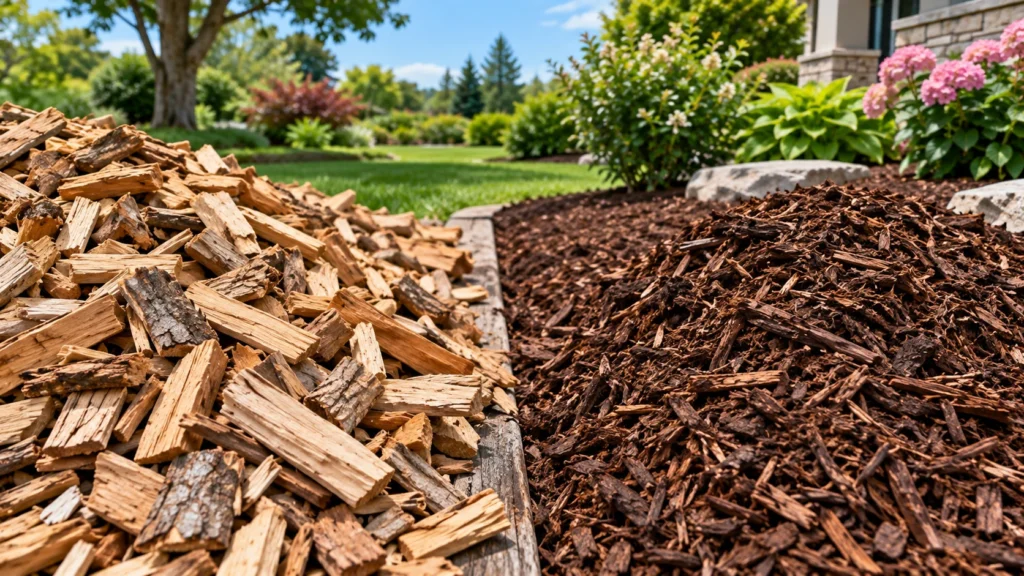
So there is no simple winner. You need to look at where the material will be used, how it should look and how often it can be replaced. If you produce mulch for sale, you also need to look at chip size, dust and product cleanliness.
Wood Chips vs Mulch at a Glance
| Factor | Wood chips | Finer organic mulch |
|---|---|---|
| Meaning | A specific wood material | A soil-covering product or category |
| Typical texture | Coarse, irregular pieces | Finer, shredded or more uniform |
| Appearance | Natural and rustic | Neat, finished and easier to color-match |
| Decomposition | Usually slower | Usually faster, depending on material |
| Main strength | Long-term coverage | Managed appearance and soil conditioning |
| Common uses | Trees, shrubs, paths, large areas | Flower beds, front landscapes, planted borders |
| Maintenance | Less frequent in many sites | May require more frequent refreshing |
| Cost | Often low when locally sourced | Often sold as a finished retail product |
| Quality variation | Can be high in unscreened loads | Usually sold to a more controlled grade |
This table is a starting point. “Mulch” can describe many products, so always compare the actual materials offered by the supplier.
What Are Wood Chips?
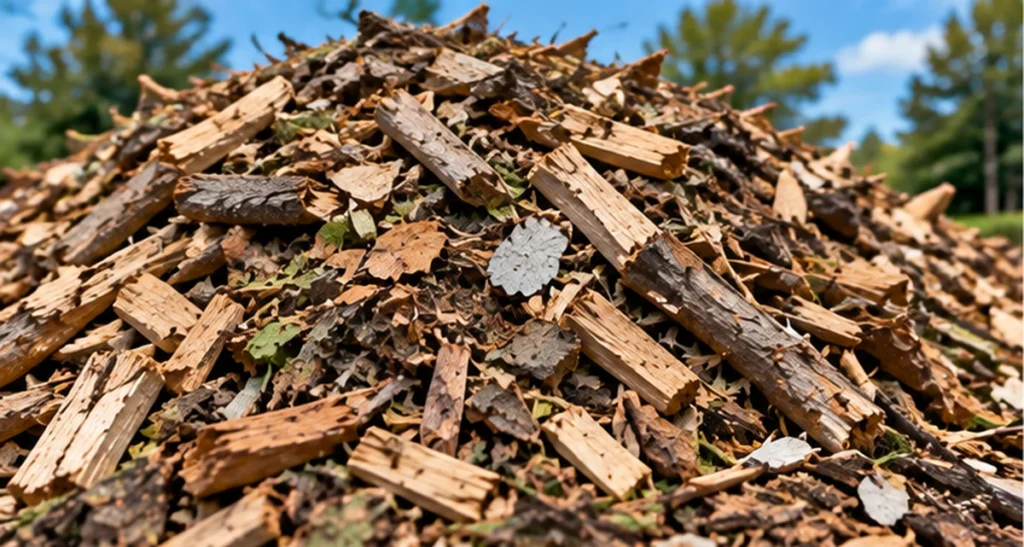
Wood chips are pieces of wood created by cutting or chipping branches, trunks, slabs or clean wood residue. Depending on the source, a load can include bark, leaves, twigs, sawdust and irregular long pieces.
Arborist wood chips are usually mixed and natural. They are often available in large quantities and may be inexpensive, but appearance and particle size can change from one delivery to the next.
Commercial screened wood chips are more controlled. Screening separates fine material and oversize to create a repeatable grade. That matters when the chips will be bagged, specified by a landscape contractor or used in a process that requires a defined particle size.
What Is Mulch?
Mulch is any layer placed over soil to protect or improve the surface. It can be organic or inorganic.
Organic mulch includes:
- wood chips;
- shredded bark;
- bark nuggets;
- compost;
- leaves;
- straw and pine needles.
Inorganic mulch includes gravel, stone and some manufactured products. These options do not decompose in the same way as organic materials.
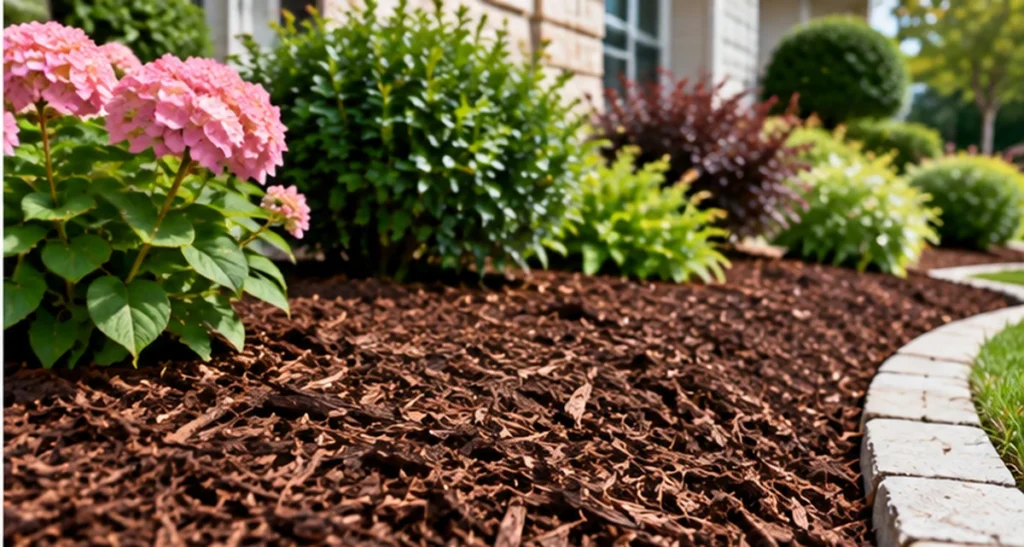
So, wood chips are mulch when they are used as ground cover. The practical comparison is really between coarse wood chips and other mulch products with different textures and performance.
The Main Differences Between Wood Chips and Mulch
1. Material and consistency
Unscreened wood chips can contain a wide range of sizes and plant material. Bagged bark or wood mulch is usually processed for a more consistent appearance.
Consistency may not matter on a woodland path. It matters much more at the entrance to a hotel, in a retail landscape bed or when a producer promises a defined grade.
2. Particle size and shape
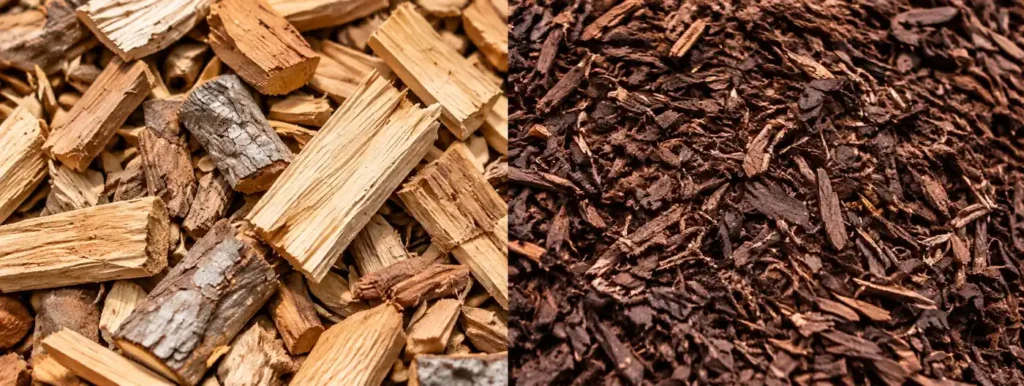
Wood chips are normally larger and more irregular. Fine mulch packs more closely and creates a smoother surface. Larger particles may allow better air and water movement, while excessive fines can mat, become dusty, or decompose quickly.
Particle size also changes handling. Long pieces can bridge at a hopper or look untidy in a bag. Too many fines can be lost during conveying or create an inconsistent application rate.
3. Appearance
Wood chips give a natural, informal finish. They fit paths, tree areas, parks, and large landscapes. Processed mulch is usually chosen when color and visual uniformity matter more.
Dyed mulch can provide a consistent initial color, but buyers should still ask what feedstock is underneath the dye. Clean, traceable material is more important than color alone.
4. Decomposition and soil effect
Coarse wood chips usually decompose more slowly than fine organic mulch. They gradually contribute organic matter at the soil surface. Compost and some finer mulches break down faster and may support a soil-improvement goal more quickly.
Neither product should be treated as a complete fertilizer. If nutrient addition is the main objective, test the soil and use an appropriate amendment.
5. Moisture and weed control
Both products can reduce evaporation and suppress weeds when applied as a continuous layer. Depth, site preparation and maintenance often matter more than the product name.
A thin layer will not stop established perennial weeds. A very deep layer can keep heavy soil too wet or cover plant crowns. Check the soil instead of applying mulch by habit.
6. Cost
Local arborist chips may be free or inexpensive because tree services need a place to deliver them. The trade-off is limited control over quantity, appearance and composition.
Commercial mulch costs more because it may include sorting, screening, aging, coloring, bagging, storage and delivery. Compare cost per delivered volume and expected maintenance—not just the price of one bag.
7. Maintenance
Finer mulch may need refreshing more often because it decomposes, compacts or moves. Coarse wood chips often provide longer coverage, although traffic, climate, chip type and layer depth can change the result.
Before adding new mulch, measure the material already present. Annual top-dressing without inspection can create excessive depth.
Pros and Cons of Wood Chips
Advantages
- good long-term coverage;
- effective around established trees and shrubs;
- useful for paths and large areas;
- can be inexpensive when locally available;
- improves the soil surface gradually;
- coarse structure often resists compaction better than very fine material.
Limitations
- unscreened loads can be inconsistent;
- fresh loads may contain leaves, twigs and long pieces;
- the rustic appearance does not suit every landscape;
- unknown sources may contain unsuitable wood or contaminants;
- large deliveries require space and handling equipment;
- dry organic material presents a fire risk.
Pros and Cons of Processed Organic Mulch
Advantages
- more predictable color and texture;
- easier to specify for decorative landscapes;
- available in bags or controlled bulk grades;
- some products break down faster and contribute organic matter sooner;
- easier for a buyer to reorder a similar product.
Limitations
- normally costs more than free arborist chips;
- may require more frequent refreshing;
- fine material can compact or form a surface layer;
- dyed products may hide variable feedstock;
- the word “mulch” alone does not identify the material or quality.
A Simple Selection Matrix
| Your main priority | Better starting choice |
|---|---|
| Natural, low-cost coverage | Local clean wood chips |
| Formal and uniform appearance | Screened or processed mulch |
| Long-life path surface | Coarse wood chips |
| Rapid soil-conditioning goal | Compost or finer organic mulch |
| Consistent retail product | Screened commercial mulch |
| Frequent planting and cultivation | Fine, easy-to-move organic mulch |
| Large tree and shrub areas | Coarse arborist or screened wood chips |
The matrix is deliberately practical. It avoids claiming that one material is always better.
Why Screening Changes the Comparison
Many wood chips vs mulch comparisons assume that wood chips are rough and inconsistent while commercial mulch is uniform. That is not always true. Screening can turn mixed chipper output into controlled fractions.
A screen can separate:
- fine particles and sawdust;
- the target commercial fraction;
- oversized or overlong chips for reprocessing;
- some foreign material when used with suitable upstream separation equipment.
This improves product consistency without changing the basic identity of the material. It also allows a mulch producer to direct each clean fraction to the most suitable market.
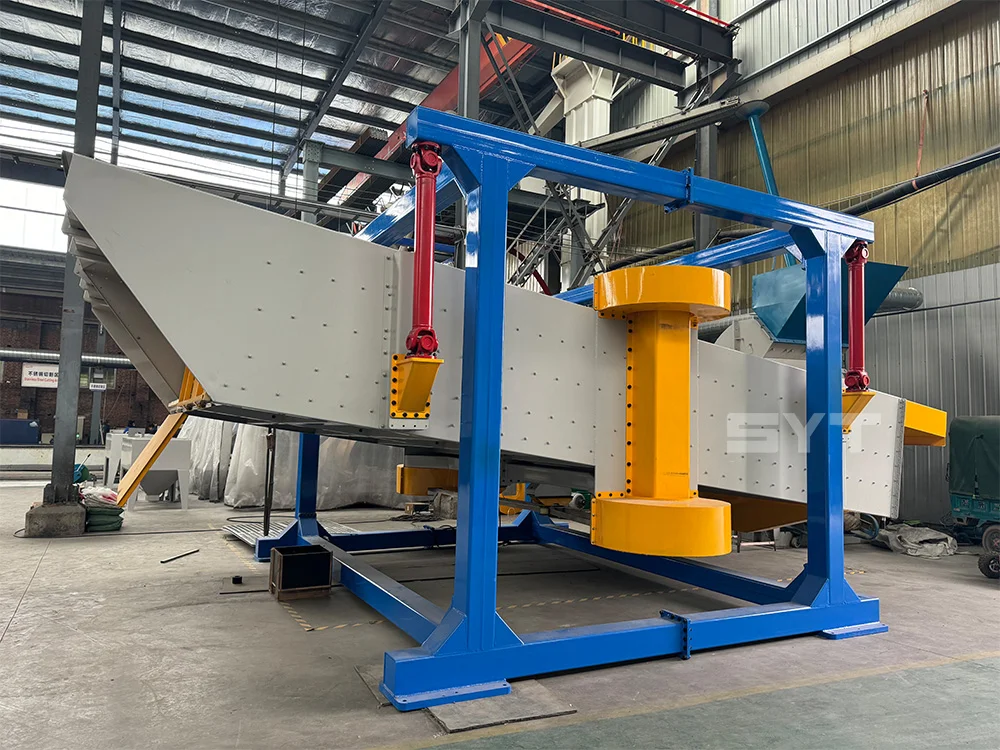
For equipment specifications, see the Sanyuantang Wood Chip Screener Oscillating Screen.
Advice for Commercial Mulch Producers
Do not start by asking only, “What screen capacity do I need?” First define the incoming material and the products you want to sell.
When our sales and engineering team checks a new wood chip project, we normally ask for:
- minimum and maximum feed size;
- typical moisture condition;
- target product sizes;
- acceptable fines and oversize;
- required capacity;
- contaminants expected in the feed;
- available installation space and downstream conveyors.
Wood chips are light and their shapes are not regular. Some pieces lie flat on the screen. Some long pieces stand up or turn while moving. Because of this, screen opening size alone cannot tell us the final result. We prefer to check a real sample when the customer needs accurate separation.
Sanyuantang’s current wood chip screener uses an oscillating screening motion and supports multiple product cuts. The published specification covers 1–5 layers, 5–55 mm screening sizes and 600–1000 m³/h. These figures describe the machine range, not a guaranteed result for every mulch product. Final capacity must be checked against the actual material.
FAQ
Are wood chips a type of mulch?
Yes. Wood chips become mulch when they are applied as a protective soil covering. Mulch is the broader category.
Which lasts longer, wood chips or mulch?
Coarse wood chips normally remain visible longer than fine organic mulch, but wood species, climate, moisture, traffic and depth all affect service life.
Are wood chips cheaper than mulch?
They can be, especially when sourced from a local arborist. Commercial screened or bagged wood chips include processing and handling costs, so compare equivalent grades and delivered volumes.
Which is better for weeds?
Both can suppress weeds when the layer is continuous and deep enough. Site preparation and maintenance are as important as material choice.
Do wood chips attract termites?
Wood chips do not automatically cause a termite problem, but organic mulch should be kept clear of foundations where required by local guidance. Inspect the site and avoid creating constantly wet conditions beside a building.
Which is better around trees?
Clean, coarse wood chips are often a strong choice around established trees. Keep the material away from the trunk and never cover the root flare.
Our Practical Recommendation
Choose wood chips when you want natural, durable coverage for trees, shrubs, paths or large areas. Choose a finer processed mulch when appearance, fast decomposition or easy handling around small plants matters more.
For commercial products, the decision is not limited to wood chips or mulch. Feedstock control and screening can turn mixed wood into a consistent grade that is easier to sell and use.
If you process wood chips, mulch, sawdust or biomass material, contact Sanyuantang. You can send photos, a short video, the raw material size, the finished sizes and the required capacity. We will help you check whether our wood chip screener is suitable and arrange a material test when needed.
Email: info@sanyuantang.com
Phone: +86-18639095165