Liquid Sifting Solutions for Slurry Filtration and Equipment Selection
Compare liquid sifting solutions by viscosity, solids loading, screen aperture and sustained flow. Plan a slurry trial around product loss and cleaning.

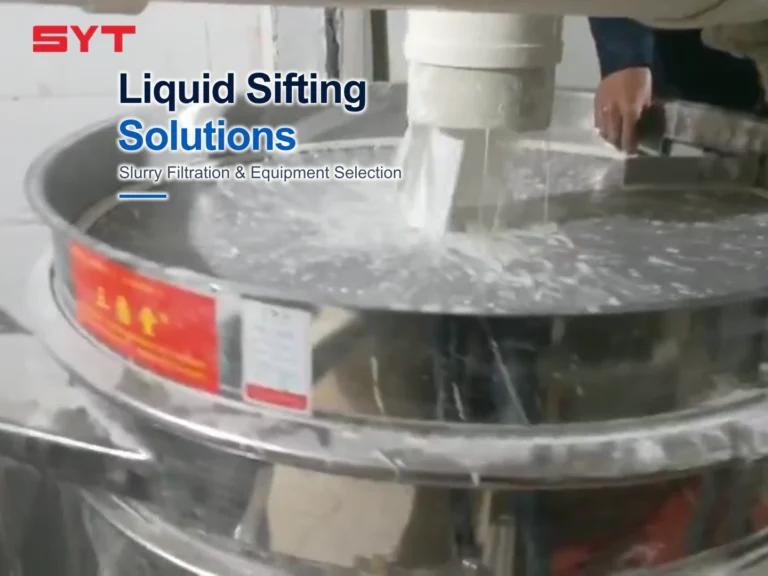
Compare liquid sifting solutions by viscosity, solids loading, screen aperture and sustained flow. Plan a slurry trial around product loss and cleaning.

Plan bag dump station dust control and prevent screener buildup. Check emptying peaks, extraction, buffering and downstream flow.

Use screening efficiency calculation formulas for yield and recovery. Check mass balance, sampling and equipment acceptance criteria.
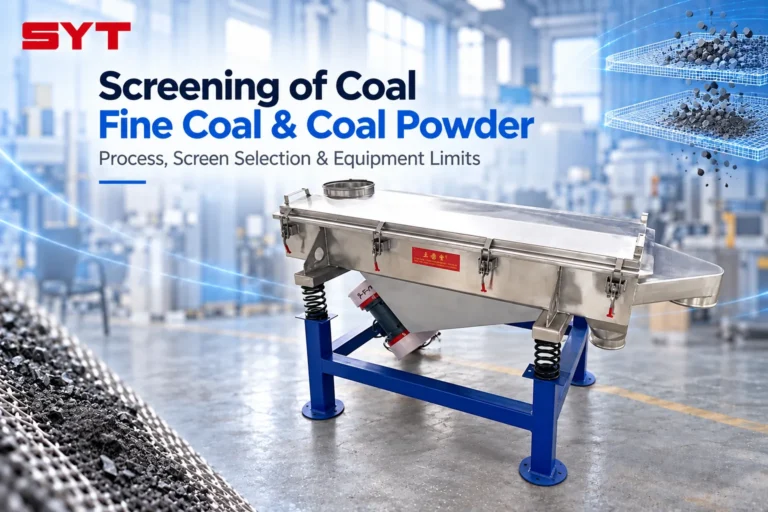
Understand where screening fits in coal processing, then review equipment options for fine coal and coal powder. Compare feed condition, moisture, blinding and separation targets without confusing fine sieves with heavy raw coal screens.
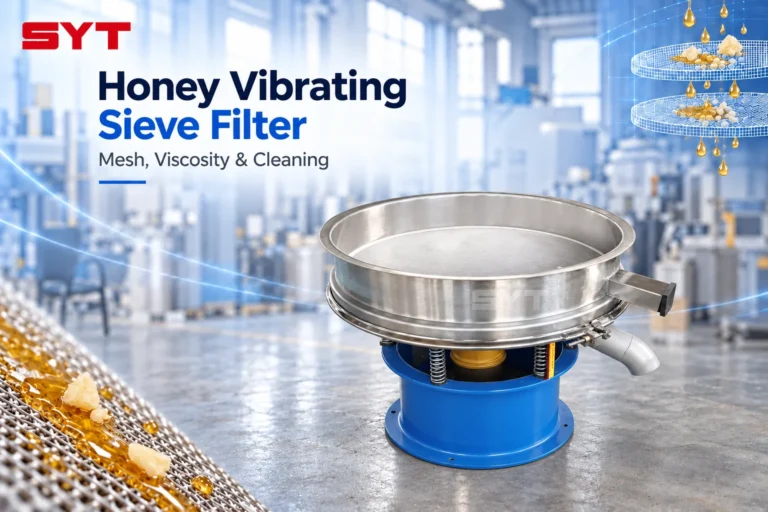
Select a honey vibrating sieve filter around the impurity target, mesh aperture, honey viscosity and cleaning requirements. Learn why stable flow must be verified with actual honey rather than inferred from screen diameter.
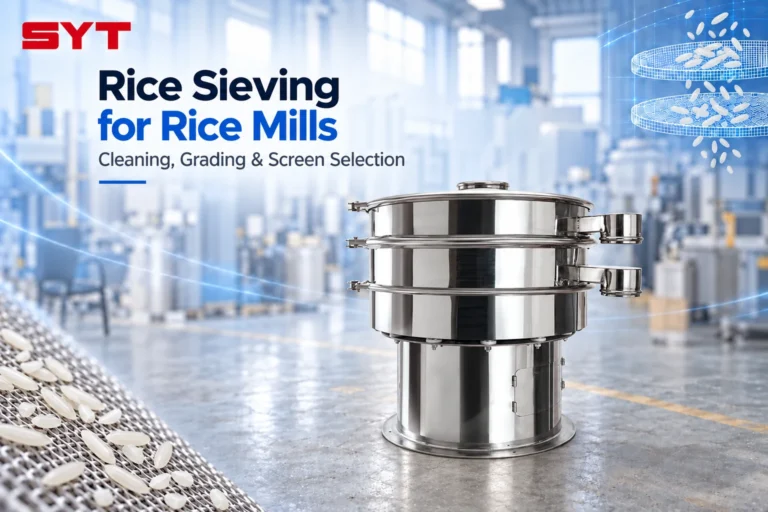
Understand rice sieving for cleaning and grading in rice mills. Compare screen openings, whole and broken rice separation, grain recovery and breakage, while recognising the limits of screening versus destoning and length grading.
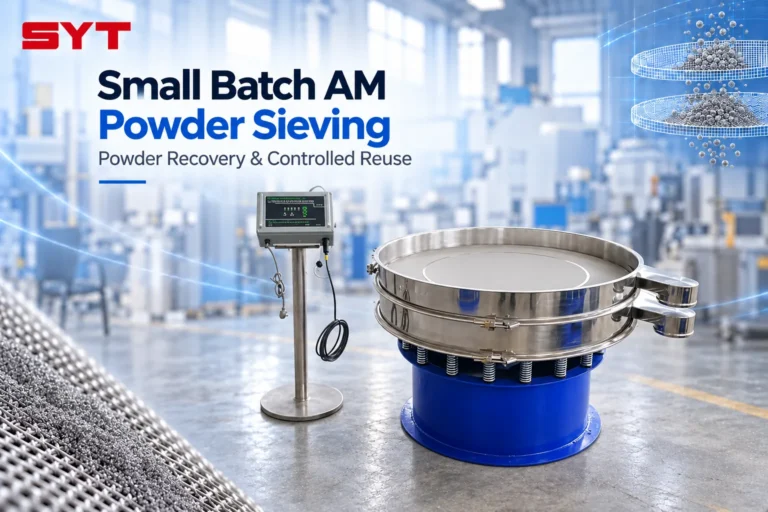
Plan small batch AM powder sieving for recovery and controlled reuse. Review batch handling, screen selection, material traceability and cleaning, and understand why sieving alone does not establish powder suitability for reuse.
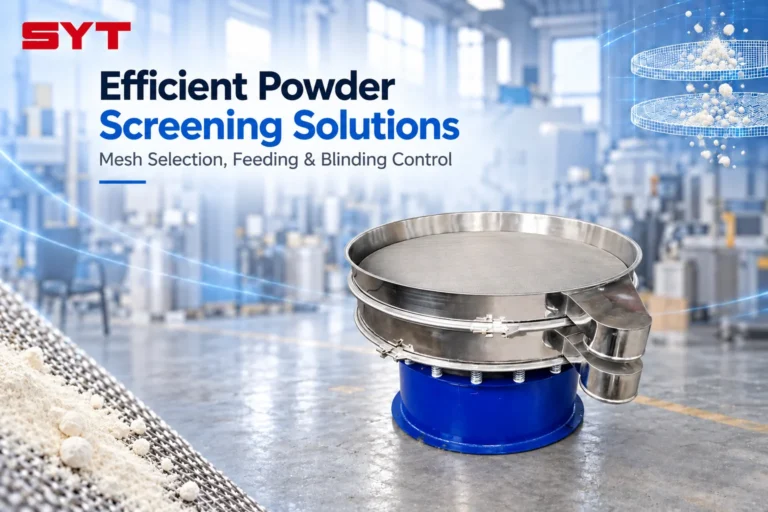
Explore efficient powder screening solutions through mesh selection, controlled feeding and suitable blinding control. Learn how to assess sustained throughput, product loss and cleaning needs with representative material trials.
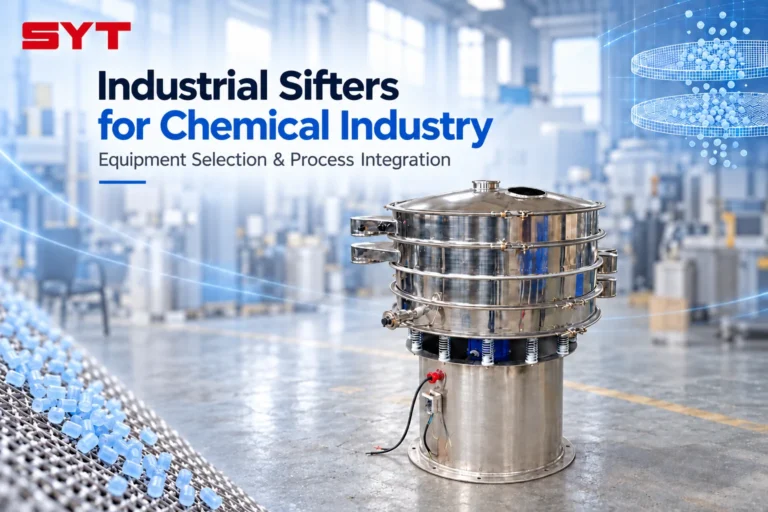
Compare industrial sifters for chemical powders and granules, from screen selection to feeding and process integration. Learn which material data, trials and safety requirements to review before choosing a Sanyuantang configuration.
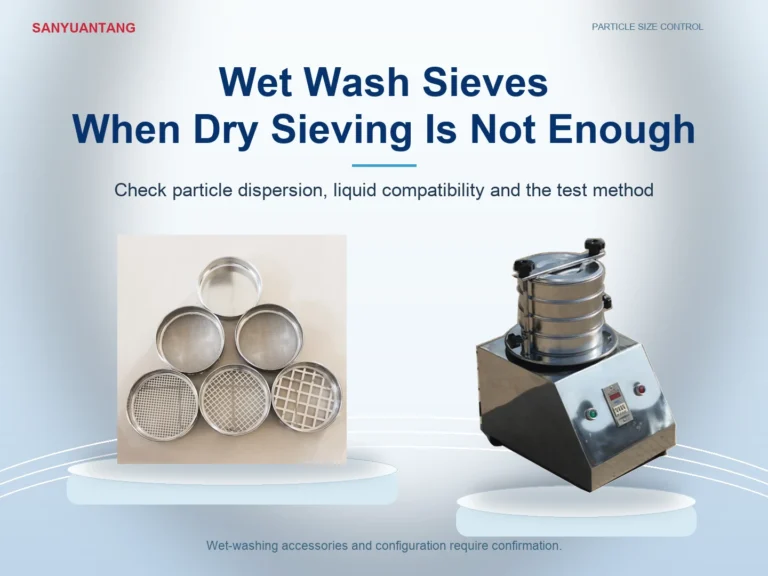
Learn when wet wash sieves are useful, why dry sieving can misrepresent difficult samples, and which material, liquid, equipment, and test-method details to confirm.
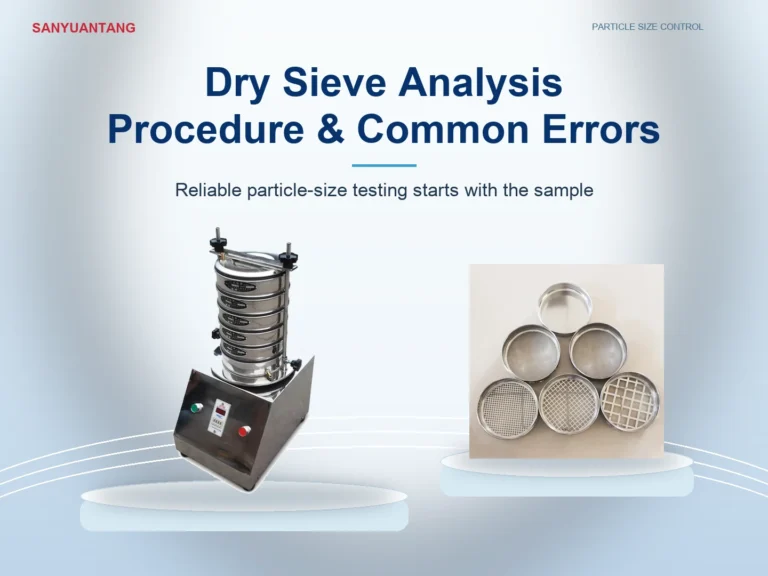
A practical guide to dry sieve analysis, including suitable materials, the test procedure, common errors, result interpretation, and when wet sieving may be needed.
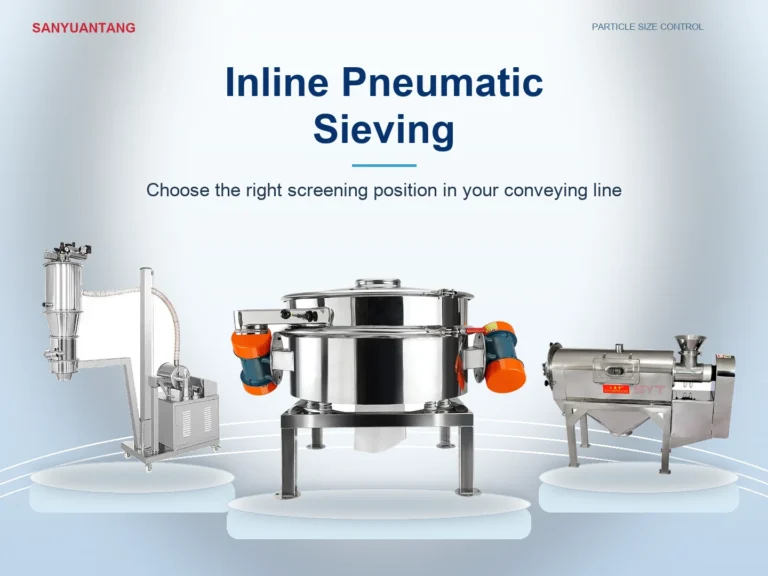
Learn where inline pneumatic sieving fits in a conveying line, how equipment options differ, and which material and pressure conditions to confirm.
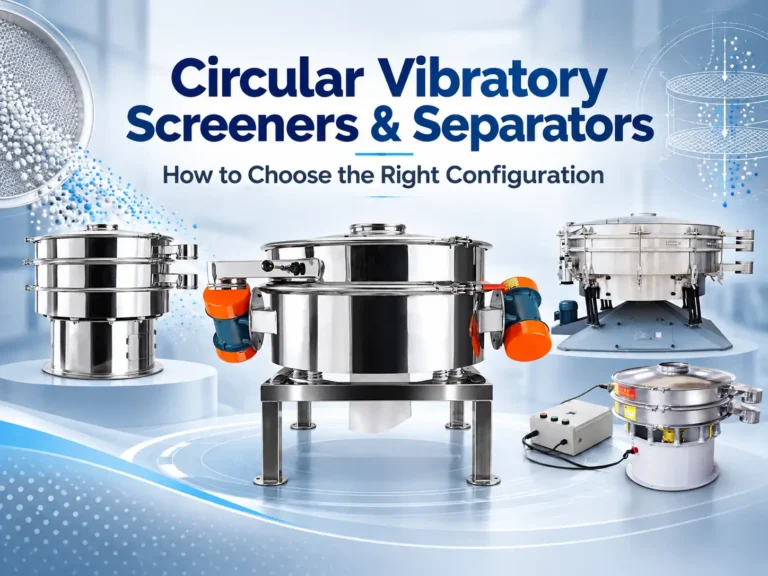
A guide to circular vibratory screeners and separators, covering screening goals, deck count, mesh, capacity, material behavior, and configuration choices.
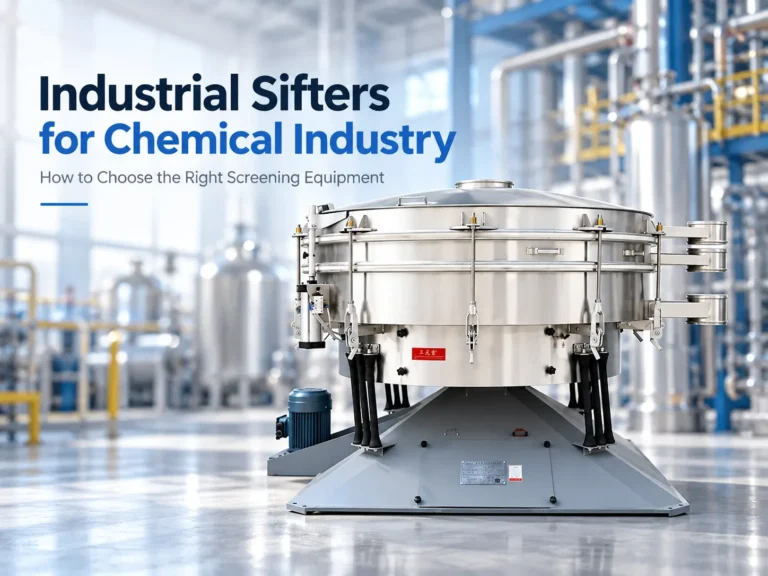
A practical guide to selecting industrial sifters for chemical powders by screening task, material behavior, mesh size, capacity, and material compatibility.
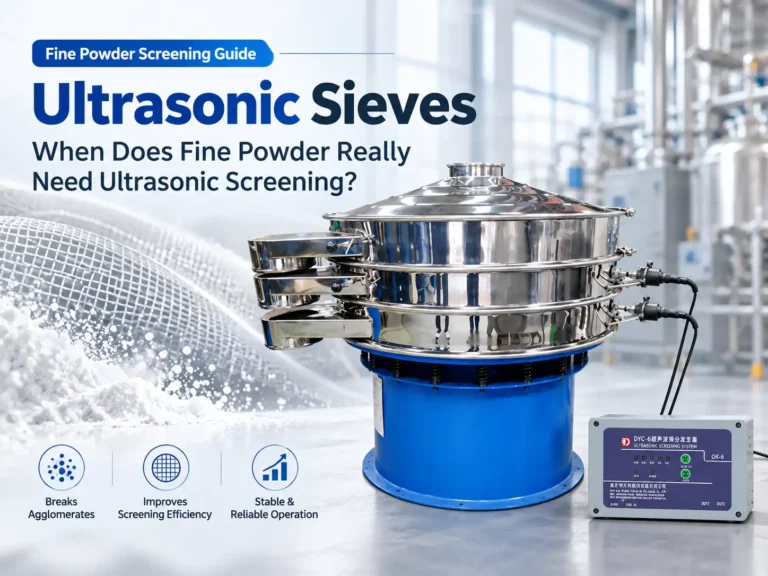
Ultrasonic sieves are mainly used when fine powders cause persistent mesh blinding, static adhesion or agglomeration during conventional screening. This guide explains when ultrasonic screening is useful, when a standard vibrating sieve may already be sufficient, and which material and production parameters should be checked before equipment selection.
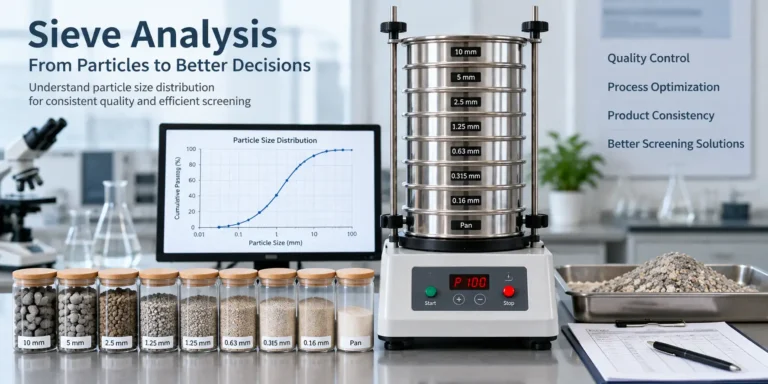
Understand the purpose of sieve analysis for particle-size control, specifications, quality checks and industrial vibrating screen selection.
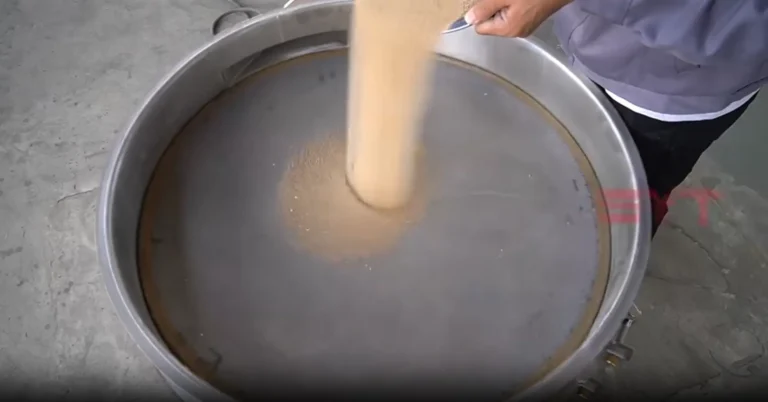
Learn the sieve analysis procedure, calculations, equipment and common errors, plus how particle-size data supports industrial screen selection.
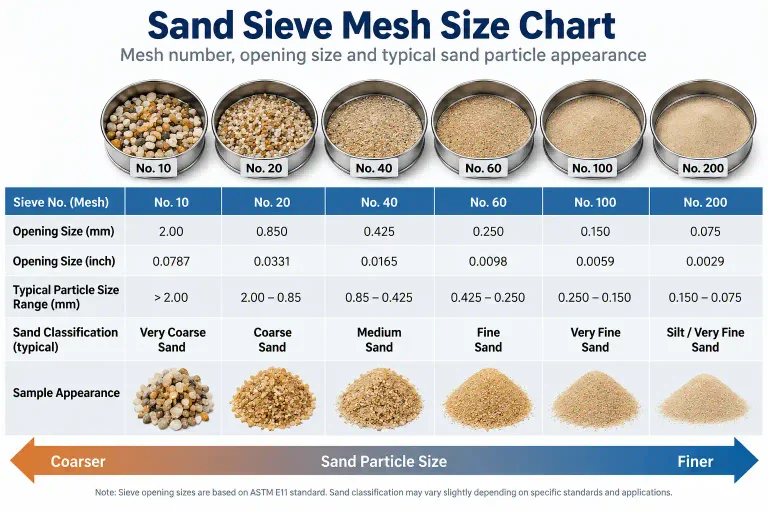
Sand sieve mesh size guide with mesh, mm and micron conversions, selection tips and a real silica sand screening example from Sanyuantang.