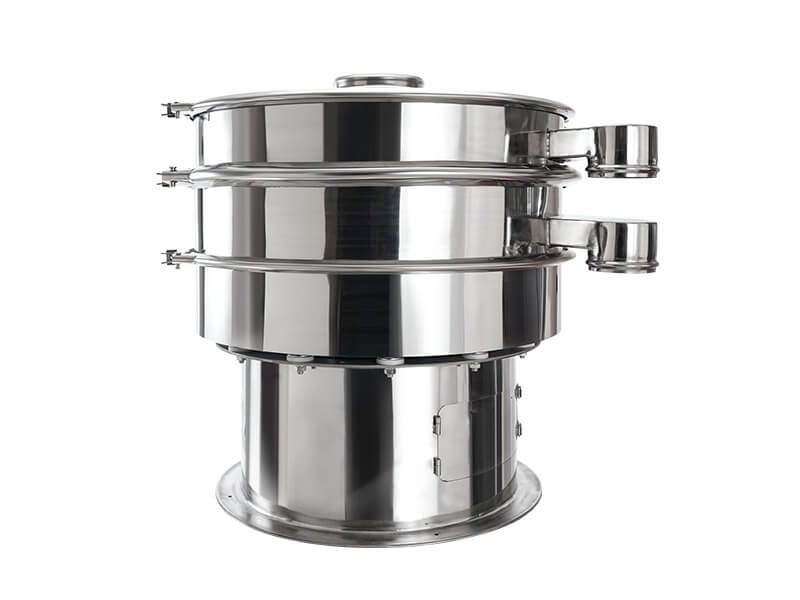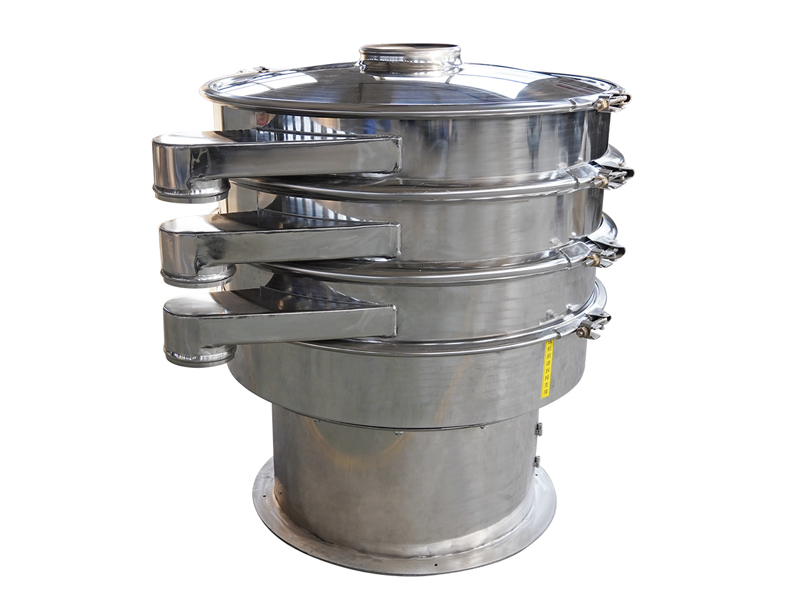
Industrial screeners are the key equipment for screening and sorting materials in a wide range of industries. It can be divided into a variety of screening equipment and special customised equipment according to different industries, which can meet the screening needs of different materials, thus improving production efficiency and product quality. Different types of industrial screeners play an important role in various industries through their unique working principle and structural design. From mining screening equipment to ultrasonic fine screening equipment, industrial screeners cover a wide range of industrial types, while improving the screening efficiency and safety production level. So what are the different types of industrial screeners? Below you will find a detailed description of the different types of industrial sifters and their applications across a wide range of industries.
Table of Contents
- Ultrasonic screener
- Circular vibrating screener
- Inclined screener machine
- Linear Swing Vibrating Screener
- Gyratory Screener

Ultrasonic screener
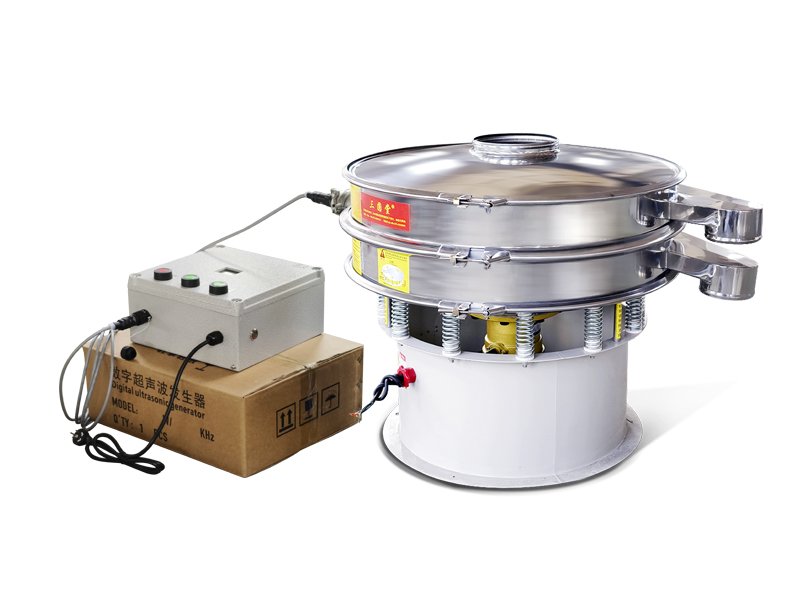
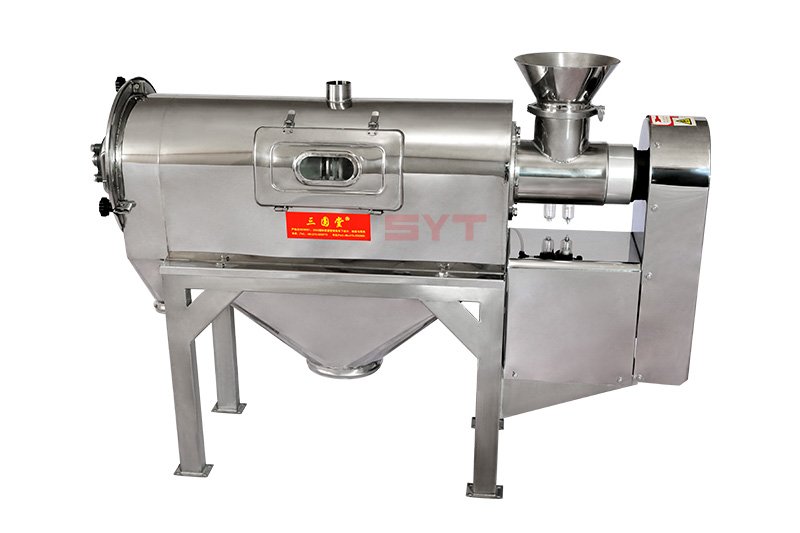
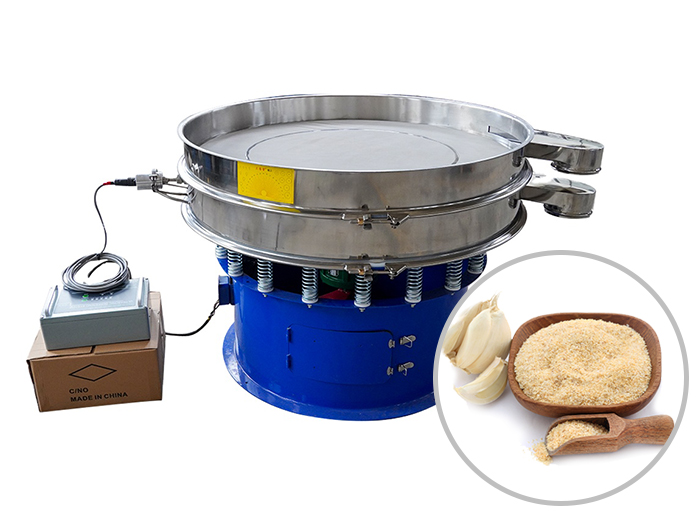
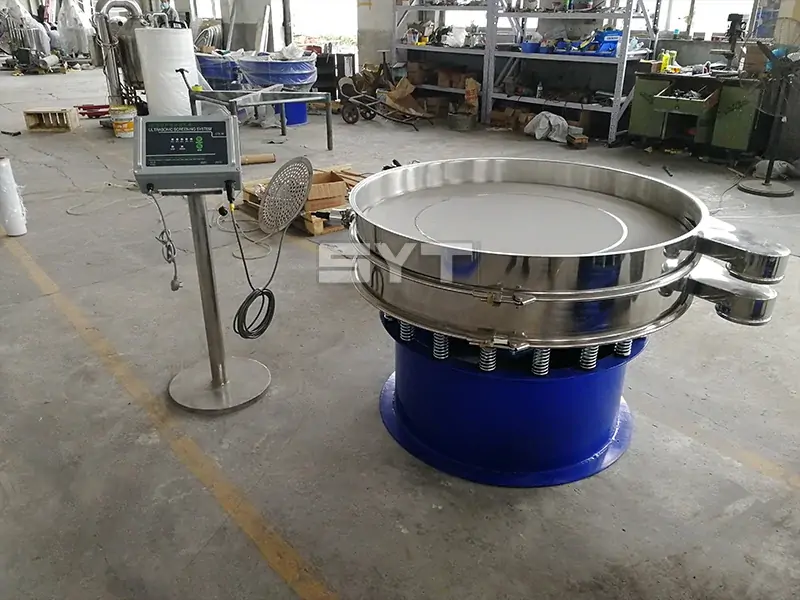
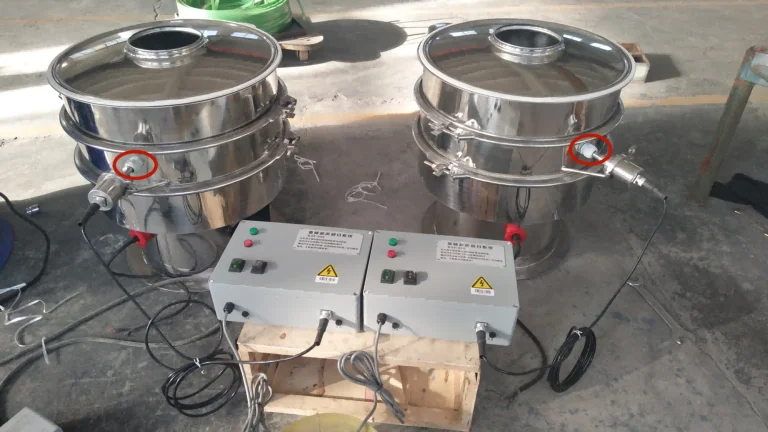
Ultrasonic vibrating screener is a kind of equipment using ultrasonic vibration technology for sieving, which is suitable for sieving fine granular materials, especially viscous materials and materials that are easy to be clogged. It applies high-frequency vibration to the sieve mesh through the ultrasonic vibration source to make the materials pass through the sieve holes quickly, effectively preventing sticking and clogging. This kind of sieving machine is widely used in food, chemical, pharmaceutical and other industries. For example, in the pharmaceutical industry, ultrasonic sieving machine is used for fine powder screening to ensure the purity and uniformity of drugs; in the food industry, it is used for sieving materials such as icing sugar, starch, etc. to improve the hygiene standard of food production. In addition, ultrasonic screening machine also has the characteristics of low noise and low energy consumption, which is a kind of efficient and environmentally friendly screening equipment.
Ultrasonic vibrating screener utilizes an advanced ultrasonic vibration technology superimposed on the standard vibrating motor. By applying high-frequency, low-amplitude ultrasonic waves directly to the sieve mesh, it effectively eliminates surface blinding and mesh friction.
- Working Principle: The ultrasonic power supply converts electricity into high-frequency mechanical waves through a transducer, transmitting them across the screen surface to keep particles suspended.
- Target Materials: Superfine powders, electrostatically charged materials, and sticky substances. Perfect for pharmaceutical powders, silica powder, 3D printing metal powders, battery anode/cathode materials (graphite/lithium), and cosmetic ingredients.
- Key Technical Advantage: Prevents mesh blinding completely, increases screening accuracy by up to 100%, and extends screen service life.
circular vibrating screener
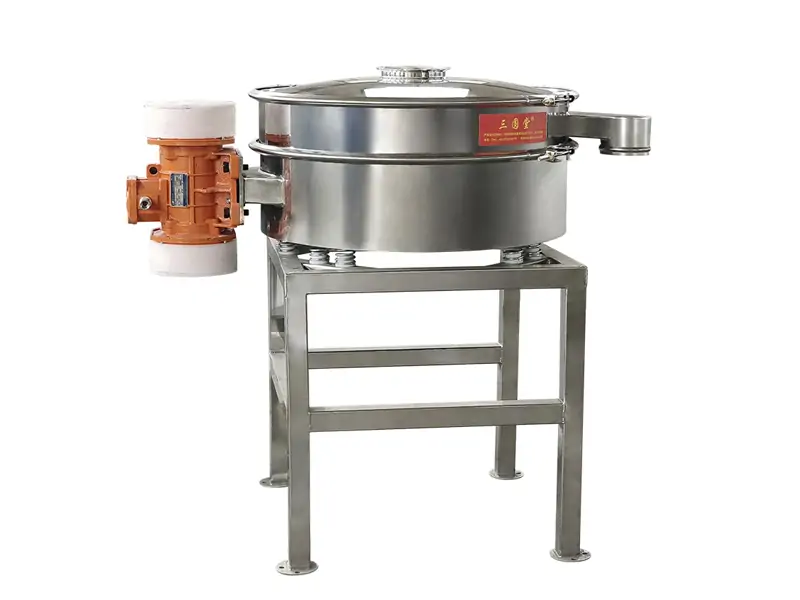
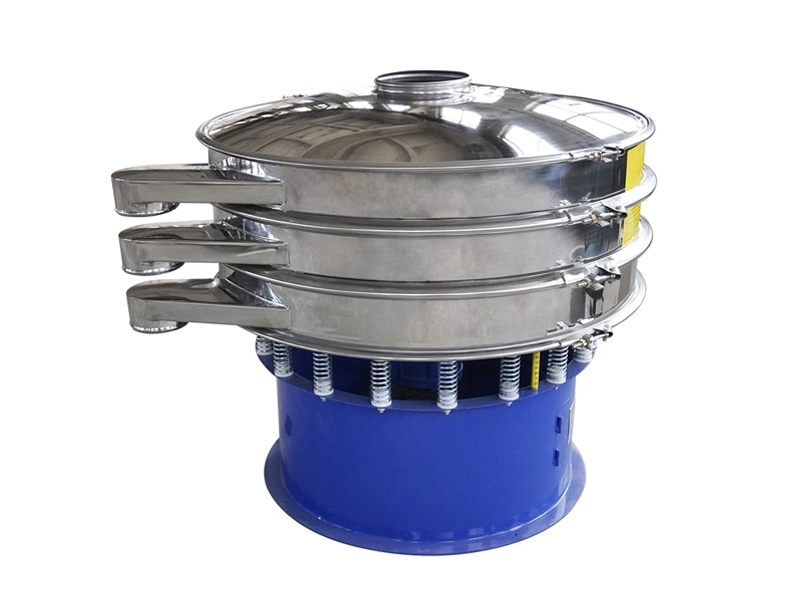
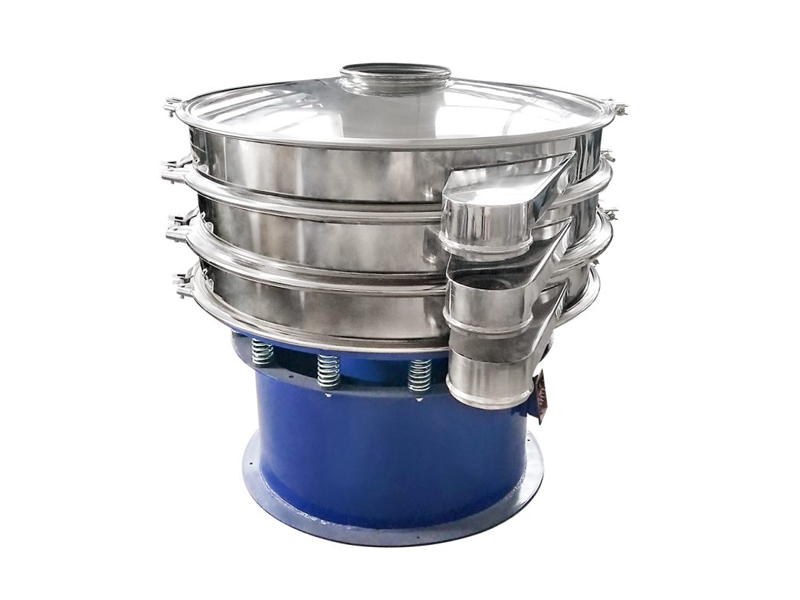
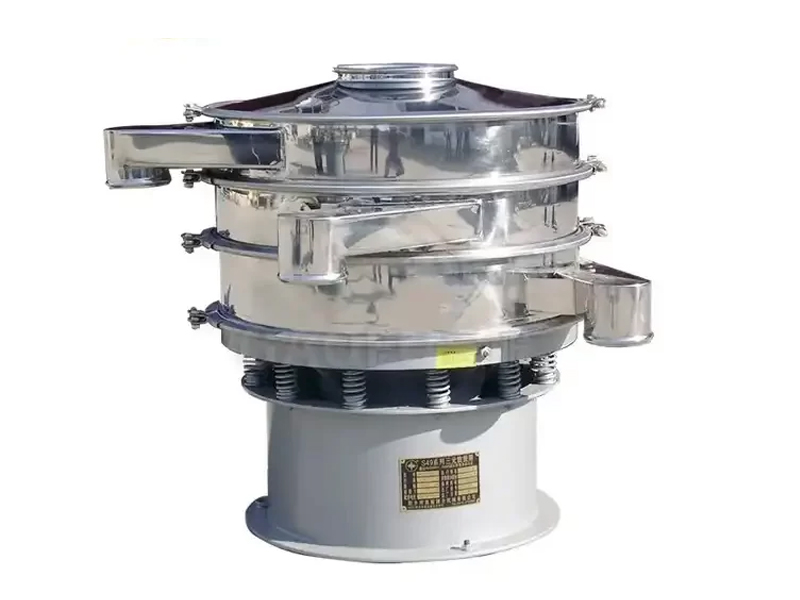
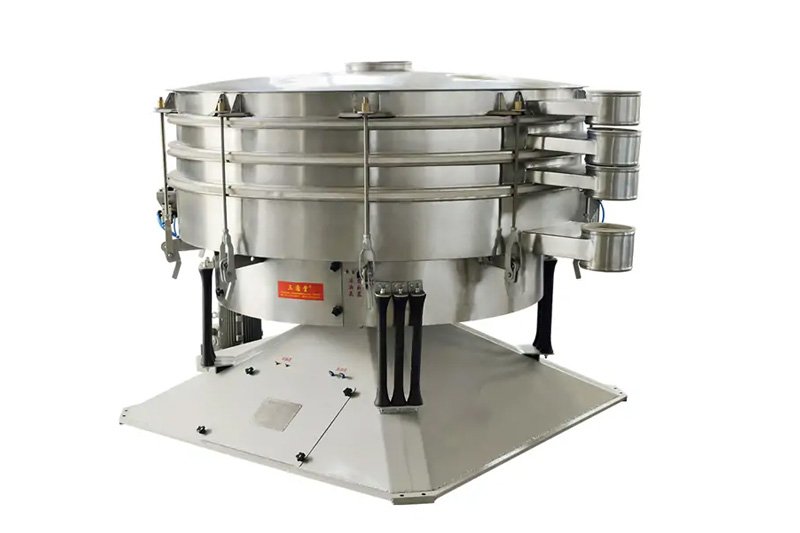
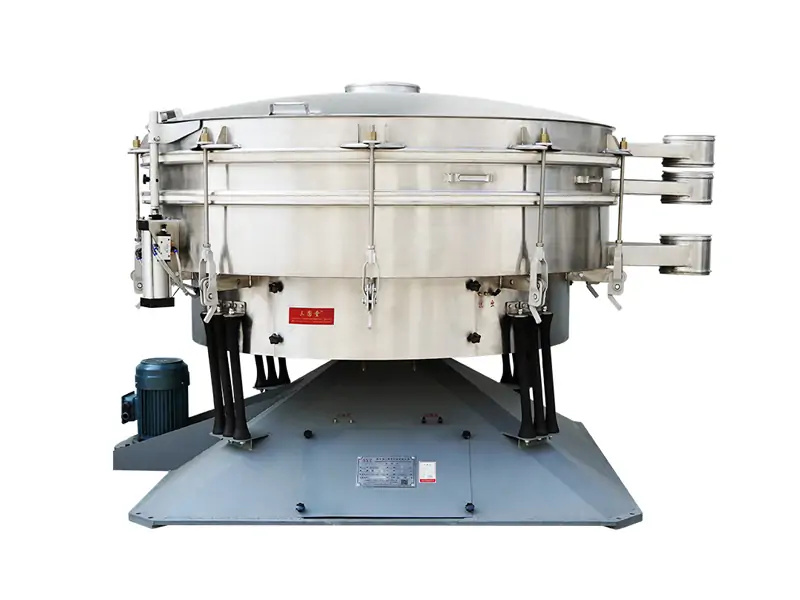
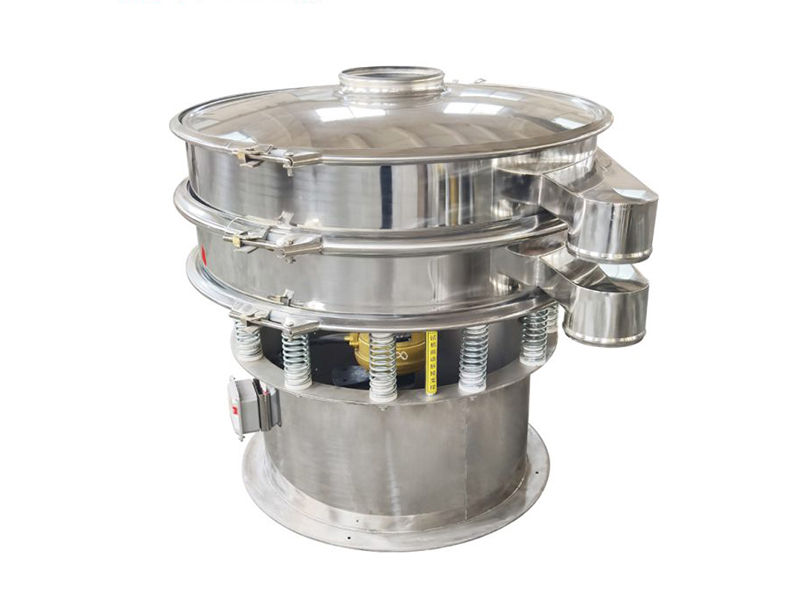
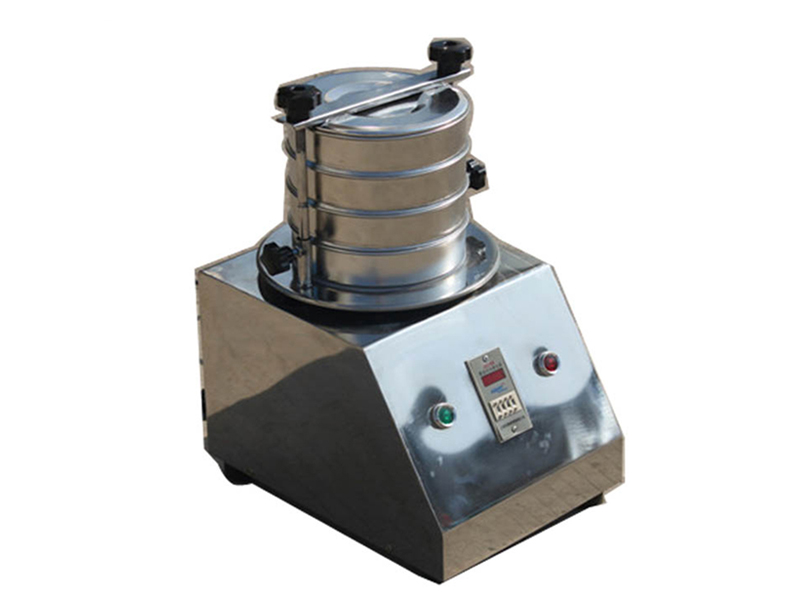
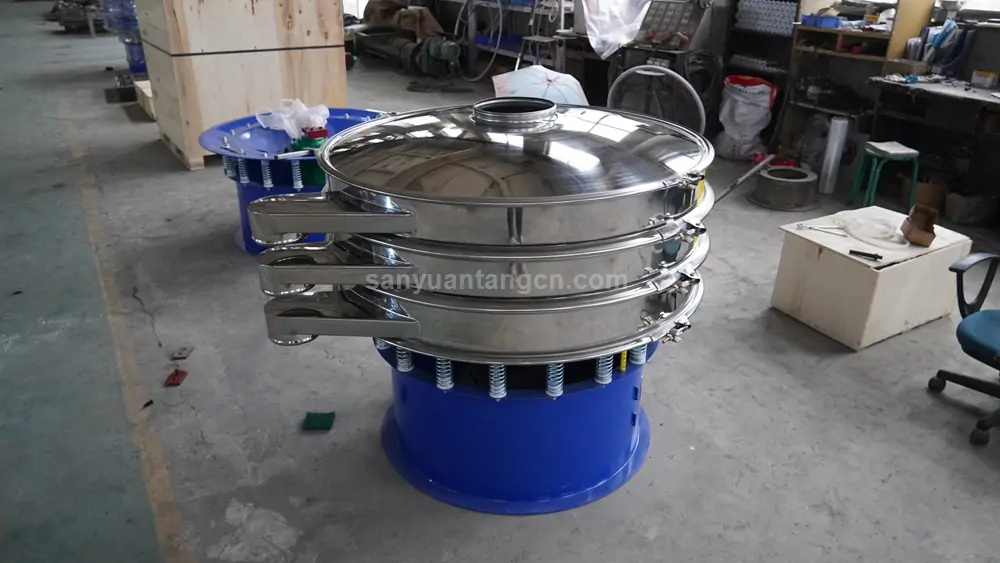
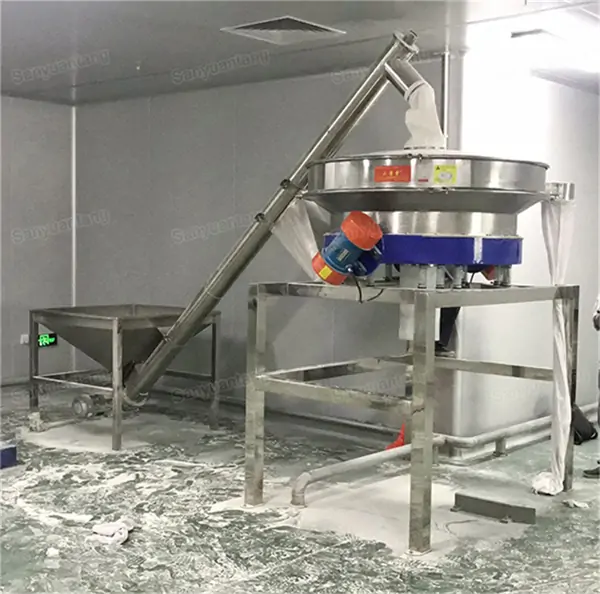
Circular vibrating screener is one of the most common industrial screeners, and its working principle is to use the excitation force generated by the vibrating motor to make the materials in the screen box move rapidly on the screen mesh, so as to achieve the separation of materials. Vibrating screen is suitable for screening powdery and granular materials, which is widely used in ore, building materials, chemical industry and other industries. For example, in the mining industry, vibrating screen is used for the preliminary screening of ore, separating large ores from fine materials; in the building materials industry, it is used for grading sand and gravel to ensure the quality of building materials. Vibrating screen has the advantages of simple structure, easy maintenance, large handling capacity, etc., which is an indispensable equipment in industrial production.
The circular vibrating screener is a classic, high-efficiency sorting machine that operates with a three-dimensional, continuous circular motion. It is highly versatile and capable of handling bulk materials with various grain sizes.
- Working Principle: An eccentric weight blocks mounted on the top and bottom of the vibrating motor converts the motor’s rotary motion into a 3D inclined movement (horizontal, vertical, and inclined), throwing material across the screen.
- Target Materials: Coarse granules, dry powders, and sludges. Widely used for ores, coal, limestone, construction aggregates, metal powders, food grains, and starch.
- Key Technical Advantage: Simple and robust structure, large processing capacity, adjustable material retention time on the screen, and low maintenance costs.
Inclined screener machine
Inclined screener machine is a specially designed screening equipment with inclined screen surface, which is suitable for screening wet materials and high-viscosity materials, such as ore leaching liquid, ceramic slurry and so on. The working principle is that the materials are screened on the inclined screen surface, and the angle of inclination of the screen surface and the vibration force are used to achieve the separation of materials. Inclined sifter is especially widely used in metallurgical and ceramic industries. For example, in the metallurgical industry it is used for the dewatering of slurries, and in the ceramic industry it is used for the screening of slurries to ensure the fineness of ceramic products. The design of the inclined screener gives it a significant advantage in handling sticky materials and can effectively reduce clogging problems.
Designed with a specific structural inclination, this machine excels at separating materials that are sticky, wet, or require high-velocity surface travel.
- Working Principle: It utilizes gravity combined with linear or circular vibrating force. The inclined angle (usually 15°–25°) allows the material to travel rapidly down the screen deck, accelerating the stratification process.
- Target Materials: High-moisture ores, metallurgical slurries, ceramic glazes, and wastewater treatment. Specifically for de-watering mining slurry, ceramic slip, and paper mill waste.
- Key Technical Advantage: Excellent gravitational assistance reduces material build-up on the mesh, significantly lowering the clogging risks for wet/viscous media.
Linear Swing Vibrating Screener
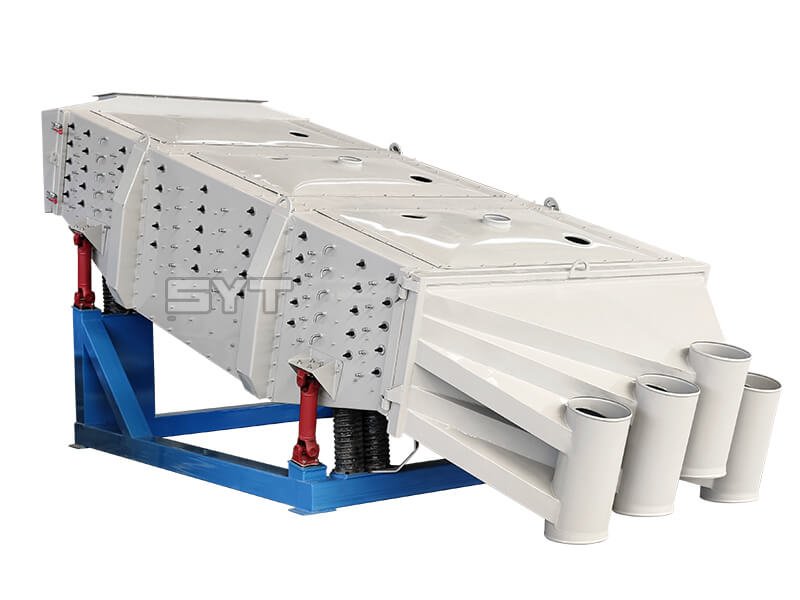
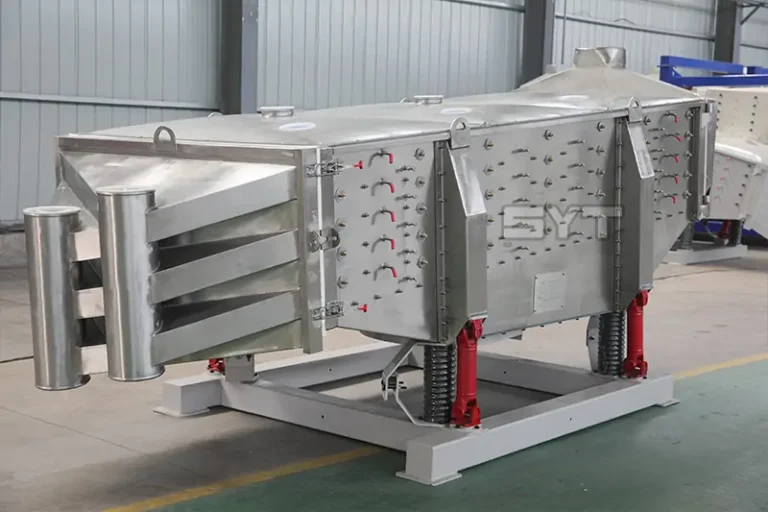
Linear swing vibrating screener adopts linear vibration for screening, which is suitable for fine-grained materials and high-precision screening, such as sand and gravel, coal, chemical raw materials and so on. Its working principle is that the materials are screened on the surface of linear screen, and the separation of materials with different grain sizes is achieved by adjusting the vibration force and the inclination angle of the screen surface. With the advantages of high screening efficiency and large handling capacity, linear screen is widely used in coal, chemical and building materials industries. For example, in the coal industry, linear screen is used for coal classification and desulphurisation treatment; in the chemical industry, it is used for screening fine chemical raw materials to ensure product quality. The design of the linear screen makes it outstanding in the field of high-precision screening, and it can meet the demanding industrial needs.
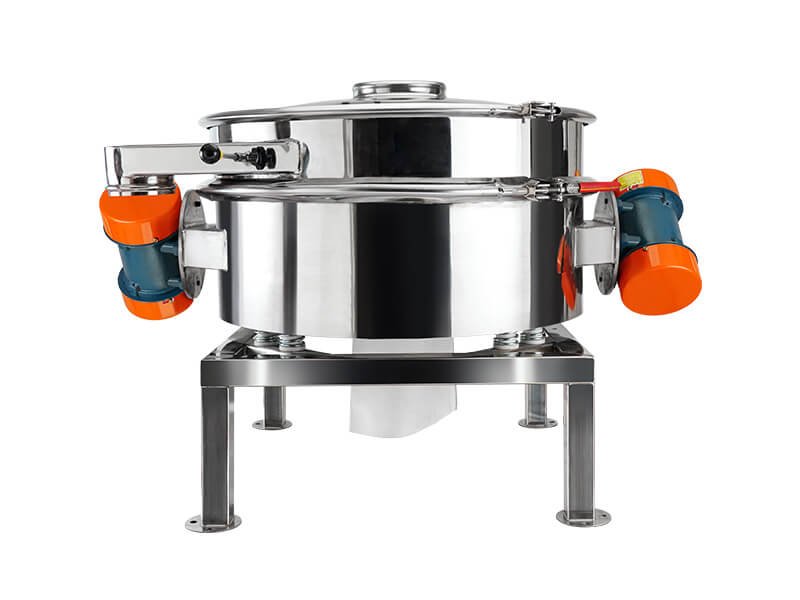
The linear vibrating screener uses dual counter-rotating vibrating motors to generate a linear trajectory, making it an excellent choice for high-capacity classification and grading.
- Working Principle: Two identical motors rotate synchronously in opposite directions. The centrifugal forces they generate cancel each other out in the horizontal direction and combine in the vertical direction, forcing the material to jump forward in a straight line.
- Target Materials: Dry granular materials and small pellets. Ideal for quartz sand, frac sand, fertilizer granules, plastic pellets, animal feed, and crushed coal.
- Key Technical Advantage: High grading precision, linear transport action allows for easy integration into automatic production lines, and multiple decks can be stacked for multi-stage sizing.
Gyratory Screener
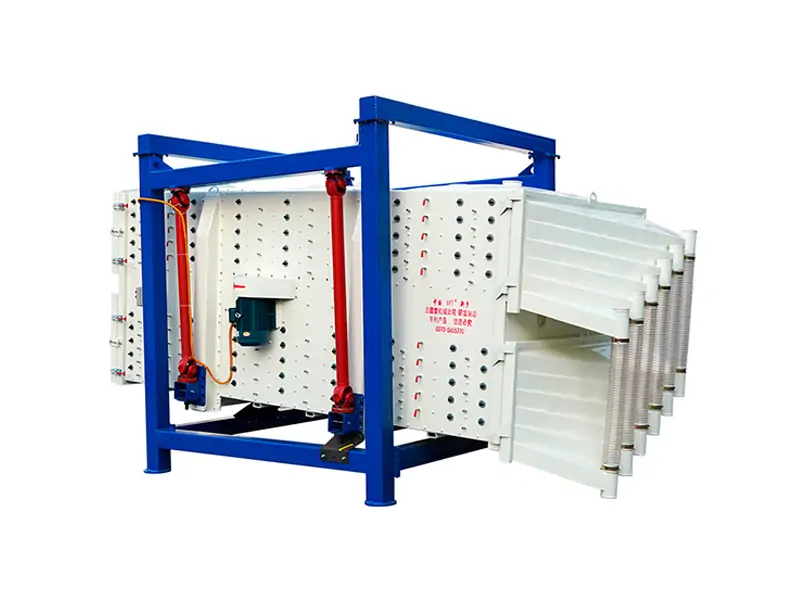
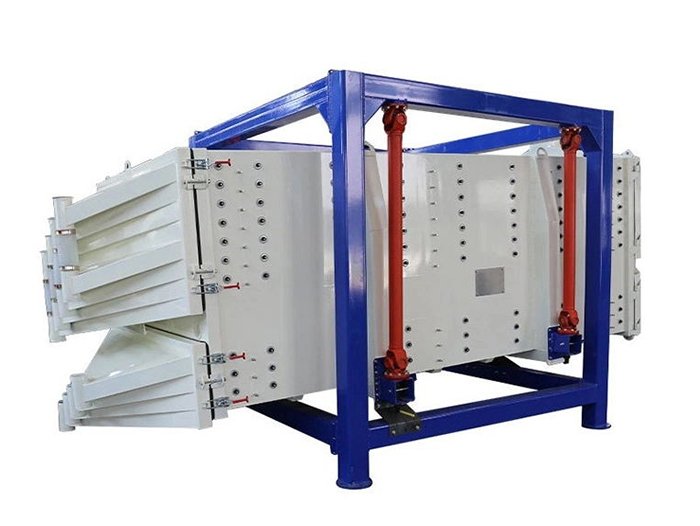
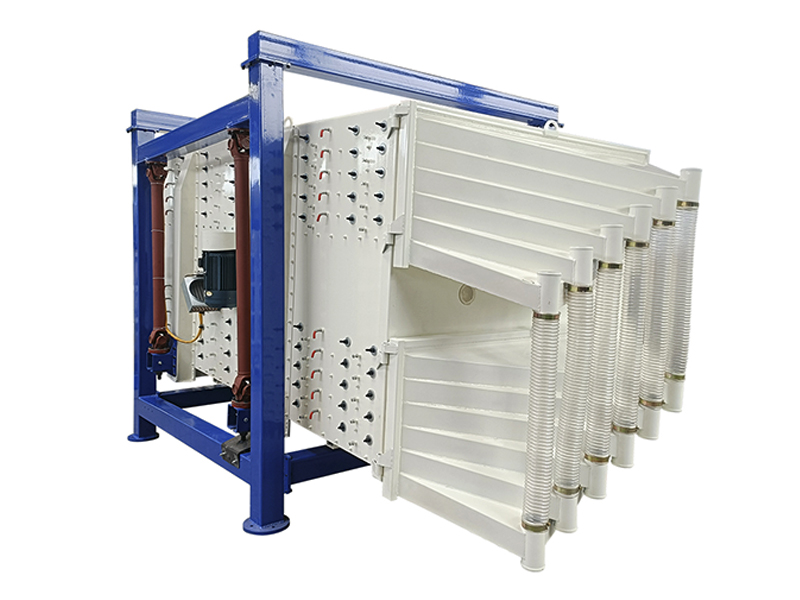
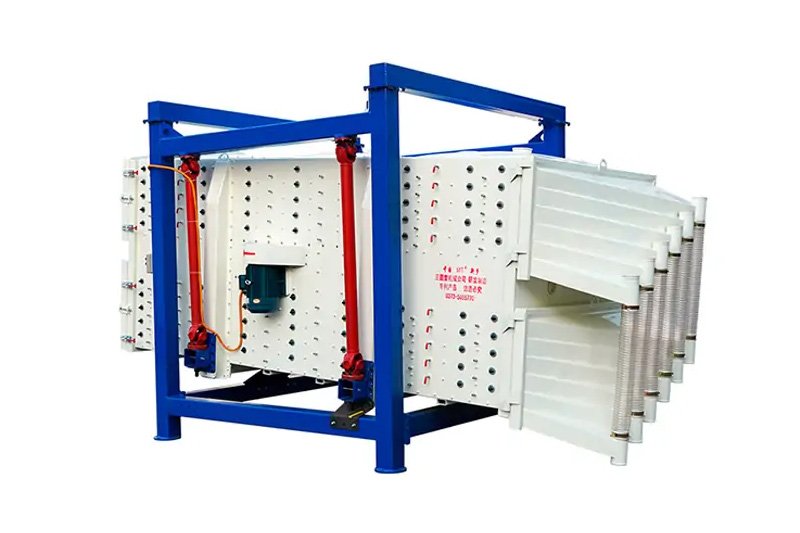
Gyratory screener is a kind of screening equipment using rotating screen cylinders, which is suitable for screening wet materials and viscous materials, such as coal sludge, limestone, paper pulp, etc.. The working principle is that the material enters into the rotating screen cylinder through the inlet, and the separation of the material is realised through the action of the rotating screen cylinder and the screen holes. With the characteristics of large handling capacity and strong adaptability, rotary screening machine is widely used in mining, paper making and environmental protection industries. For example, it is used for pulp screening in papermaking industry; in environmental protection industry, it is used for sludge treatment. The design of the rotary screening machine enables it to efficiently process materials with high humidity or high viscosity, making it ideal for special working conditions.
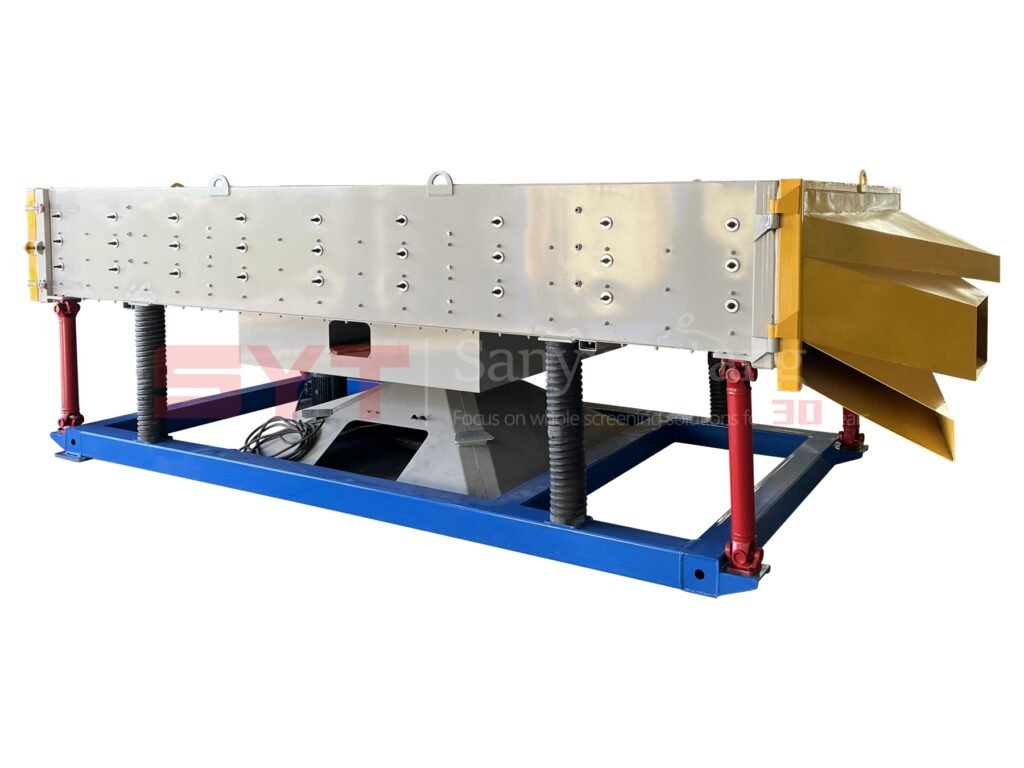
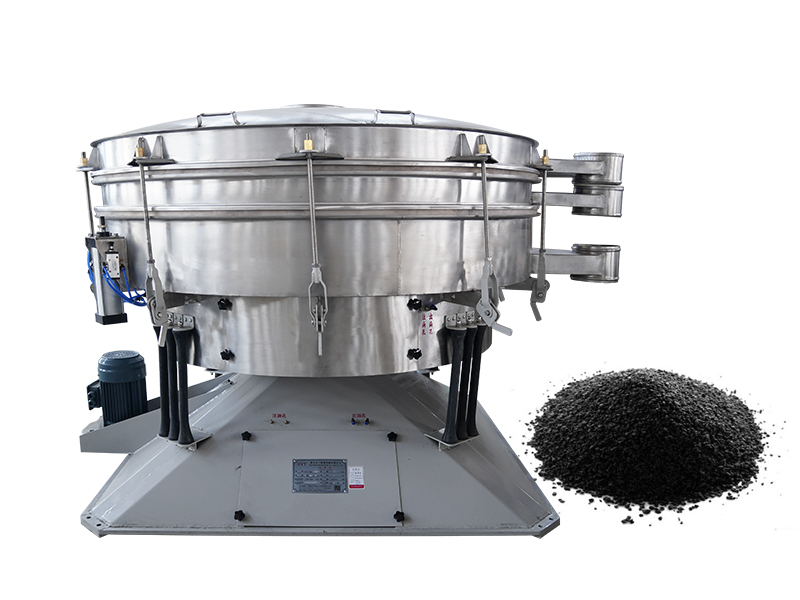
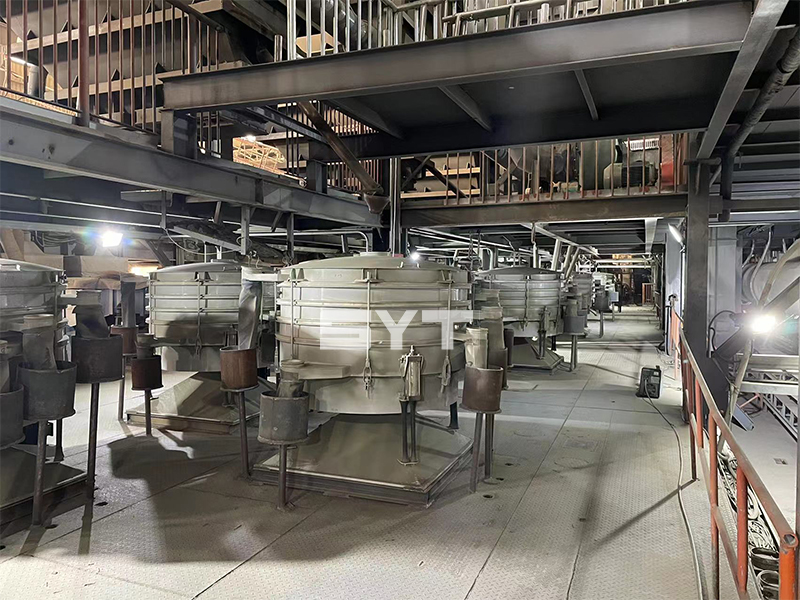
The gyratory screener (often engineered as a rectangular or square design) provides a near-horizontal, gentle sifting motion. It is premier equipment for large-scale, high-purity industrial screening where material degradation must be avoided.
- Working Principle: It combines a circular motion at the feed end, changing gradually to an elliptical motion in the center, and finally a straight-line motion at the discharge end. This keeps material in constant contact with the mesh without bouncing it.
- Target Materials: Large capacity, high-purity dry materials. Extensively used for urea pellets, bulk fertilizers, granulated sugar, salt, activated carbon, and premium frac sand.
- Key Technical Advantage: Exceptionally high screening purity, gentle motion prevents fragile material from breaking, and massive throughput per square meter of screen area.
Industrial Screeners Selection & Comparison Guide
Choosing the right industrial screening equipment depends heavily on your material characteristics, required capacity, and accuracy. Below is a quick comparison table to help you select the best fit for your production line:
| Screener Type | Motion Principle | Best For (Materials) | Screening Accuracy | Throughput Capacity |
| Ultrasonic Screener | High-frequency ultrasonic waves + 3D vibration | Superfine powders, sticky, electrostatic or blinding-prone materials. | Extremely High | Medium / Low |
| Circular Vibrating Screener | Three-dimensional continuous circular motion | General dry bulk powders, coarse granules, and common food ingredients. | Medium to High | High |
| Inclined Screener Machine | Gravity assistance + high velocity linear vibration | Wet ores, high-viscosity mineral slurries, ceramic glazes, and dewatering. | Medium | High |
| Linear Vibrating Screener | Straight-line forward jumping motion via dual motors | Quartz sand, aggregates, plastic pellets, and multi-stage dry grading. | Medium | Very High |
| Gyratory Screener | Horizontal plane gyratory-reciprocating motion | Urea, fertilizers, sugar, frac sand requiring high purity and minimal degradation. | High | Massive / Bulk |
Conclusion
These different types of industrial screeners play an important role in different industries and applications. They meet the screening needs of different materials through different working principles and structural designs. Ultrasonic screening machines are suitable for fine and sticky materials, vibrating screens for granular and powdery materials, inclined screening machines for wet materials, linear screens for high precision screening, and rotary screening machines for high humidity and high viscosity materials. Each type of industrial screeners machine has its unique advantages and application scenarios, with a wide range of models to meet the diverse needs of various industries.
If you want to know more about industrial screeners, or need customised solutions for specific industries and materials, you can directly consult us online. We always welcome your enquiry and provide professional technical support and service!
Email: info@sanyuantang.com
Phone: +86-18639095165