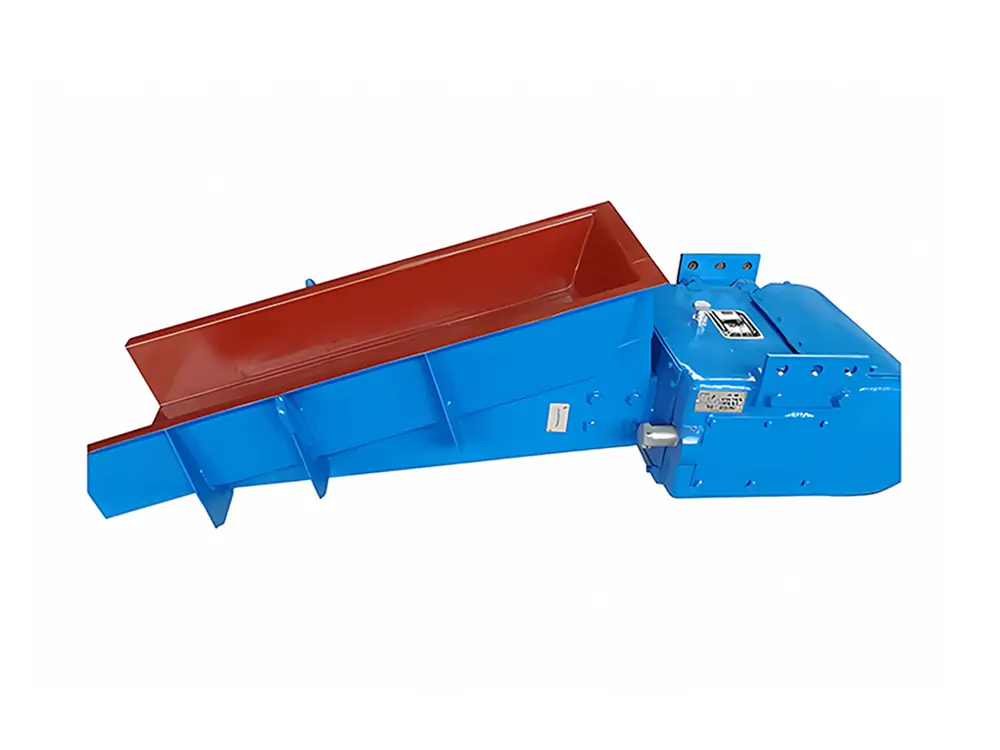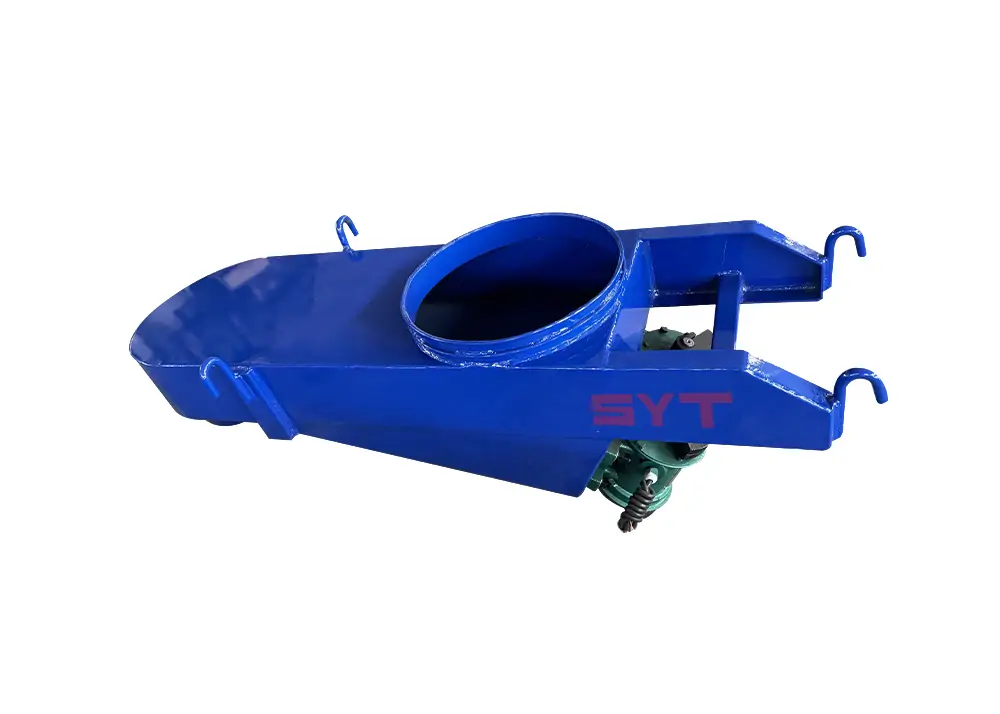
The electromagnetic vibrating feeder coil is a key component of the electromagnetic vibrating feeder, which is a conveying device used to uniformly and quantitatively convey bulk materials or components in a controlled and consistent manner. The coil is responsible for generating the electromagnetic force that drives the feeder to vibrate, allowing the material to move smoothly and efficiently. This article will deeply analyze the structure, working principle, technical characteristics and usage precautions of the electromagnetic vibrating feeder coil to help you better understand and apply it.

Structure of electromagnetic vibrating feeder coil
Electromagnetic vibrating feeder coil is mainly composed of the following parts:
Coil skeleton
The coil skeleton is the basic structure to support the enameled wire, usually made of insulating material with good heat resistance and mechanical strength.
Enameled Wire
Enameled wire is the core part of the coil and forms the electromagnetic field by winding on the backbone. The material of the enameled wire and the winding process directly affect the performance of the coil.
Insulating Paper
Insulating paper is used to wrap the enameled wire to prevent the coil from short-circuiting or leaking electricity.
Iron core
Iron core is an auxiliary part of the coil, when the coil is energized, the iron core will be attracted, thus generating vibration; when the power is cut off, the iron core is released and the vibration stops.
The working principle of electromagnetic vibrating feeder coil
The working principle of electromagnetic vibrating feeder coil is based on electromagnetic induction. According to the type of current, the coil is divided into DC and AC:
Direct current coils
The current magnitude of DC coils follows Ohm’s law (I=U/R), and its impedance is mainly determined by the resistance of the coil. DC coils are usually designed with a fine wire diameter and a high number of turns to ensure a stable current.
AC Coils
The current magnitude of an AC coil is determined by the impedance, which consists of the coil resistance and inductive reactance (I=U/(R+jL)). AC coils are usually designed with thicker wire diameter and fewer turns to adapt to the characteristics of alternating current.
In practice, DC and AC coils are not used interchangeably. When DC coils are used in AC systems, they may not work properly due to excessive inductive reactance; when AC coils are used in DC systems, they may be burned out due to low resistance.
Technical Characteristics of Electromagnetic Vibrating Feeder Coils
Voltage range
The working voltage range of electromagnetic vibrating feeder coils is usually 85% to 110% of the rated voltage, which ensures stable operation of the equipment under different voltage conditions.
Environmental adaptability
The coils are suitable for environments with an altitude of no more than 2000 meters, temperatures between -15℃ and +40℃, and relative humidity of no more than 90%. In addition, the coil should avoid contact with corrosive gases or dust.
Protection class
The protection grade of the attraction coil is generally IP00, which is suitable for occasions without special protection requirements.
Installation and use of electromagnetic vibrating feeder coil

Installation Precautions
- Before installation, check whether the rated voltage, model and specification of the coil match with the equipment.
- Ensure that the coil and the core are well matched and the movable bracket is flexible and free of stagnation.
Precautions for use
- Before use, check whether the power supply wiring is firm, to avoid poor contact leading to equipment failure.
- Regularly check the working condition of the coil and replace worn or aged parts in time.
Electromagnetic vibrating feeder coil models and scope of application
Electromagnetic vibrating feeder coils have various models, the common ones are GZ1 to GZ9 series. These coils are suitable for AC 50Hz, voltage 220V to 380V circuit, widely used in mining, metallurgy, chemical industry, building materials and other industries.
| Coil model | Outer diameter length | Inner diameter length | Outer diameter width | Inner diameter width | Height | Coil wall thickness | Number of turns | Wire diameter | Indicated current | Working current | Power | Cross-sectional area | Feeder weight | Coil weight |
|---|---|---|---|---|---|---|---|---|---|---|---|---|---|---|
| GZ1 | 100 | 60 | 79 | 35 | 60 | 20 | 85 | 0.83 | 1 | 1.34 | 0.06 | 0.542 | 73 | 1.3 |
| GZ2 | 142 | 90 | 91 | 39 | 68 | 20 | 480 | 1.4 | 2.3 | 3 | 0.15 | 1.542 | 143 | 2 |
| GZ3 | 157 | 110 | 100 | 50 | 60 | 25 | 300 | 1.74 | 3.8 | 4.58 | 0.2 | 2.382 | 217 | 2.6 |
| GZ4 | 185 | 139 | 114 | 70 | 60 | 20 | 161 | 2.1 | 7 | 8.4 | 0.45 | 3.462 | 412 | 2.8 |
| GZ5 | 225 | 175 | 130 | 80 | 54 | 30 | 105 | 2.63 | 10.5 | 12.7 | 0.65 | 5.432 | 656 | 3.6 |
| GZ6 | 254 | 182 | 208 | 136 | 55 | 35 | 118 | 1.68×2.83 | 13.3 | 16.4 | 1.5 | 4.752 | 1252 | 5 |
| GZ7 | 312 | 242 | 226 | 156 | 54 | 30 | 68 | 2.1×3.8 | 20 | 24.6 | 3 | 7.982 | 1920 | 5.6 |
| GZ8 | 334 | 266 | 274 | 206 | 58 | 30 | 46 | 2.44×4.7 | 32 | 39.4 | 4 | 11.52 | 3040 | 6.2 |
| GZ9 | 376 | 306 | 276 | 206 | 57 | 30 | 38 | 2.63×5.5 | 38.6 | 47.6 | 5.5 | 14.52 | 3750 | 6.8 |
Applicable environmental conditions
- Altitude: ≤2000 meters
- Temperature range: -15°C to +40°C
- Relative humidity: ≤90%
- No corrosive gas or dust
Transportation and storage of electromagnetic vibrating feeder coil
Transportation Precautions
- The coil should avoid rain and moisture during transportation.
- When loading and unloading, it should be gently carried and put down, and it is forbidden to throw it to avoid damaging the coil.
Storage Precautions
- The coil should be stored in a ventilated, dry warehouse with relative humidity not exceeding 80%.
- Avoid contact with acid, alkali and other corrosive substances to ensure the long-term stability of the coil.
Conclusion
Electromagnetic vibrating feeder coil as the core component of the equipment, its performance is directly related to the working efficiency and stability of the feeder. By understanding the structure, working principle, technical characteristics and precautions for the use of the coil, you can better maintain and use the electromagnetic vibrating feeder, extend the service life of the equipment and improve production efficiency.
If you need to customize electromagnetic vibrating feeder coil or have any related questions, please feel free to contact us! We will provide you with professional technical support and solutions.
Email: info@sanyuantang.com
Phone: +86-18639095165