
Rice sieving in a rice mill separates material by differences in size and passage through a screen. It can remove coarse impurities, extract fines and make some whole-rice and broken-rice separations. It is not household rice washing, and it does not replace destoning, magnetic separation or optical sorting. At Sanyuantang, we first establish whether the feed is paddy, brown rice or milled rice, then discuss the grain shape, hourly requirement and intended product grade.
Start with the Rice Sieving Task, Not the Mesh Number
A safety sieve intercepts contaminants with a clear size difference from the rice, such as large agglomerates or coarse packaging-related debris. A finer deck may remove small fragments. Stones similar in size to the rice can follow the same outlet, however, because the screen does not identify their composition.
| Process objective | Main separation basis | What it does not replace |
|---|---|---|
| Coarse cleaning and fines removal | Size difference between rice and unwanted material | Detection of same-size stones or non-magnetic metals |
| Whole-rice and partial broken-rice separation | Grain shape, dimensions and passage through the aperture | Strict length grading |
| Destoning | Density difference with suitable airflow and stratification | Screen integrity checks or colour sorting |
| Magnetic and optical sorting | Magnetic or visual properties, respectively | Complete removal of every type and size of foreign matter |
Screening belongs within the cleaning line, not in place of the entire food-safety process. Assess metal controls against the contaminant and detection requirement: magnets do not capture every metal. Similarly, a vibrating sieve cannot identify discoloured grains as an optical sorter does.
Broken Rice Separation Is Not the Same as Length Grading
Whole and broken kernels may have similar widths but different lengths. A long grain can approach an opening end-first, while a broken piece may remain on the deck because of its orientation or the surrounding bed. Ordinary screening can therefore make useful size separations without delivering a strict length grade. Adding another deck does not automatically solve this limitation.
Define the grade before choosing the opening. Replace “less broken rice” with an agreed grain type, incoming whole-to-broken ratio, permitted broken content in the main product and maximum acceptable whole-rice loss to the other outlets. Otherwise, a cleaner-looking product may simply mean that more valuable rice has been rejected.
The FAO-hosted NFA milled-rice specification (1980, historical reference) illustrates why definitions matter: it distinguishes grain classes and broken fractions by specified criteria. It is a historical, country-specific example, not a current universal specification. Use the standard and buyer requirements applicable to your market, rather than copying its thresholds into a new purchase contract.
Choose a Rice Sieving Machine Around the Grain and Line Position
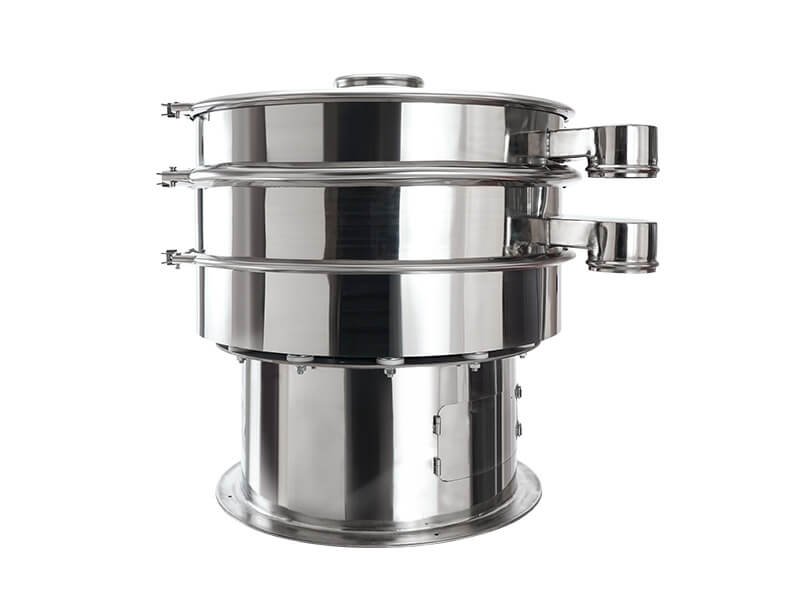
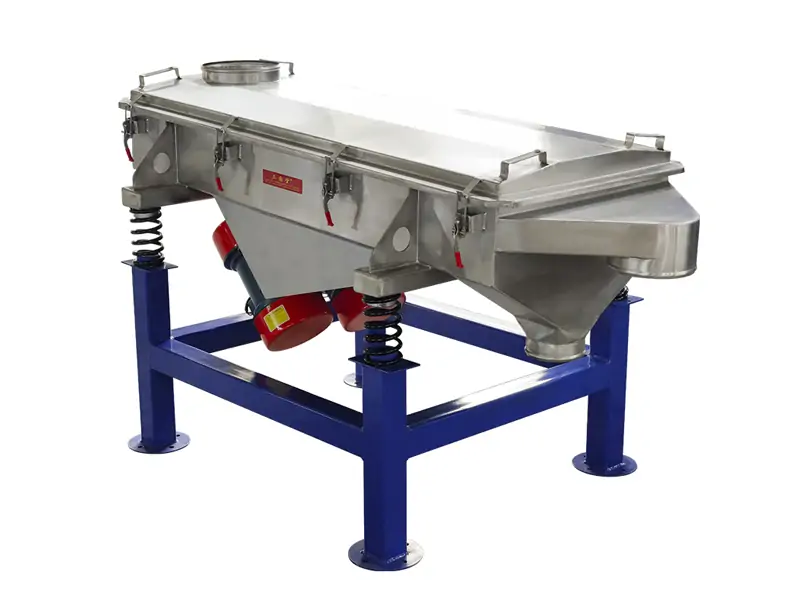
Our SY rotary vibrating screen is a candidate for small- to medium-scale checking or grading of suitable grain. Where a continuous, longer screening bed and multiple outlets are needed, we can evaluate the SYZ linear vibrating screen. Suitability for the actual whole-grain rice must be established by trials. Rice-flour capacities and mesh settings cannot be transferred to intact kernels.
- Grain condition: variety, length-width-thickness distribution, processing stage, moisture condition and adhering powder.
- Screen specification: round perforations, slots or woven mesh; actual aperture dimensions, open area and wear condition.
- Acceptance targets: hourly feed, product fractions, whole-rice recovery and permitted additional breakage.
- Line interfaces: even feeding, inlet and outlet drops, collection arrangements and cleaning access.
The installation point changes the job. Paddy precleaning mainly protects downstream equipment. Post-milling grading focuses on product fractions and broken content. Prepacking screening emphasises product checks and mesh integrity. We review the process position before discussing screen dimensions or discharge arrangements.
There is no single rice sieve mesh for every long-grain or round-grain variety. Select the opening shape and dimensions with the sample, then weigh and inspect every outlet. A thick feed bed reduces opportunities for small material to reach the openings. Excessive drops or unsuitable motion can increase breakage; faster discharge is not the only target.
See our stainless-steel linear vibrating screen for an overview of a product type discussed above. This is an equipment introduction, not a whole-rice grading trial. Aperture selection, whole-rice recovery and additional breakage still need to be checked with representative rice.
Validate Rice Grading Machine Performance and Cleaning
Run representative rice at the proposed feed condition. Record the input and each outlet mass, sample every fraction for whole rice, broken rice and impurities, and check whether acceptable grain is being rejected. Compare breakage before and after the trial so that incoming broken kernels are not all attributed to the machine.
- Whole-rice loss is high: check aperture shape, grain orientation and feed-bed thickness.
- Broken-rice carryover is high: inspect the openings, mesh condition and residence conditions.
- New breakage increases: examine transfer drops, upstream handling and the permitted motion settings.
When the cause is unclear, send us the rice type, outlet sample photographs and sampling results. We can first establish whether the problem concerns screening, upstream processing or the definition of the product grade.
For food use, check the mesh, seals and cleaning components as well as the main contact surface. A stainless-steel appearance is not evidence that every food-contact requirement has been met. Include welds, joints, cleaning access and supporting documentation in the review. Operators should inspect mesh integrity and clear retained material at the agreed batch or daily intervals. If a screen breaks, isolate and trace potentially affected rice rather than only replacing the mesh and restarting.
Rice Sieving FAQs
Can Rice Sieving Remove All Stones?
No. Stones close to the rice in size can pass through the same opening or remain in the same fraction. Assess destoning and other suitable cleaning steps, then verify the finished product with representative samples.
Is Rice Flour Screening the Same as Rice Safety Sieving?
No. Rice flour is a fine-powder duty, often involving adhesion and agglomeration. Whole-rice screening places more emphasis on grain shape, whole-to-broken separation and additional breakage. Do not reuse the same mesh or capacity promise.
What Mesh Size Should a Rice Sieving Machine Use?
Specify the actual aperture and opening shape from the rice dimensions and separation target. Test the proposed screen against the required grade and whole-rice recovery; a mesh number alone is insufficient.
Can a Vibrating Sieve for Rice Replace a Length Grader?
Not where the requirement is a strict length-based grade. Screening depends on passage through an opening and grain orientation. Dedicated length grading may still be needed even after size screening.
How Can a Rice Mill Check Whole-Rice Loss?
Weigh every trial outlet and assess its whole and broken fractions using the agreed method. Compare the amount of whole rice in the feed with the amount recovered in the intended product, while recording residual material and sampling uncertainty.
Conclusion
Rice sieving is useful when the task is defined by size separation and the trial confirms the intended grade without excessive whole-rice loss or new breakage. It is not an all-in-one substitute for destoning, length grading or colour sorting. Share your rice variety, processing stage, hourly feed and required fractions with Sanyuantang. We will discuss candidate screens and a representative test, and make the limits clear before agreeing a configuration.
Sanyuantang Support for Rice Screening Projects
At Sanyuantang, we manufacture screening and conveying equipment in Xinxiang, Henan. For rice projects, our work starts with the grain, the position in the mill and the fractions the customer needs to collect. Laser cutting, welding, bending, drilling and CNC machining support equipment manufacture and interface customisation. Material trials and video reviews help us discuss grain recovery, discharge and cleaning arrangements before purchase. The final contact materials, screen structure, capacity and acceptance criteria belong in the agreed technical proposal; they are not inferred from a general food-industry application.
