
A honey vibrating sieve filter can be evaluated for removing wax fragments and other oversize impurities, but its diameter alone does not establish honey throughput. Viscosity, temperature, crystallisation, impurity loading and mesh construction all affect passage. At Sanyuantang, we start with what you want to remove and the conditions under which your honey must be handled. We do not use the output of another liquid, or another manufacturer’s filter, as a honey-capacity guarantee.
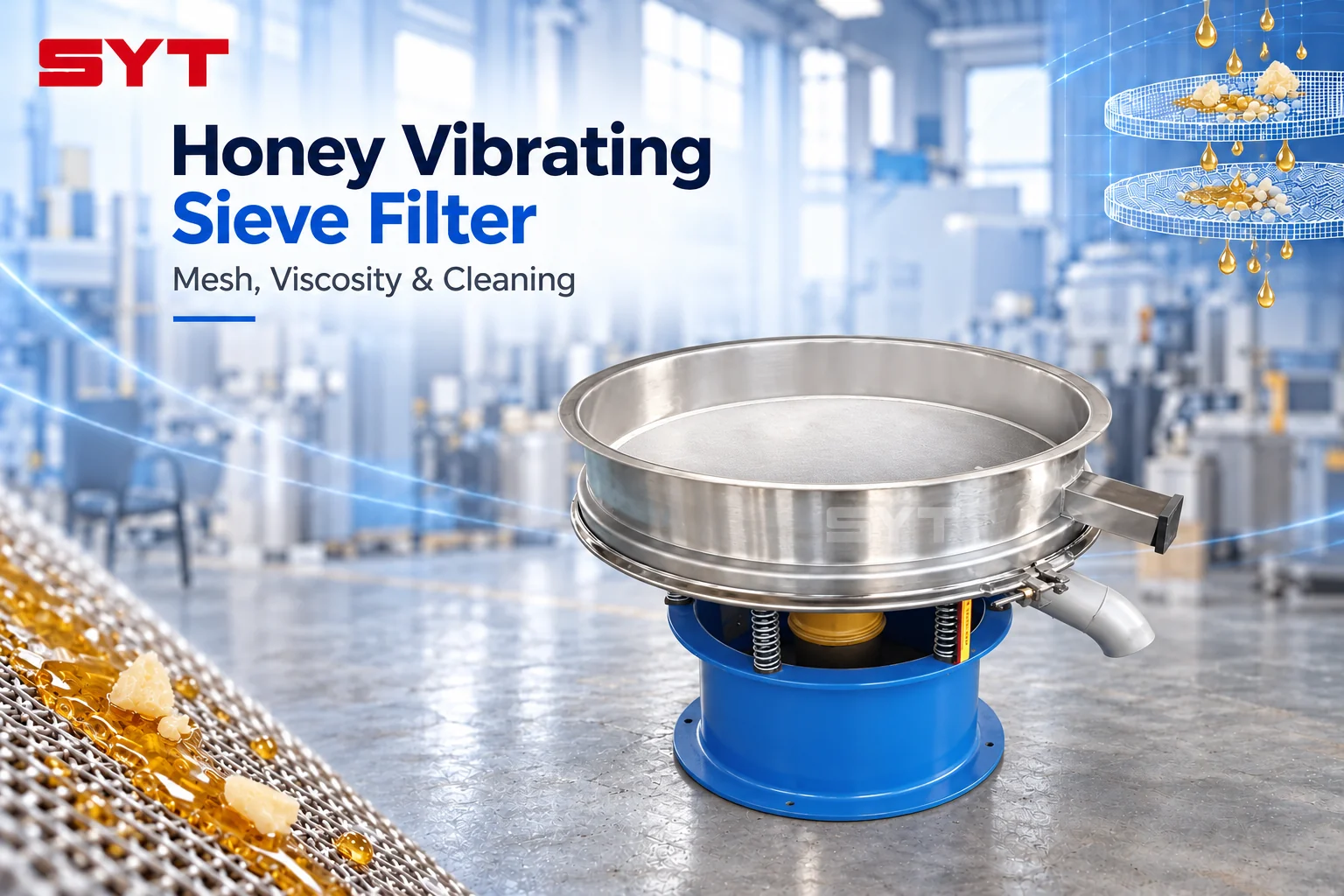
Which Honey Filtering Machine Matches Your Process?
Gravity straining, vibrating screening and mechanical self-cleaning filtration are different processes. Choose between them before comparing a quoted flow rate.
| Equipment type | How it works | What to check before selection |
|---|---|---|
| Gravity double sieve | Honey flows through coarse and fine screens under gravity | Flow at actual viscosity, manual debris removal and dismantling for cleaning |
| Vibrating sieve filter | Vibration assists distribution and passage across the mesh | Sustained flow, wax accumulation and cleaning intervals; not automatic scraping |
| Mechanical self-cleaning filter | A dedicated mechanism cleans the filtering surface | Required feed conditions, pressure, reject removal and cleaning method for that design |
In a vibrating sieve, honey and material small enough to pass the apertures move to the undersize outlet. Larger wax pieces remain above the screen or enter the relevant reject path. Vibration assists the process; it does not force every viscous honey through any fine mesh. Screening is not sterilisation, and it does not remove dissolved substances or guarantee removal of microorganisms and all small contaminants.
Watch the liquid level, the discharge and the retained wax. A rising level or a steadily declining flow is a reason to investigate, not to keep feeding until the machine overflows. Ordinary vibration should not be described as a maintenance-free, continuously self-cleaning scraper system.
Choose Honey Filter Micron Size from the Impurity Target
First identify the material to retain, then specify the actual aperture in micrometres. Mesh count is not a standalone micron value: wire diameter and weave change the opening and open area. Confirm the mesh, supporting structure and usable screening area rather than asking only for a finer mesh.
A coarse-then-fine arrangement may help when wax loading is high because it reduces the burden on the fine stage. If incoming honey is already clean, an extra stage may simply add resistance, retained honey and washing work. Compare impurity removal, honey loss and cleaning frequency together.
Pollen retention depends on pollen and agglomerate dimensions, the openings, any filter cake and operating conditions. Neither “all pollen retained” nor “all pollen removed” follows from using vibration. Fine sieving is not automatically ultrafiltration, and a filtering method does not establish compliance with a “raw honey” or other product label.
The Codex overview of the Standard for Honey explains that honey quality includes composition, water-insoluble solids, hygiene and labelling. Removing visible wax is only one part of that wider quality assessment. Your quality team should confirm the applicable product and market requirements separately from machine selection.
Verify Honey Vibrating Sieve Filter Capacity with a Sustained Trial
Cold honey generally flows less readily. Crystals and wax deposits can make passage more difficult still. Temperature adjustment can change flow, but the permitted temperature and holding time must come from the customer’s process and quality requirements. We do not specify one universal heating temperature simply to raise output.
- Honey sample: source or type, moisture condition, actual temperature and degree of crystallisation.
- Impurities: wax and other retained material, approximate dimensions and loading.
- Production: batch quantity or continuous requirement, feeding method and permitted cleaning interval.
- Acceptance: actual aperture, filtered-product checks, retained-honey loss and any required quality tests.
Test long enough to see wax accumulation and the change in flow. A brief startup peak does not establish a sustainable hourly rate. Record screened output, liquid buildup, material remaining in the unit and time spent cleaning. Where batch operation is intended, include loading, draining and cleaning in the cycle rather than reporting filtering time alone.
If flow falls, investigate honey temperature, crystallisation, wax covering the mesh and feed fluctuations before assuming the motor is too small. A larger motor does not remove the underlying restriction. If viscosity data are unavailable, send us a flow video and honey-condition details at the actual operating temperature so we can discuss what further measurements a useful trial needs.
Sanyuantang Honey Sieve Options and Hygienic Design Checks
The SY rotary vibrating screen covers general powder, granule and liquid screening. Our SYT high-frequency filter vibrating screen is another liquid-screening candidate with stainless-steel configurations in the product range. These general product descriptions are not honey-specific validation. The proposed series, aperture, seals and discharge arrangement must be confirmed against the actual honey sample.
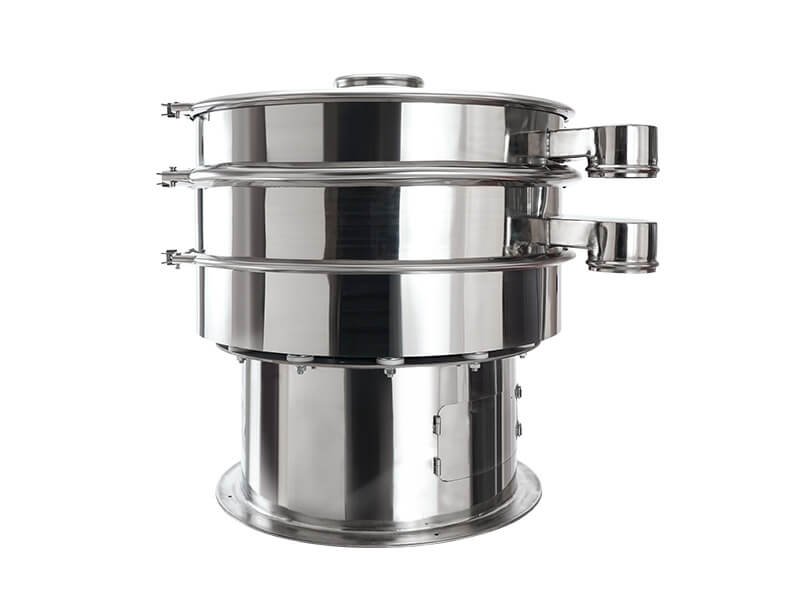
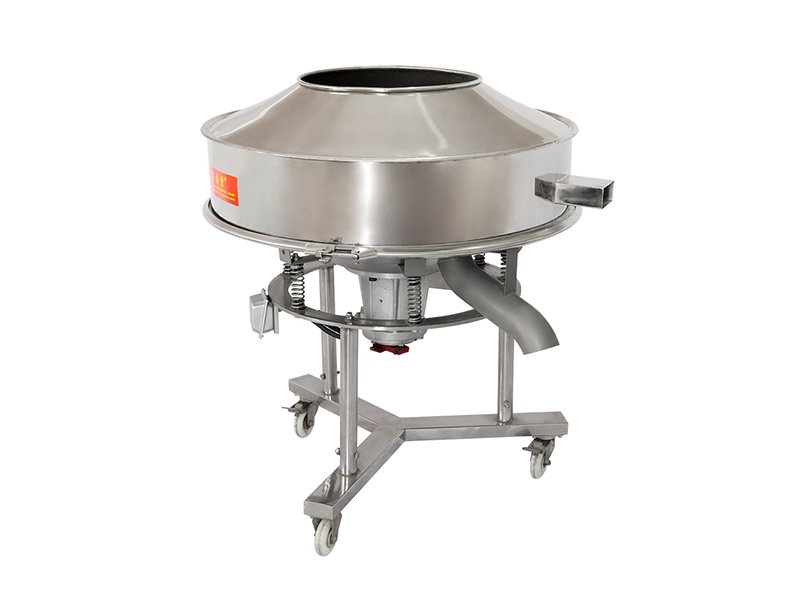
The video below introduces our high-frequency vibrating filter screen. Use it to review the equipment arrangement, not as evidence of honey-specific flow or filtration results. Those depend on the actual honey, aperture and operating conditions.
Stainless steel is a starting point, not the complete hygiene specification. Check the mesh, seals and all contact components, their documentation, welds, joints, drainability and access for removing deposits. A unit that can be dismantled is not necessarily designed for cleaning in place. Do not assume that CIP connections or a validated CIP cycle are included.
Agree the cleaning agent, temperature, dismantling method and drying procedure for the supplied configuration and food-hygiene programme. Inspect for wax and cleaning residues before restart. Remaining detergent or wash water must not contaminate the next honey batch. Where changeovers or difficult deposits are expected, review access and residual honey during the trial, not after installation.
Related Honey Processing Video: Keep Concentration Separate from Sieving
Our official channel includes Honey Processing Machine: Sanyuantang official video. It describes vacuum concentration as part of honey processing. This is related process context, not a vibrating-sieve filtration test, and its stated functions or performance must not be transferred to a standalone screen. Concentration addresses moisture; a sieve addresses passage by aperture. If your line needs both, ask us to review the process sequence and the separate equipment scope.
Honey Vibrating Sieve Filter FAQs
Will a Vibrating Honey Filter Remove All Pollen?
That cannot be guaranteed from the machine type. Check the actual aperture, pollen condition and product requirement. If pollen retention is a quality or sales requirement, use an appropriate verification method rather than a mesh label alone.
Why Does Cold Honey Filter Slowly?
Higher viscosity increases flow resistance, while crystals and wax deposits can further restrict passage. Confirm the honey condition and permitted processing temperature before choosing conditioning, coarse straining or another configuration.
What Is the Best Honey Filter Micron Size?
There is no universal best aperture. Choose it from the impurities to retain and the required product, then compare stable flow, honey loss and cleaning frequency with a representative sample.
Is a Honey Vibrating Sieve Filter Self-Cleaning?
Vibration can assist passage but does not mean the equipment automatically scrapes off wax or never needs stopping. Check the exact cleaning mechanism, reject route and permitted maintenance interval in the proposal.
Can a Stainless Steel Honey Sieve Be Cleaned in Place?
Only if that function is explicitly designed and confirmed for the supplied unit. Dismantling for washing is not CIP. Review cleaning coverage, drainage, seals and the agreed procedure before specifying this requirement.
Conclusion
Choose a honey vibrating sieve filter by the target impurity, actual aperture and stable performance at your permitted honey conditions. Diameter and startup flow are not enough. Share your honey condition, temperature, aperture target and hourly or batch requirement with Sanyuantang. We can review rotary or high-frequency candidates, plan a meaningful trial and agree the cleaning and acceptance requirements without treating a general catalogue as honey test data.

Sanyuantang Manufacturing Support for Honey Filtration
At Sanyuantang, our Xinxiang factory manufactures screening and conveying equipment and reviews configurations around the material and the production line. For honey enquiries, we focus on the contact parts, screen support, feeding, drainage and dismantling access alongside the separation itself. Fabrication facilities include laser cutting, welding, bending, drilling and CNC machining. We can discuss material trials and use video communication to review the proposed arrangement with customers. Honey-specific flow, cleaning performance and any additional processing functions require separate confirmation in the technical proposal; they are not implied by a stainless-steel exterior.