
At Sanyuantang, we recommend judging a screen by product quality and recovery as well as hourly throughput. Check how much of the target size fraction is recovered, how much out-of-size material enters the product and how much useful material leaves in the reject. Define the metrics and sampling method before comparing machines to reduce disputes about output that meets a quantity target but fails the product requirement.
This guide uses dry size separation on a single screen deck with undersize and oversize streams. For multiple decks, record each stage and product stream. For wet material, first establish a common dry basis or another agreed basis; masses with different moisture contents should not be combined directly in the same calculation.
How throughput differs from separation performance
Throughput measures feed entering the equipment per unit time, commonly in kg/h or t/h. It describes processing rate, not whether the separation is accurate. Undersize yield measures the share of feed reporting to the undersize stream; it is not the same as recovery of the fine fraction.
Yield can change because the screen behaves differently, but it also changes when the feed contains a different proportion of fines. Yield from different feed batches cannot by itself establish which machine performs better.
“Screening efficiency” can have different definitions. A procurement specification should state whether it means target-size recovery, correct placement or another agreed metric, and give the formula. An undefined percentage can leave the buyer and supplier using different denominators.
| Metric | What it describes | What to check |
|---|---|---|
| Feed throughput | How much feed is processed per unit time | Same operating period and mass basis |
| Undersize yield | Share of feed reporting to undersize | Not the same as fine-particle recovery |
| Fine-particle recovery | Share of feed fines recovered in undersize | Feed and undersize particle-size data are needed |
| Product oversize content | Coarse material entering undersize | Relate it directly to the product requirement |
| Correct placement | Material reporting to the intended outlet | Include both fine and coarse fractions |
How to define the separation size and test method
Agree the size boundary used to classify fine and coarse particles, then specify sampling, sample reduction and analysis. The production screen’s nominal aperture and the acceptance analysis need a clear relationship. Mesh count alone does not establish the achieved separation.
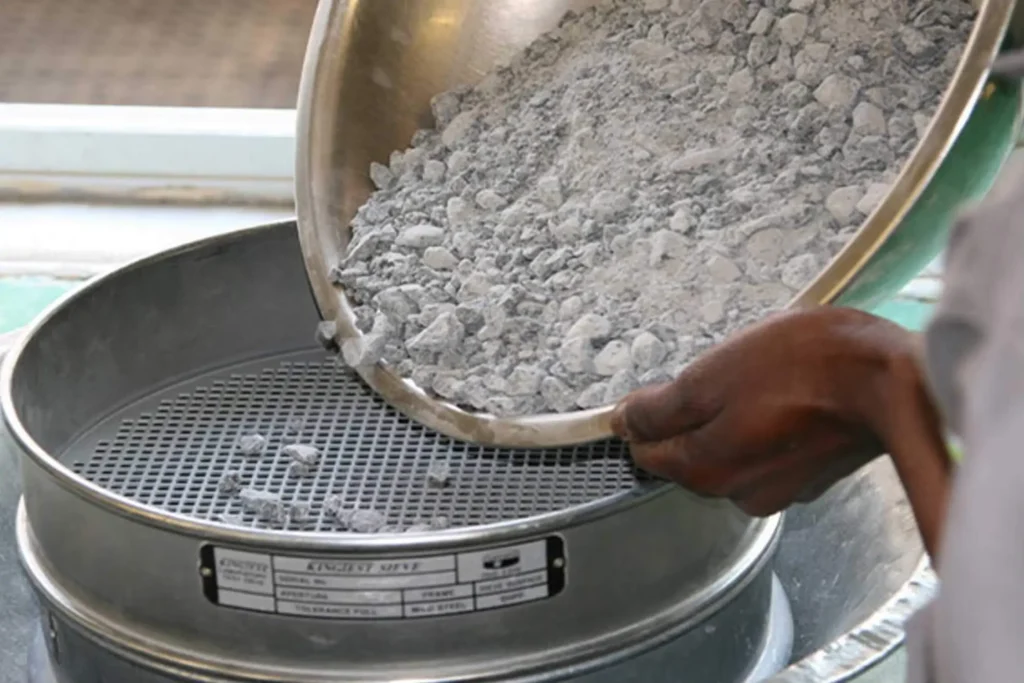
When using test sieves, specify aperture size, sieve equipment and the procedure. For agglomerating, fragile or elongated material, define how agglomerates are handled and whether analysis may change the particles. Results from different methods should not be mixed without validation.
Our screen mesh and aperture guide can help identify aperture terminology. Acceptance testing measures actual material distribution between the outlets; a size table does not replace that test.
How to measure feed and both product streams
Use F for feed mass flow, U for undersize and O for oversize, all in kg/h. Let a, b and c be the mass fractions below the agreed separation size in the feed, undersize and oversize respectively. Enter 80% as 0.80 in the formulas.
Once the continuous trial is stable, measure all three streams over the same time window and take representative samples using the agreed procedure. Avoid a surface grab from the undersize stream or pairing a pre-start feed sample with an outlet sample taken much later.
Check at least these two balances:
- Total mass balance: F ≈ U + O.
- Fine-particle balance: F × a ≈ U × b + O × c.
Compare discrepancies against measurement and sampling uncertainty and any accumulation in the system. Investigate weighing, leaks, collected dust, retained material and sample representativeness before claiming performance from data that do not close.
Include dust collection, external returns and any other outlet separately when present. The two-outlet model is incomplete if additional material streams are unrecorded.
Screening efficiency calculation formulas
The following formulas distinguish yield, recovery, product contamination and correct placement. They apply to the defined two-product size separation with a common mass basis. Report the definition alongside the percentage rather than labelling every result as the same efficiency.
| Metric | Formula | Basis |
|---|---|---|
| Undersize yield | U ÷ F × 100% | All feed |
| Fine-particle recovery | (U × b) ÷ (F × a) × 100% | All fines in the feed |
| Coarse content in undersize | (1 − b) × 100% | All undersize product |
| Coarse-particle recovery | [O × (1 − c)] ÷ [F × (1 − a)] × 100% | All coarse material in the feed |
| Correct placement | [U × b + O × (1 − c)] ÷ F × 100% | All feed |
Here, correct placement is the mass percentage reporting to the intended outlet. Report it separately from fine and coarse recovery. A metric is undefined when its denominator is zero; do not report a recovery percentage for a target fraction absent from the feed.
Worked example with a closed mass balance
This is an illustrative calculation, not performance data or a guarantee for a Sanyuantang model. Assume an agreed size boundary, the same dry basis for all streams and the same analysis method.
| Stream | Mass flow | Fraction below the separation size | Fine-particle mass flow |
|---|---|---|---|
| Feed F | 1,000 kg/h | 80% | 800 kg/h |
| Undersize U | 750 kg/h | 98% | 735 kg/h |
| Oversize O | 250 kg/h | 26% | 65 kg/h |
The total mass balance closes: 750 + 250 = 1,000 kg/h. The fines balance also closes: 735 + 65 = 800 kg/h. Coarse material in the oversize is 250 × 74% = 185 kg/h, compared with 200 kg/h of coarse material in the feed.
- Undersize yield: 750 ÷ 1,000 × 100% = 75%.
- Fine-particle recovery: 735 ÷ 800 × 100% = 91.875%, approximately 91.9%.
- Coarse content in the undersize: 2%.
- Coarse-particle recovery: 185 ÷ 200 × 100% = 92.5%.
- Correct placement: (735 + 185) ÷ 1,000 × 100% = 92%.
The hypothetical machine receives 1,000 kg/h and sends 750 kg/h to undersize. This does not mean fine recovery is 75%, nor does it mean 1,000 kg/h of accepted product has been produced.
Fines lost to oversize are 65 kg/h. That is 8.125% of feed fines or 6.5% of all feed, with different denominators. If fines are valuable product, investigate this loss. If the fine fraction also contains unacceptable components, additional product testing is needed.
To review a calculation with Sanyuantang, provide feed and outlet quantities measured over the same period, together with their particle-size results. This lets the discussion start with the calculation basis rather than an undefined efficiency percentage.
How acceptance priorities change with the screening task
Protective screening normally passes most feed while retaining a small amount of coarse contamination. When contamination is scarce, a calculated removal recovery can be sensitive to sampling error. Product contamination, screen integrity and useful-product loss in the reject deserve particular attention. The size-based formulas do not prove that every foreign object is removed.
Size classification requires checking particle-size distributions at each outlet, recovery and sustained throughput together. Feed containing more near-size particles makes representative testing especially important. An easily separated coarse-and-fine sample may overstate how the equipment will perform with production material.
If the purpose is to remove fines and retain coarse product, shift the emphasis to recovery and residual fines in the oversize. A change in the desired product outlet requires a change in the acceptance metrics.
How to make the trial represent production
Agree feed batch, moisture, size distribution, temperature, feeding method, screen configuration and quality targets before testing. Cover normal loading and relevant feed fluctuations or more difficult batches. Record sustained throughput after stable operation is reached and compare the beginning and later stages of the run.
A few buckets show only short-term performance under those conditions. They do not establish that prolonged operation will avoid blinding, accumulation or product loss. Choose the run length around the material behaviour and production cycle.
When comparing machines or configurations, keep the feed, separation size, analysis and quality target as consistent as possible. Changing aperture and feed rate at the same time prevents attributing every output change to machine construction.
What to record for repeatable equipment acceptance
A trial report should identify the machine and screen, operating settings, feed properties, measurement periods for all three streams, sample references, size-analysis results and calculation. Record screen condition before and after cleaning or replacement, including observed accumulation and blinding locations.
An acceptance requirement can specify sustained feed rate for an agreed material and screen configuration, with separate limits for product oversize content, target-fraction recovery and allowable loss. Include cleaning, reassembly and repeat-test results. Set the limits for the process rather than applying a universal efficiency percentage.
When quality is acceptable but throughput remains inadequate, use our guide to vibrating screen capacity factors to investigate feeding and operation. Test product quality again after adjustment so that a flow increase does not hide a wider separation boundary.
Frequently asked questions about screening efficiency
Does acceptable product quality mean recovery is also high
No. A screen can reject a large amount of useful fines and produce a smaller quantity of acceptable undersize. Examine product quality and recovery together.
Can fine-particle recovery be calculated without feed size data
Not accurately from undersize yield alone. The calculation needs the mass of feed fines, either measured directly or inferred from complete outlet data where mass-balance and sampling conditions hold. Representative feed sampling is preferable for formal acceptance.
How should two machines claiming high efficiency be compared
Ask for the definition, formula, sample conditions, throughput and analysis method. Percentages with different definitions are not directly comparable. Test the same feed against the same quality requirement and compare recovery, loss and sustained output.
Can wet and dry masses be used in the same calculation
Not without establishing a common basis. Different moisture contents can distort both the mass balance and recovery result. Agree a dry basis or another defined basis before using the data.
Is a short bucket trial enough for production acceptance
It can show short-term behaviour but cannot establish sustained performance through deposit buildup or a production cycle. Set the duration and operating conditions around the actual material and process.
Sanyuantang’s recommendation for a screening trial
Agree the quality target before discussing a higher throughput or a single efficiency percentage. Our recommendation is to define the product outlet and separation size, collect representative feed and outlet data, close the mass balance, and compare quality, recovery and sustained rate under the same conditions.
When you discuss a screening trial with Sanyuantang, prepare the material name, representative normal and more difficult samples, target size boundary, allowable out-of-size content, planned throughput and desired product outlet. Existing feed and outlet samples with measurement records can help connect equipment selection, trial results and purchase acceptance to the same requirements.
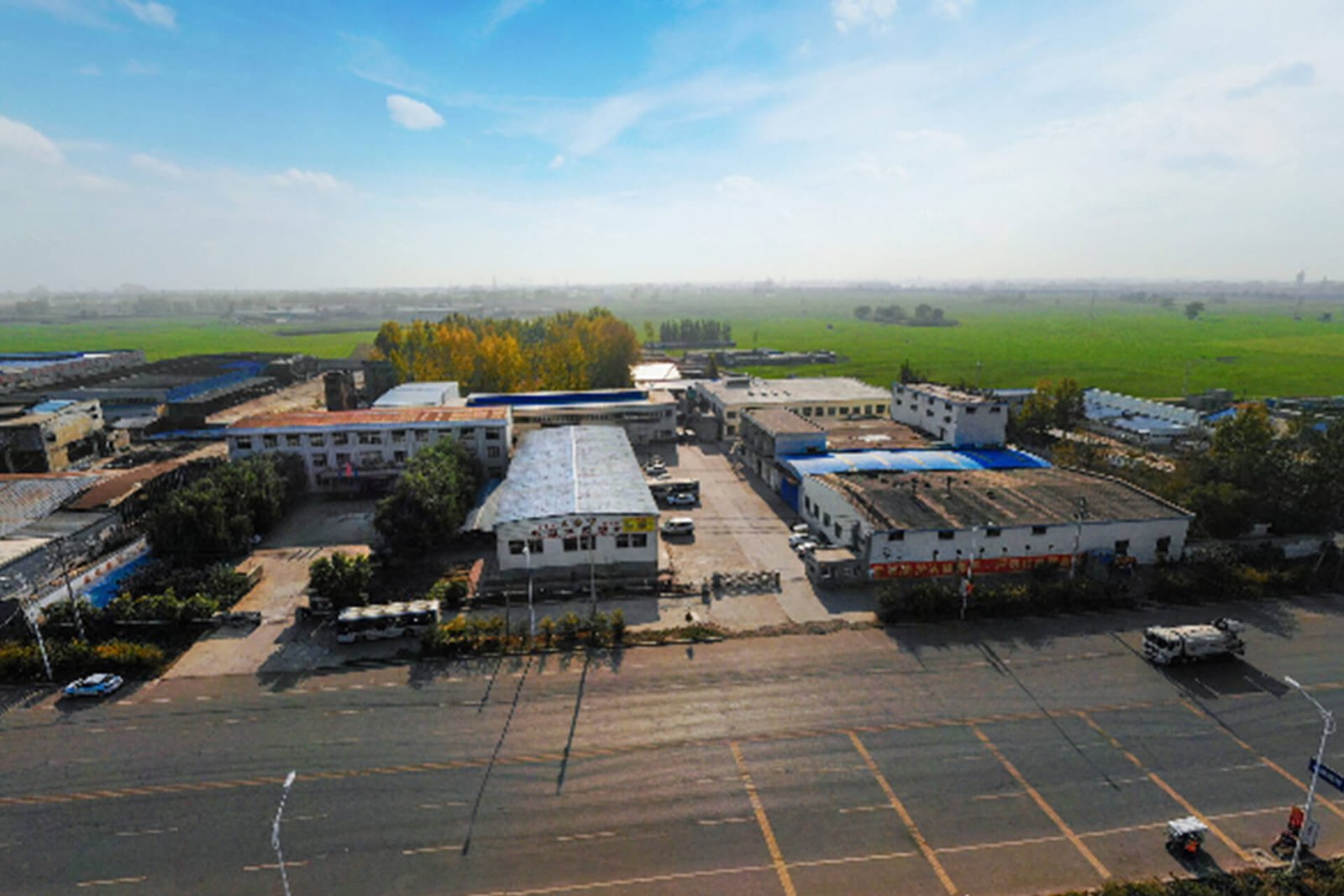
Sanyuantang manufactures screening and material handling equipment in Xinxiang, Henan, China. Learn more about our factory and discuss a material trial with our team before finalizing equipment acceptance requirements.
Email: info@sanyuantang.com
WhatsApp: +86-18639095165