Project Background
A powder metallurgy manufacturer in North America was developing upgraded self-lubricating oil-impregnated bearings for automotive micro motors, such as electric tailgates and windshield wiper systems. The production process required stable screening of fine copper powder. The material needed to be accurately classified into 500-mesh and 800-mesh copper powder fractions to ensure powder consistency during subsequent mixing, pressing, and sintering.
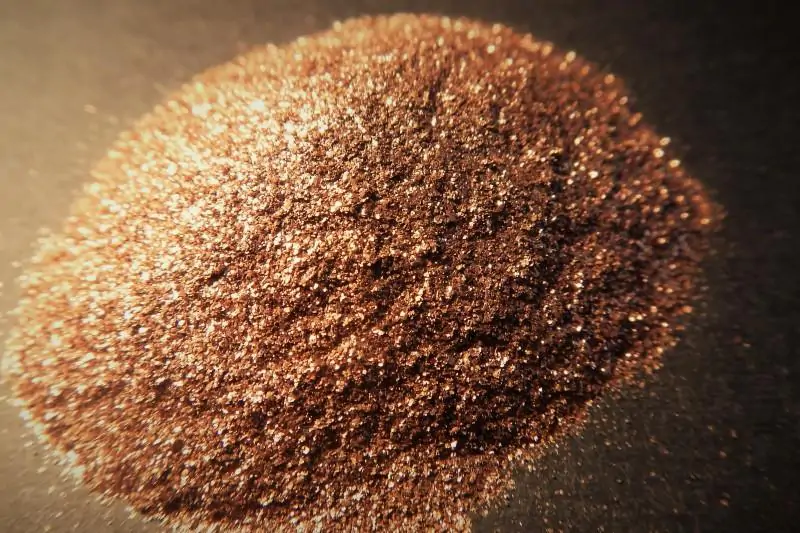
During the trial production stage, the customer found that traditional vibrating screens had difficulty maintaining continuous operation when handling this type of ultra-fine metal powder. Due to the small particle size and large specific surface area of copper powder, electrostatic powder adhesion and screen mesh blockage occurred easily during screening. This resulted in reduced screening efficiency, frequent shutdowns for manual cleaning, and unstable production performance.
Customer Screening Challenges
1. Screen Mesh Blockage Caused by Electrostatic Powder Adhesion
Fine copper powder has a small particle size and a large specific surface area. During the screening process, friction between particles can generate static electricity, causing some powder particles to attach to the screen mesh surface and gradually form agglomerates.
During the customer’s site testing, the traditional vibrating screen showed noticeable powder accumulation on the screen surface after approximately 20 minutes of continuous operation. Some mesh openings became blocked, screening efficiency decreased, and manual cleaning was required.
The main problems included:
- Fine copper powder easily adhered to the screen mesh surface;
- Agglomerated powder reduced the effective screening area;
- Screening efficiency gradually decreased during extended operation;
- Frequent manual intervention affected continuous production.
For 500 mesh and 800 mesh copper powder classification, even minor powder adhesion can affect separation performance and final powder consistency.
2. Frequent Manual Cleaning Increased Fine Mesh Maintenance Pressure
To maintain equipment operation, operators had to frequently stop the machine and manually clean the screen mesh surface.
This resulted in:
- Increased downtime during production;
- More operator involvement;
- Higher risk of damaging fine stainless steel mesh;
- Unstable screening accuracy after repeated cleaning.
For high-value metal powders, frequent replacement of damaged fine mesh creates additional maintenance costs.
Problem Investigation
Before selecting a screening solution, our engineering team analyzed the customer’s operating conditions, including copper powder characteristics, required mesh size, screening stability, and existing equipment performance.
Based on the information provided by the customer, we found that the main issue was not insufficient screening capacity. The key challenge was the unstable separation caused by fine copper powder adhesion and screen mesh blockage during continuous operation. The existing screening process required frequent manual cleaning, which affected production continuity and increased screen maintenance requirements. After evaluating the material characteristics and production requirements, we determined that an ultrasonic-assisted screening system was more suitable for this fine metal powder application.
Sanyuantang Solution
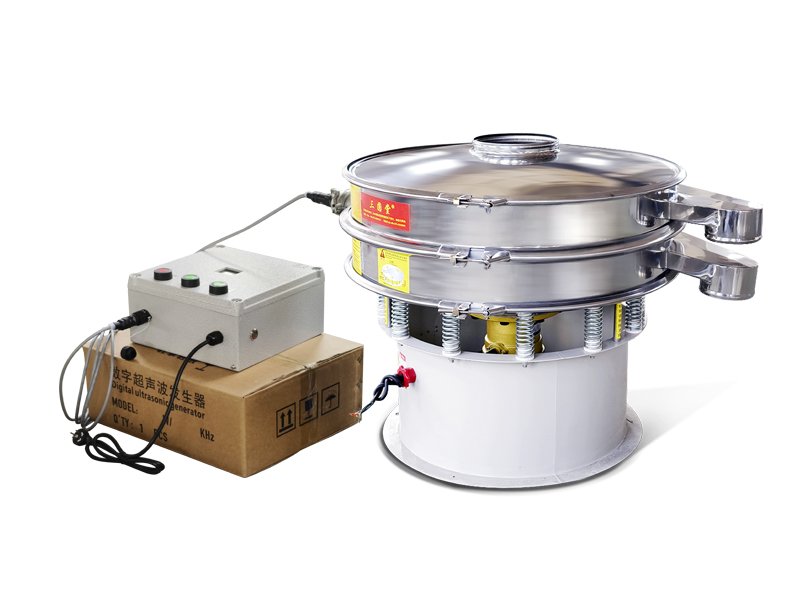
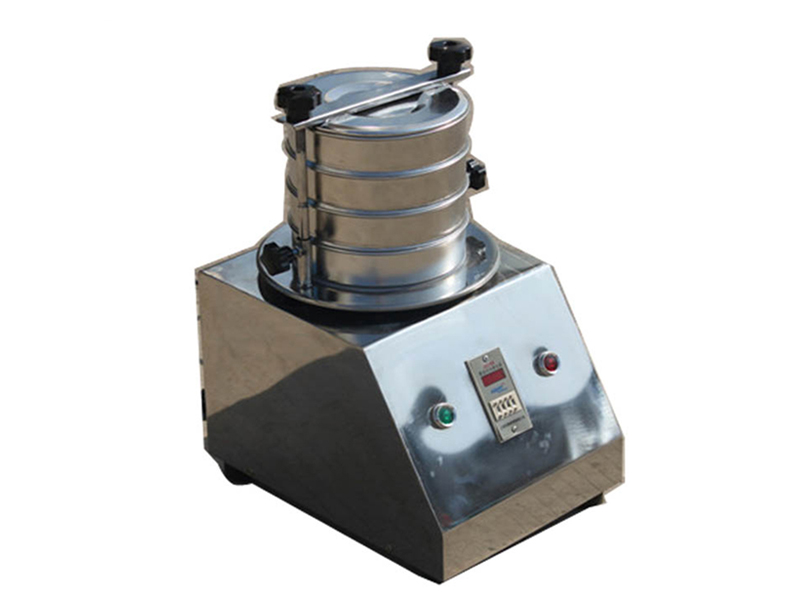
To address these issues, we recommended the Sanyuantang SY series ultrasonic vibrating screen, specifically the SYC-800-2S double-layer ultrasonic vibrating screen with dual ultrasonic systems.
Product reference:
https://sanyuantangcn.com/products/ultrasonic-vibrating-screen
For fine copper powder screening above 500 mesh, an ultrasonic vibrating screen cannot eliminate all possible mesh blockage factors. Instead, it uses high-frequency auxiliary vibration to reduce powder adhesion between the material and screen mesh, decrease electrostatic-related blockage, and improve continuous screening stability.
Based on the traditional vibrating screen structure, the equipment adds a 36 kHz high-frequency ultrasonic-assisted screening system. The ultrasonic vibration helps reduce fine powder adhesion on the mesh surface, allowing ultra-fine powder materials to maintain a more stable screening condition and reducing downtime caused by manual mesh cleaning.
Solution Design
| Solution Design | Equipment Configuration & Function | Actual Improvement |
| Double-layer screening design | The equipment adopts a 500 mesh + 800 mesh double-layer screen structure. The upper screen controls larger particles and agglomerated powder, while the lower screen completes the 800-mesh fine powder separation. Different copper powder fractions can be separated in one screening process. | Reduces repeated screening procedures, improves powder classification stability, and provides more consistent raw material for subsequent mixing and sintering processes. |
| Dual ultrasonic system | The equipment is equipped with two independent ultrasonic systems, which separately act on the upper and lower screen meshes. This design provides continuous ultrasonic assistance for fine copper powder that tends to adhere to the mesh and cause blockage. | Reduces manual mesh cleaning frequency and improves continuous screening performance. |
| Φ800mm screen diameter | Based on the customer’s requirement of approximately 30 kg/day core material processing, the Φ800mm screen size was selected to balance screening capacity, equipment footprint, and ultra-fine powder handling stability. | Meets the actual production requirement while maintaining stable operation and convenient installation. |
| Ultrasonic-assisted mesh cleaning | High-frequency low-amplitude vibration reduces powder adhesion on the screen surface and improves fine powder passing performance. Compared with manual brushing or mechanical cleaning methods, it reduces maintenance operations. | Reduces cleaning downtime, lowers screen mesh wear, and improves production continuity. |
Equipment Configuration
| Parameter | Standard Configuration (SYC-800) | Customized Copper Powder Project Configuration |
| Equipment Model | SYC-800 standard ultrasonic vibrating screen | SYC-800-2S double-layer ultrasonic vibrating screen with dual ultrasonic systems |
| Screening Structure | Single-layer screening | Double-layer screening structure for 500 mesh + 800 mesh classification |
| Ultrasonic System | Standard ultrasonic-assisted system | Dual ultrasonic systems are separately applied to the upper and lower screen meshes |
| Screen Mesh Specification | Selected according to material requirements (10–635 mesh) | 500 mesh + 800 mesh fine copper powder screening configuration |
| Screen Diameter | Φ800mm | Φ800mm |
| Equipment Material | SUS304 stainless steel | SUS304/SUS316 stainless steel according to material characteristics |
| Motor Power | 0.55 kW | 0.55 kW |
| Test Capacity | Determined according to material characteristics and screening requirements | Approximately 30 kg/day based on customer testing |
| Suitable Materials | Fine powder screening applications | Powder metallurgy ultra-fine metal powder screening |
| Main Problems Solved | General fine powder screening and common mesh blockage issues | Electrostatic adhesion, screen mesh blockage, and continuous screening stability problems in fine copper powder processing |
Before & After Comparison
| Comparison Item | Traditional Vibrating Screen | Sanyuantang SYC-800-2S Ultrasonic Vibrating Screen |
| Screen mesh blockage | Fine copper powder easily caused electrostatic adhesion and particle agglomeration during screening. After continuous operation, the equipment required a shutdown for screen cleaning. | Ultrasonic-assisted screening reduces powder adhesion on the mesh surface, decreases blockage, and improves continuous operation stability. |
| Screen mesh maintenance | Frequent manual brushing and cleaning increased maintenance workload and could affect fine mesh service life. | Reduces manual cleaning frequency and lowers screen mesh wear and maintenance requirements. |
| Continuous operation capability | Screening continuity was affected by mesh blockage, requiring periodic shutdown and cleaning. | Maintains a more stable screening condition and supports longer continuous operation. |
| Particle size classification stability | Mesh blockage reduced screening efficiency and affected the classification accuracy of 500 mesh and 800 mesh copper powder. | Double-layer screening combined with dual ultrasonic systems helps maintain stable powder classification performance and improves material consistency. |
| Field test result | Effective production time was affected by frequent screen cleaning. | Customer field testing achieved approximately 30 kg/day processing capacity, with stable screening performance under the current operating conditions. |
Project Results
- For the problems of powder adhesion and mesh blockage during ultra-fine copper powder screening, the SYC-800-2S ultrasonic vibrating screen uses ultrasonic-assisted vibration to reduce powder attachment on the screen mesh and improve screening stability.
- After equipment implementation, the customer reduced manual screen cleaning frequency, lowered maintenance pressure on fine mesh screens, and improved continuous screening stability.
- Through the double-layer screening configuration, the equipment can continuously separate different copper powder particle sizes, providing more consistent raw materials for subsequent powder mixing and sintering processes.
Engineer Recommendations
Based on the actual operating experience with 500 mesh and 800 mesh ultra-fine copper powder, we have summarized the following daily operation and maintenance recommendations to help reduce screening problems related to static electricity, powder adhesion, and screen maintenance.
Feed Material at a Stable and Controlled Rate
- Copper powder has a relatively high density. If too much material is fed into the screen at one time, powder may accumulate in the center area of the screen surface and affect the ultrasonic-assisted screening effect.
- During daily operation, it is recommended to use a small and continuous feeding method, allowing the copper powder to spread evenly across the screen surface for more stable screening performance.
Check the Equipment Grounding Connection Regularly
- Ultra-fine copper powder may generate static electricity during the screening process. Static accumulation can increase powder adhesion on the screen mesh.
- Before operation, operators should check the grounding connection between the equipment base and screen frame to ensure that static electricity can be properly discharged during operation.
Avoid Strong Brushing or Mechanical Impact When Mesh Blockage Occurs
- The 500 mesh and 800 mesh screens are relatively fine. Frequent brushing or mechanical impact may damage the screen mesh and may also press powder particles into the mesh openings.
- When screening speed decreases, it is recommended to first check the material condition and confirm whether the ultrasonic system is operating normally before taking cleaning actions.
Clean Dust Around Ultrasonic Connection Parts Regularly
- Ultra-fine copper powder is a conductive metal powder. During long-term operation, attention should be paid to cleaning dust around the ultrasonic transducer connection area.
- Keeping the connection area clean and dry helps maintain stable equipment operation.
Maintain Proper Screen Mesh Tension During Replacement
- Screen mesh tension affects ultrasonic vibration transmission performance.
- When replacing the screen mesh, ensure that the mesh surface remains flat and properly tensioned. Loose mesh installation may reduce screening stability and affect the ultrasonic-assisted screening effect.
Typical Applications of Ultrasonic Vibrating Screen
Sanyuantang SY series ultrasonic vibrating screens are mainly used for fine powder and ultra-fine powder screening applications where materials tend to cause mesh blockage, powder adhesion, electrostatic accumulation, or unstable screening performance.
Different materials have different characteristics, including particle size, moisture content, static properties, and flowability. Therefore, screening equipment selection should be based on actual material behavior and production requirements.
Typical application materials include:
| Industry | Typical Materials | Common Screening Challenges | Application |
| Powder Metallurgy | Copper powder, iron powder, stainless steel powder, tungsten powder | Ultra-fine metal powders are prone to electrostatic adhesion and mesh blockage | Metal powder classification, impurity removal, particle size control |
| New Energy Materials | Lithium battery cathode materials, anode materials, and conductive powders | Fine powders tend to agglomerate and require stable screening performance | Fine screening of battery materials |
| Fine Chemical Industry | Pigments, dyes, resin powder, catalysts | Poor powder flowability and material adhesion on screen mesh | Particle size control and impurity removal |
| Food Processing | Starch, milk powder, seasoning powder, food additives | High hygiene requirements and possible mesh blockage from fine powders | Powder classification and foreign material removal |
| Pharmaceutical Industry | APIs, herbal powders, pharmaceutical excipients | Strict particle size requirements and stable screening needs | Powder classification and quality control |
| Electronic Materials | Solder powder, silver powder, magnetic materials | Ultra-fine powders tend to agglomerate and require precise classification | Electronic powder screening |
| Ceramic & Glass Materials | Alumina, silicon carbide, glass powder | Hard fine powders create a higher screen load | Raw material classification and fine powder screening |
| 3D Printing Materials | Metal powder, nylon powder | High requirements for powder particle size consistency | Printing powder standardization |
Contact Us
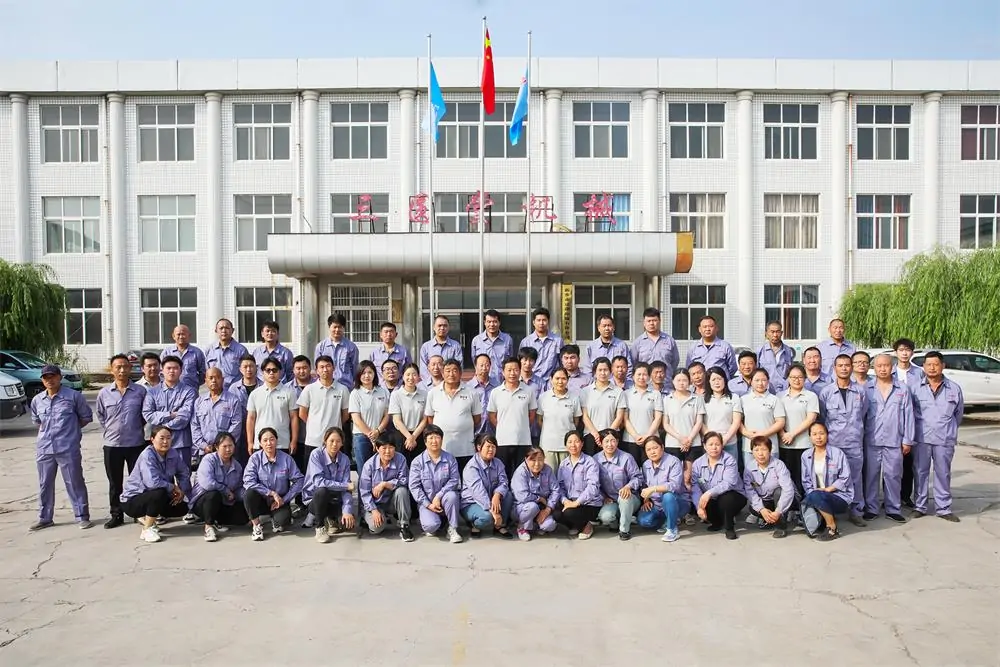
Sanyuantang has focused on fine powder screening equipment manufacturing for more than 30 years, with practical experience in handling ultra-fine powders, adhesive powders, and high-static materials.
If your production process faces challenges such as mesh blockage, powder agglomeration, or unstable screening performance, our engineering team can provide a screening solution based on your material characteristics and actual operating conditions.
Email: info@sanyuantang.com
Phone: +86-18639095165