
Circular vibratory screeners and separators are commonly used to remove oversize particles, classify powders and granules, separate several particle-size fractions, or filter solids from liquids. Depending on the manufacturer or industry, the same general equipment may also be called a round vibratory screener, vibrating separator, vibro sifter, or rotary vibrating screen.
That creates a problem for buyers. The machine may look simple, but choosing one from a mesh number and an hourly capacity is rarely enough.
The screen diameter, number of decks, material characteristics, percentage of fines, moisture, bulk density and tendency to blind the mesh can all change how a machine performs. For some materials, a standard circular screener is enough. For others, changing the screen-cleaning method or using an ultrasonic, inline or different screening system makes more sense.
 Ultrasonic Vibrating Screen
 Tumbler Screening Machine
 Rotary Vibrating Screen
- sifter-machine
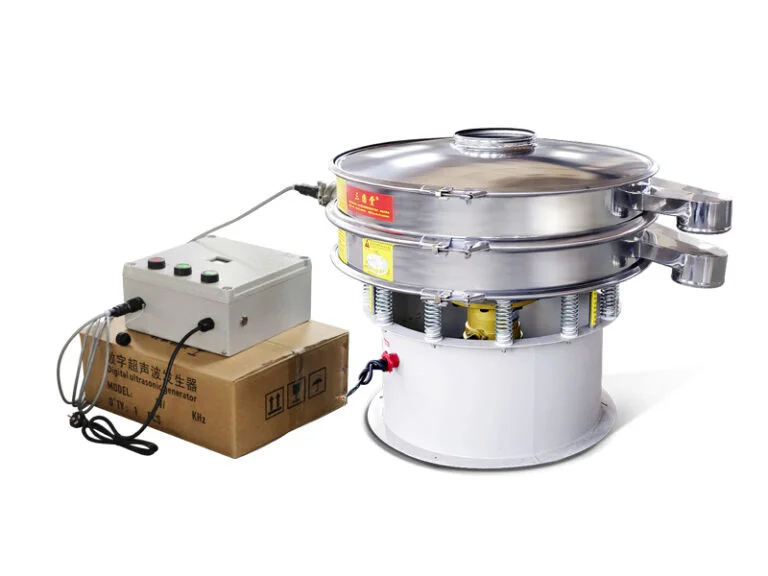
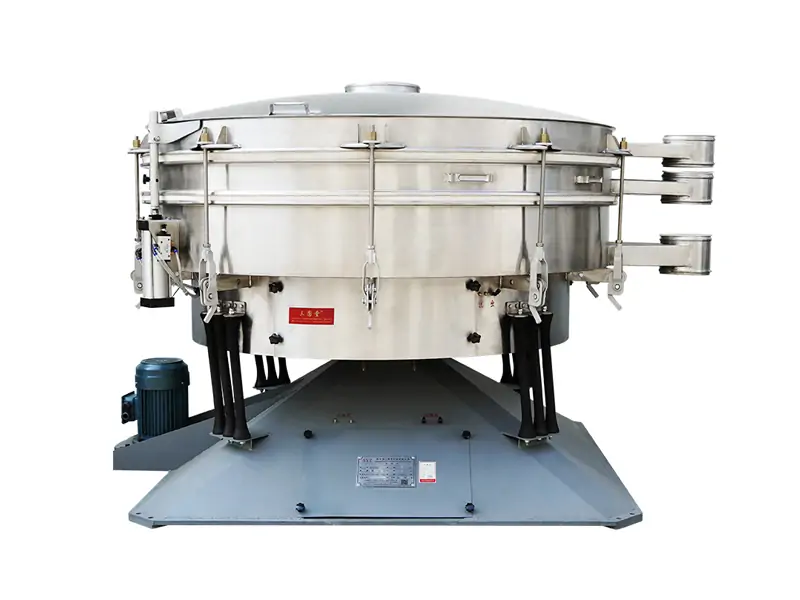
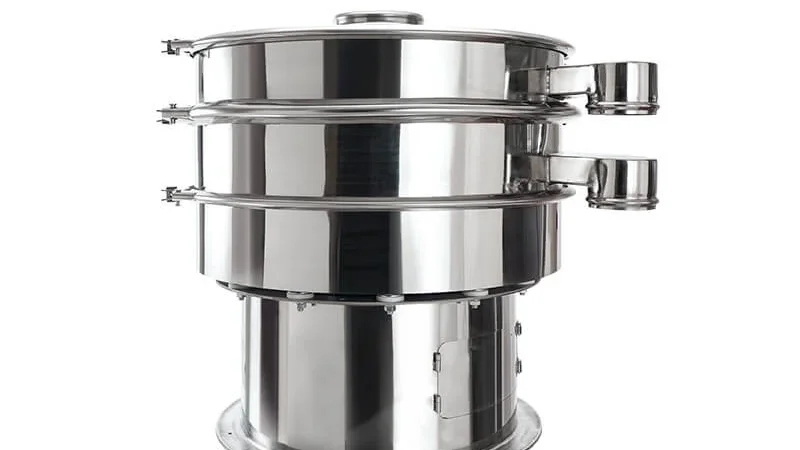
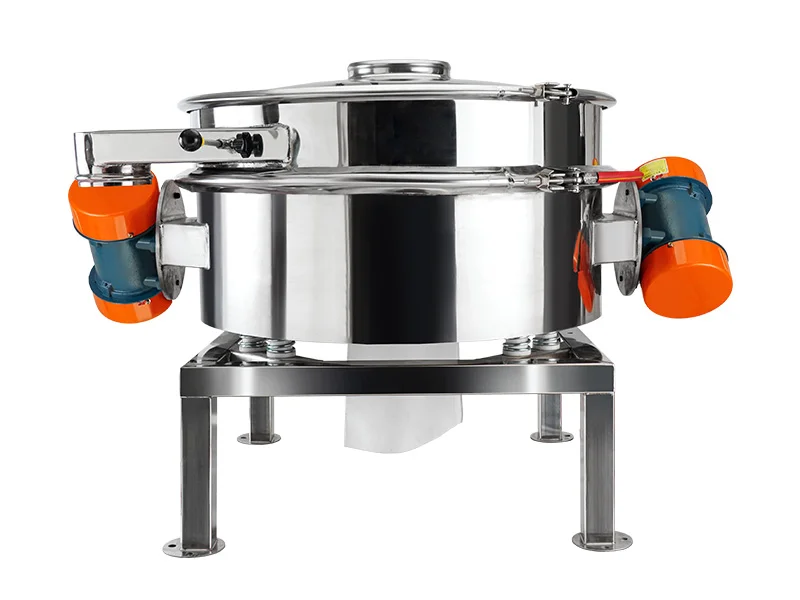
This guide focuses on that decision.
What Are Circular Vibratory Screeners and Separators Used For?
A circular vibratory screener uses vibration to distribute material across one or more horizontal screen surfaces. Particles smaller than the screen opening pass through, while larger material remains above the screen and moves toward a discharge outlet.
The equipment can therefore perform several different jobs.
| Screening Goal | What the Machine Does | Typical Configuration Direction |
|---|---|---|
| Remove occasional oversize | Separates unwanted large particles | Single deck |
| Check screen a finished product | Removes foreign material or agglomerates | Single deck |
| Separate two particle sizes | Creates one cut point | Single deck |
| Produce several size fractions | Uses several cut points | Multi-deck |
| Filter a slurry | Separates retained solids from liquid | Application-specific screen |
| Fine powder screening | Controls a small cut size | Standard or assisted screening depending on material behavior |
The words screener and separator do not always indicate two fundamentally different machines. In industrial equipment listings, round vibratory screeners are also described as circular vibratory screeners, separators and sifters. What matters more is the separation task and machine configuration than the label used on the catalogue.
Sanyuantang uses Rotary Vibrating Screen for its standard round screening equipment. The machine is intended for the screening, classification and filtration of powders, granules and liquid-containing materials.
Start With the Screening Job, Not the Machine Model
One of the first questions we normally ask is simple:
What do you need to remove or separate?
A customer removing a few oversized particles from a finished powder has a very different requirement from a customer producing four commercial particle-size grades.
For simple impurity removal, one screen deck may be enough. If three saleable fractions are required, more than one cut point is needed, which changes the deck arrangement, discharge ports and screen loading.
This distinction matters because adding decks is not free capacity. Each additional separation changes how material moves through the machine.

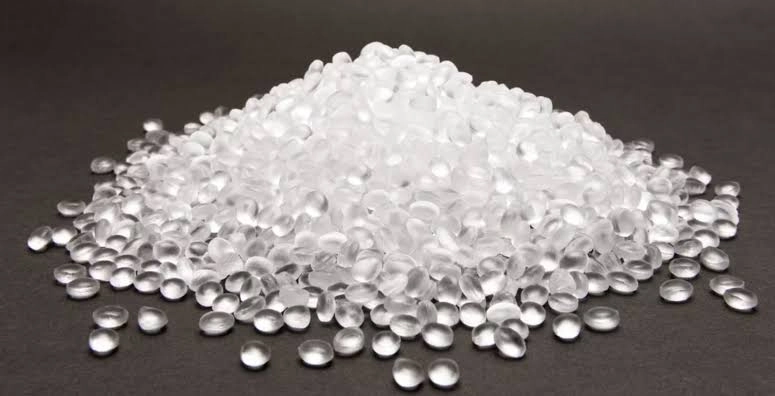

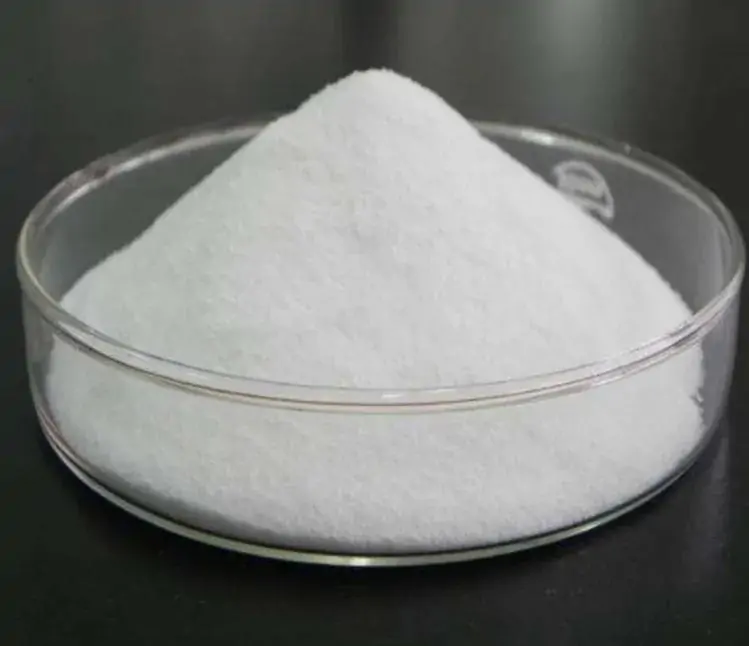
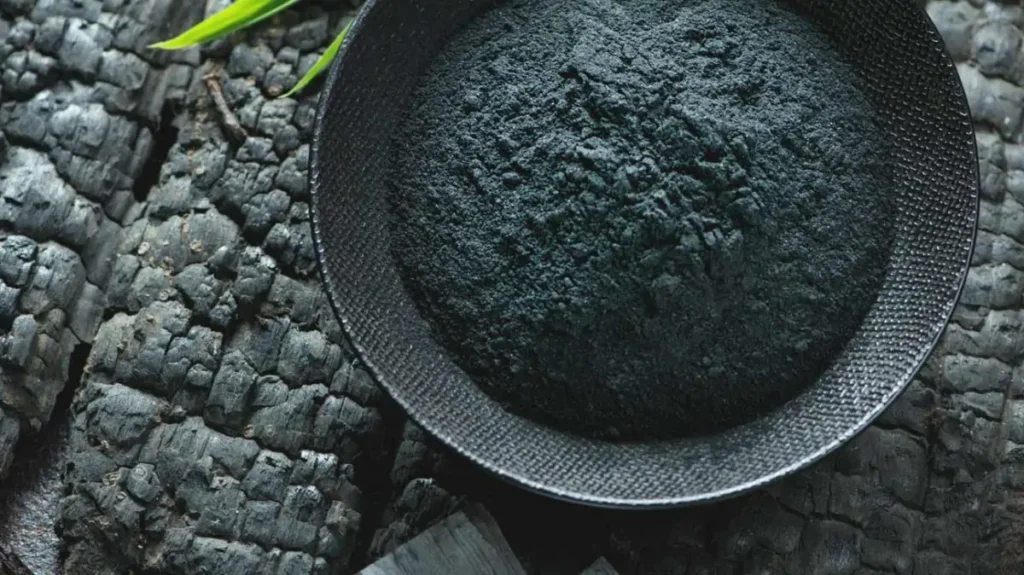


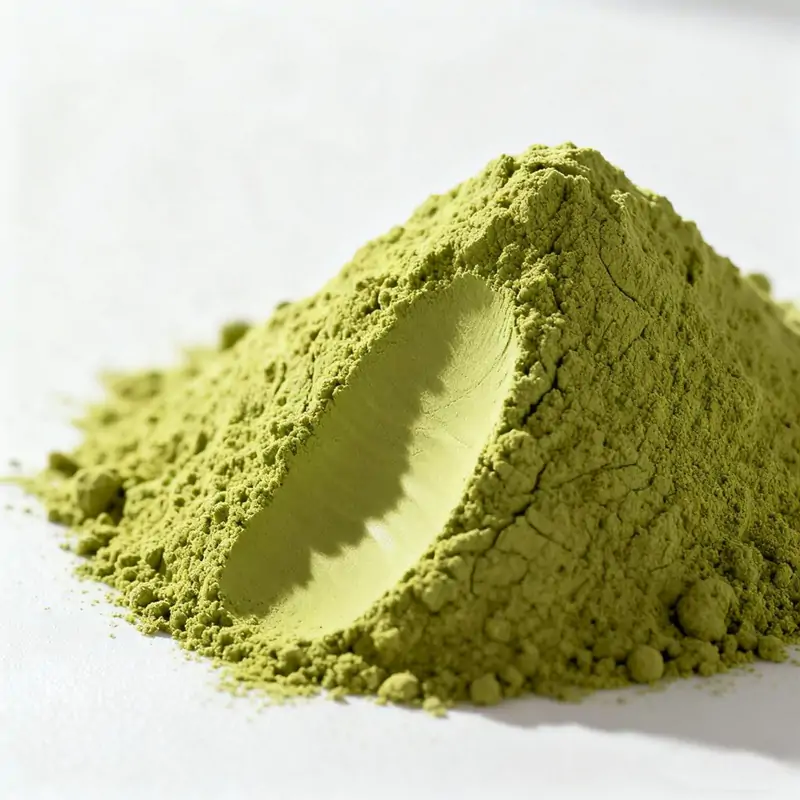
Before discussing a model, define:
- feed particle-size range;
- required cut size or mesh;
- number of final fractions;
- required throughput;
- acceptable oversize and undersize;
- whether the process is dry or wet.
If these points are still unclear, selecting a screen diameter first is premature.
How Does Material Move Across a Circular Vibratory Screen?
A standard rotary vibrating screen normally uses a vertical vibration motor with eccentric weights. The vibration is transmitted to the screen body and creates a combination of horizontal, vertical and inclined movement.
The material does not simply bounce straight up and down.
It spreads across the screen surface, smaller particles encounter the openings, and the retained material gradually travels toward the discharge outlet. Adjusting the vibration condition changes material travel and residence time on the screen.
Sanyuantang’s circular rotary vibrating screen generates three-dimensional motion through a vertical excitation source and upper and lower eccentric weights.
This is important during selection because two opposite problems can occur.
If material passes across the screen too quickly, there may not be enough opportunity for near-size particles to find an opening. If it stays on the screen too long, the screen can become heavily loaded and actual production may fall.
The correct operating condition is therefore not simply “more vibration.”
How Many Screen Decks Do You Actually Need?
The number of screen decks should follow the number of required separations.
A single-deck machine creates one screening cut. Material passing through the screen leaves through one outlet, while retained material leaves through another.
Additional decks make multi-fraction classification possible.
For example, if a process needs coarse, medium and fine products, several screen openings can be arranged in sequence. This is common in grading applications where each particle-size fraction becomes a separate finished material.
But more decks also mean a more complicated screening condition. Feed distribution, screen loading and the percentage of material passing each deck begin to matter more.
This is why “I need five meshes” is not enough information by itself. We also need to know how much material should report to each fraction.
Why Mesh Size Alone Cannot Determine Capacity
This is one of the most common problems in screening equipment selection.
A customer may ask:
“I need 100 mesh. What is the capacity of your machine?”
There is no reliable answer from mesh size alone.
Two powders using exactly the same screen opening can behave completely differently.
| Parameter | Why It Changes Screening Performance |
|---|---|
| Feed particle size | Determines how much material is already close to the cut point |
| Target mesh or opening | Controls which particles must pass |
| Bulk density | Changes the mass represented by a given material volume |
| Percentage passing | Determines how much material must move through the mesh |
| Moisture | Can increase sticking and agglomeration |
| Particle shape | Irregular particles may behave differently from rounded particles |
| Static electricity | Fine powders may adhere to each other or the mesh |
| Feed rate | Excessive loading can reduce effective screening area |
| Number of decks | Changes the material path through the machine |
| Required final fractions | Determines how the screening load is distributed |
A free-flowing granular product can pass through a screen much more easily than a light, cohesive powder at the same nominal mesh.
This is where the material itself matters.
Need Help Reviewing Your Screening Condition?
If you are not sure whether a standard circular vibratory screener is sufficient, send us the material name, feed size, target mesh, required capacity, bulk density, moisture and current screening problem.
Sanyuantang can first review the application before recommending a machine configuration.
Email: info@sanyuantang.com
Phone: +86-18639095165
How Should Screen Diameter Be Selected?
Diameter mainly changes available screening area, but that does not mean a larger machine automatically guarantees proportionally higher output.
More screen area is useful when the material needs additional opportunity to contact the mesh. However, actual capacity also depends on how quickly material passes through the openings and how much of the screen remains available during operation.
Consider a fine powder that gradually coats the mesh.
Increasing diameter provides more area, but if the real problem is adhesion or blinding, simply installing a larger machine may not solve the cause. The additional area can eventually become restricted in the same way.
For that application, screen cleaning or assisted screening may matter more than diameter alone.
We normally evaluate diameter together with:
- required capacity;
- target cut size;
- feed particle distribution;
- bulk density;
- expected percentage passing;
- material flowability;
- available installation space.
For difficult materials, a material test can provide more useful information than choosing only from a catalogue capacity table.
What Causes a Circular Vibratory Screen to Lose Capacity?
A machine can be correctly sized and still perform poorly if the screen surface cannot remain open.
Common causes include material sticking to the mesh, particles becoming wedged in openings, excessive feed loading, agglomerated powder and static-related adhesion.
The symptom is often described simply as “low capacity,” but increasing motor force or changing to a bigger machine should not be the first response.
First inspect what is happening on the screen.
If a large part of the mesh remains open and material flows normally, screen area may indeed be the limiting factor. If the openings are progressively covered, the problem is more likely related to the material or screen-cleaning condition.
Mechanical cleaning devices can help in many standard applications. Fine powders with persistent adhesion or static behavior may require a different approach.
When Is Ultrasonic Screening Actually Necessary?
Ultrasonic screening should be considered when a fine powder repeatedly blinds the mesh because of characteristics such as adhesion, agglomeration or static charge.
It should not be treated as an automatic upgrade for every fine screen.
Sanyuantang’s ultrasonic vibrating screen is based on the conventional vibrating-screen structure with additional high-frequency ultrasonic assistance intended to reduce fine-powder adhesion and mesh blockage. Its fine copper powder application, for example, specifically describes ultrasonic assistance as a way to reduce adhesion and improve continuous screening stability rather than as a guarantee that every possible blockage problem disappears.
That distinction is important.
If a standard circular vibratory screener already passes the material steadily at the required capacity, adding ultrasonic equipment may add cost and complexity without solving a real problem.
Consider ultrasonic assistance when testing or production shows an actual fine-screening problem.
When Is an Inline Sifter a Better Choice?
Not every production line needs the residence time and multiple discharge paths of a standard round separator.
For continuous preliminary screening or impurity removal, especially where material should pass directly through the equipment into the next production stage, an inline sifter can be more appropriate.
Sanyuantang’s inline sifter is designed around this type of duty. Its product configuration emphasizes direct discharge, production-line integration and preliminary screening rather than multi-fraction classification.
Think of the distinction this way:
A standard circular separator is useful when the separation itself requires more control.
An inline machine becomes interesting when the main goal is to check screen material quickly while keeping the production flow moving.
They may both be circular vibrating machines, but they solve different process problems.
When Should You Consider a Tumbler Screener Instead?
A tumbler screener is another machine that is easy to confuse with a circular vibratory separator because the equipment itself is round.
The screening motion is different.
Sanyuantang describes its tumbler equipment as using a lower-frequency rotary and gyratory motion that imitates manual screening and is intended for fine and ultra-fine powder applications, including applications where gentler material handling or larger screening requirements matter.
So the decision should not be:
“Which circular machine is bigger?”
It should be:
“Which screening motion is better suited to this material and production target?”
For a conventional grading or impurity-removal task, a rotary vibrating screen may already be enough. For difficult high-volume fine classification, a tumbler or another screening principle may deserve evaluation.
Material of Construction Also Matters
Screening performance is only part of equipment selection.
The parts that contact the product must also be compatible with the material and process environment.
A chemical powder may require different material considerations from food ingredients. Abrasive solids, corrosive products, cleaning procedures and contamination requirements can all influence construction.
Sanyuantang’s standard rotary vibrating screen is currently offered with stainless steel 304, stainless steel 316 and carbon-steel configurations, with customization available for different applications.
Do not choose stainless steel grade simply because one grade sounds “higher.”
The correct choice depends on the material, corrosion conditions, cleaning method and applicable production requirements.
What Information Should You Send Before Asking for a Recommendation?
A useful equipment inquiry should allow an engineer to understand the screening condition without several rounds of basic questions.
Prepare the following information whenever possible:
| Information | Example |
|---|---|
| Material name | Calcium carbonate powder |
| Feed particle size | Maximum 2 mm |
| Target screen | 100 mesh |
| Required capacity | 800 kg/h |
| Bulk density | kg/m³ or g/cm³ |
| Moisture | Dry or actual moisture percentage |
| Number of fractions | 2 products |
| Process type | Dry screening |
| Current problem | Mesh blocks after 20 minutes |
| Existing machine | Model/type if available |
| Installation limits | Available height and footprint |
| Supporting material | Photos, videos or material sample |
For difficult powders, photos of the material are useful, but a representative material sample can be much more valuable.
Sanyuantang’s own application cases also show why this matters. Different rotary vibrating screen projects have been configured for very different tasks, including food powders, salt grading and plastic particle separation. Machine configuration changes with the material and the actual separation target rather than simply following one standard capacity figure.
FAQ About Circular Vibratory Screeners and Separators
Are a circular vibratory screener and a separator the same machine?
In many industrial contexts, the terms overlap. A round vibratory machine may be called a screener, separator, sifter or rotary vibrating screen. The more useful distinction is the job it performs—such as scalping, grading, impurity removal or liquid-solid filtration—and the configuration required for that process.
Can a circular vibratory screener process liquids?
Yes, certain circular vibrating screens can be configured for wet screening or liquid-solid filtration. However, the required screen opening, slurry concentration, viscosity, solids content and desired filtration result should be confirmed before selecting the machine. Dry powder capacity data should not be applied directly to a slurry application.
Does a finer mesh always mean lower capacity?
Not automatically, but finer openings generally make material passage more demanding. Actual capacity also depends on particle-size distribution, percentage passing, bulk density, moisture, particle shape, feed rate and mesh blinding. Two materials screened at the same mesh can therefore have very different practical throughput.
Does a larger screen diameter always increase capacity?
A larger diameter provides more screening area, which can help increase capacity, but it does not solve every limitation. If the mesh is blocked by sticky, agglomerated or electrostatic powder, increasing diameter alone may not correct the problem. Material behavior and screen loading should be checked first.
When should I use an ultrasonic vibrating screen?
Consider ultrasonic assistance when fine powder repeatedly blinds the mesh because of adhesion, agglomeration or static-related behavior. If a standard vibrating screen already reaches the target mesh and capacity with stable operation, ultrasonic screening may not be necessary. Material testing is useful for uncertain applications.
What parameters are needed to select a circular vibratory screener?
At minimum, provide the material name, feed particle size, target mesh or cut size, required capacity, bulk density, moisture and number of final fractions. Also explain any existing problem such as low capacity, mesh blockage, poor classification or excessive product loss.
Choosing the Right Circular Vibratory Screener Starts With the Material
Circular vibratory screeners and separators can handle many screening jobs, but the correct configuration is not determined by one mesh number or one catalogue capacity.
First define what must be separated. Then confirm the material condition, required cut size, throughput and number of fractions. If the material screens freely, a standard rotary vibrating screen may be all that is needed. Persistent fine-mesh blinding may justify ultrasonic assistance, while continuous check screening or demanding fine classification may point toward another machine type.
Send Your Screening Requirements
If you are preparing a new screening project, send Sanyuantang:
- Material name
- Feed particle size
- Target mesh or cut size
- Required capacity
- Bulk density
- Moisture
- Number of fractions
- Current screening problem
- Photos or videos, if available
For difficult materials, you can also provide a sample for screening evaluation.
The objective is not to choose the most complicated machine. It is to identify the screening configuration that can achieve the required separation under your actual production conditions.
Email: info@sanyuantang.com
Phone: +86-18639095165