Screening of coal separates material into size fractions for crushing, preparation or product-size control. It is not crushing, and an aperture does not identify coal and gangue by composition. At Sanyuantang, we distinguish lump raw coal, fine coal and coal powder before discussing equipment. This guide outlines the wider process first, then focuses on fine screening duties that can be evaluated within our equipment range. General fine-screen specifications must not be applied to heavy raw-coal service.
Where Screening of Coal Fits in the Process
Prescreening can bypass material that already meets the size requirement before crushing. Check screening examines crusher output and may return oversize for further reduction. Product grading forms the fractions required for sale or downstream processing. These tasks can be combined because they describe different positions and objectives, not mutually exclusive processes.
| Task | Purpose | Important boundary |
|---|---|---|
| Precrusher scalping or prescreening | Separate an already acceptable fraction or material needing another route | Does not reduce lump size itself |
| Postcrusher checking and product grading | Control the upper size and collect required fractions | Does not separate coal and gangue by density |
| Wet desliming | Direct specified fine material into another stream | Does not guarantee removal of all ash or impurities |
| Medium recovery and dewatering | Recover or rinse medium; reduce carried water | Requires dedicated structures and supporting processes, not an ordinary dry sieve |
Ash can differ between size fractions, but the screen opening does not recognise which particle is coal. If the objective is lower ash or upgraded coal, discuss coal analysis, washability and an appropriate separation process. A size-compliant product is not automatically a quality-compliant product.
Heavy Coal Screening Equipment and Fine Sieves Have Different Duties
Maximum feed size, impact, loading, target separation and moisture-clay condition govern the equipment class. “Linear”, “banana” or “flip-flow” describes a motion or structure; the name does not establish suitability for every coal duty.
| Equipment direction | Duty commonly considered | What must be verified |
|---|---|---|
| Heavy vibratory or scalping screen | Coarse raw-coal sizing and precrusher screening | Lump impact, structural load, wear and foundation reactions |
| Banana or multislope screen | Stratification and sizing at substantial feed rates | Feed distribution, changing bed depth and full-load separation |
| Flip-flow screen | Some difficult damp fine-material duties | Elastic media, suitable fractions, wear and maintenance |
| General fine-duty linear screen | Suitable smaller-scale granular or powder classification | Permitted feed and load; not interchangeable with heavy raw-coal equipment |
Wet and dry routes also have different system requirements. Dry screening avoids process water and the associated dewatering burden, but surface moisture and clay can promote adhesion, agglomeration and blinding. Wet screening can assist some fine separations while requiring water supply, recycle or wastewater handling and downstream dewatering. There is no universal moisture cutoff for every coal: where the water sits, clay content, shape and near-size material all matter.
Define the Fine Coal and Coal Powder Screening Target
For a fine-screen enquiry, tell us the actual feed-size distribution rather than only calling the material “fine coal”. Distinguish removing occasional oversize, collecting several size grades and reducing unwanted fines. Each requires a different arrangement and acceptance method. Also state whether the feed is dry powder, damp fines or slurry; these are not interchangeable duties.
Coal powder, graphite, activated carbon and carbon black are not the same material. If the enquiry says “carbon powder”, identify the material and provide its safety data. A screen or cleaning method selected for one should not be promised for the others without checking density, adhesion, abrasion and hazards.
- Feed: particle-size distribution, maximum particle size, near-size fraction and bulk density.
- Condition: surface moisture, clay, gangue, temperature and expected variation.
- Separation: actual aperture, desired fractions and allowable misplaced particles at each outlet.
- Installation: feed distribution, discharge capacity, dust-control interfaces, maintenance space and supporting structure.
Near-size particles need adequate opportunities to reach and pass the opening. A thick bed, uneven feed, pegged openings or worn mesh can increase misplacement. The nominal aperture is not necessarily the actual cut size. Changes to aperture, inclination or motion can alter output and separation, and must stay within the supplied equipment’s permitted settings.
Which Sanyuantang Screens Can Be Evaluated for Fine Coal?
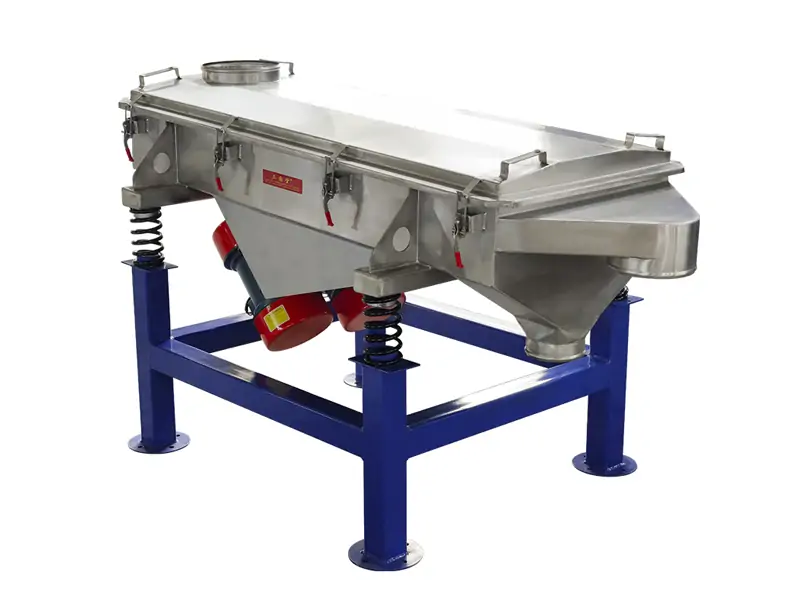
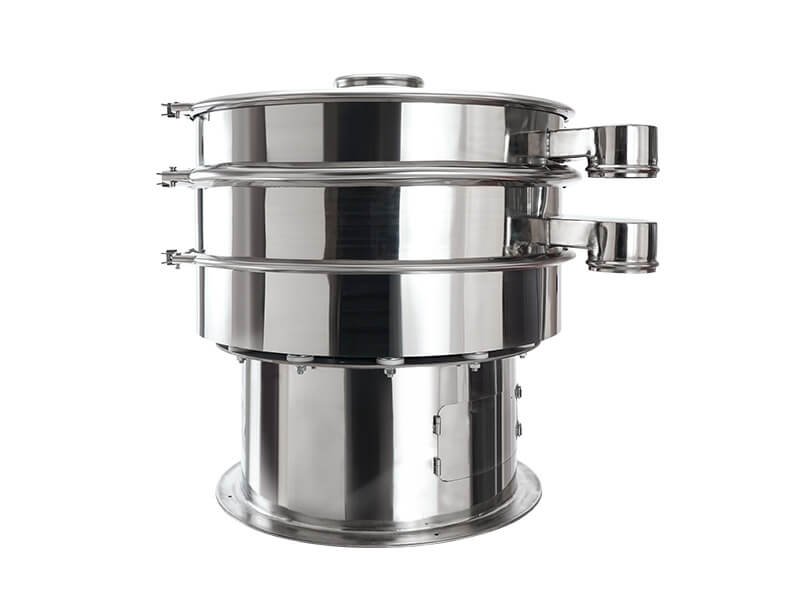
Our SYZ linear vibrating screen provides a candidate for continuous fine-granule or powder classification when feed size, load and operating conditions are within its confirmed scope. The SY rotary vibrating screen can be considered for suitable smaller-scale check screening or grading. Neither is a blanket replacement for heavy raw-coal scalping, banana screening, flip-flow service or a complete wet preparation circuit.
Where fine powder progressively blinds a conventional mesh, an ultrasonic vibrating screen may be worth a comparative trial after the material hazards and configuration have been reviewed. Ultrasonic assistance acts on the screen surface; it does not dry damp coal, remove clay chemically or crush hard lumps. The presence of a fine aperture alone is not a reason to prescribe ultrasound.

For background on this mechanism, see our guide to ultrasonic deblinding in fine powder screening. Its general screening explanation is not coal-specific performance evidence. We would compare stable passage, misplaced material and cleaning requirements on the actual sample before recommending a configuration.
If the duty includes large lumps, major impact, slurry dewatering or medium recovery, send us the process information before choosing a fine-screen model. We will review supply scope first rather than assume that an ordinary sieve can meet the requirement.
Our linear vibrating screen introduction shows the equipment type considered for suitable dry-powder and granular screening duties. It is not a coal-specific acceptance test or a heavy raw-coal screen demonstration. Confirm wear, moisture, dust controls and the required separation with the actual coal.
Verify Fine Coal Screening Efficiency and Dust Controls
At stable conditions, take coordinated samples and flow measurements from the feed, oversize and undersize. Check the size distribution of each. Fine-particle recovery describes how much of the defined fine fraction in the feed reaches the intended outlet. Product grade describes the proportion of acceptable material in that outlet. These are different measures; undersize weight alone proves neither.
Continue long enough to observe blinding, wear, cleaning stops and changes in the feed condition. Record retained material and reconcile the mass balance. Assess screen-media wear against the actual gangue and abrasive condition, not an assumption that all coal behaves identically.
Coal dust can present a combustible-dust hazard. The OSHA overview of combustible dust hazards includes coal among materials requiring attention. Qualified project personnel must review dust collection, ignition control, applicable protection and isolation, maintenance safety and structural conditions. An enclosure is not a complete explosion-protection system, and an ultrasonic generator or motor designation does not establish compliance for the complete installation.
Before sending samples, confirm material acceptance, safe sample handling and the site requirements with us. Final protective functions and documentation must be explicitly agreed; they should not be inferred from a general product page.
Screening of Coal FAQs
Does Screening of Coal Remove Ash by Itself?
Not as a general guarantee. Screening mainly separates by size. Different fractions may have different ash levels, but the result and any product-quality claim require coal analysis and, where needed, an appropriate beneficiation process.
Can a Fine Powder Sifter Replace Heavy Coal Screening Equipment?
Not simply because the opening is the same. Maximum lump size, impact, structural loading, plant scale and wet-process duties must all be satisfied. A small fine sieve should not be assigned heavy raw-coal prescreening by name alone.
Which Screen Is Suitable for Fine Coal Screening?
Start from the actual size distribution, moisture, required fractions and feed rate. A SYZ linear screen or SY rotary screen may be a candidate within confirmed limits. Material testing and the project safety review determine the configuration.
Is Ultrasonic Coal Powder Sieving Always Necessary?
No. Consider it when conventional mesh cleaning cannot maintain passage and a comparative trial supports it. Ultrasound does not replace drying, clay control or hard-lump reduction, and the complete system still needs a hazard review.
What Moisture Level Requires Wet Coal Screening?
There is no universal threshold. Surface moisture, clay, shape, near-size content and screen media affect behaviour. Compare representative samples and the complete water-handling requirements before choosing a dry or wet route.
Conclusion
Screening of coal starts with the process duty, not a generic capacity table. For fine coal and coal powder, define the aperture, feed condition and accepted fractions, then verify sustained separation and safety requirements. Send Sanyuantang your size distribution, maximum feed, moisture-clay condition and hourly requirement. We will first check whether the duty fits our fine-screening scope and identify any heavy-duty or wet-process requirements that need a different solution.
Sanyuantang Manufacturing for Fine Screening Duties
At Sanyuantang, we are a screening and conveying equipment manufacturer based in Xinxiang, Henan. For fine coal and identified carbon powders, we review material behaviour, feed loading, mesh arrangements and line connections before narrowing the equipment options. Our factory uses laser cutting, welding, bending, drilling and CNC machining for fabrication and configuration work. Material trials and video communication can help customers review separation results before purchase, subject to safe material acceptance. The agreed technical proposal defines the equipment, protective requirements, supply boundaries and acceptance conditions; a general fine-screen range is not a promise to supply every coal-preparation duty.