
Choosing a sand sieve mesh size looks simple until you have to use it in an actual screening process. One customer may ask for 40 mesh sand. Another specifies 0.425 mm. Someone else gives the required particle size in microns. These numbers may describe the same general size range, but mesh number alone is not enough to select an industrial sand screen.
When the actual sand gradation is unknown, a sieve analysis for particle size distribution provides the retained and passing percentages needed before the industrial mesh is chosen.
The material matters too. Dry silica sand can pass through a screen quite easily, while damp sand of a similar particle size may quickly blind the mesh. Feed rate, particle-size distribution, moisture, particle shape and the percentage of material close to the required cut point all affect screening performance.
So when selecting a sand screen, we normally start with the required particle size, not the machine.
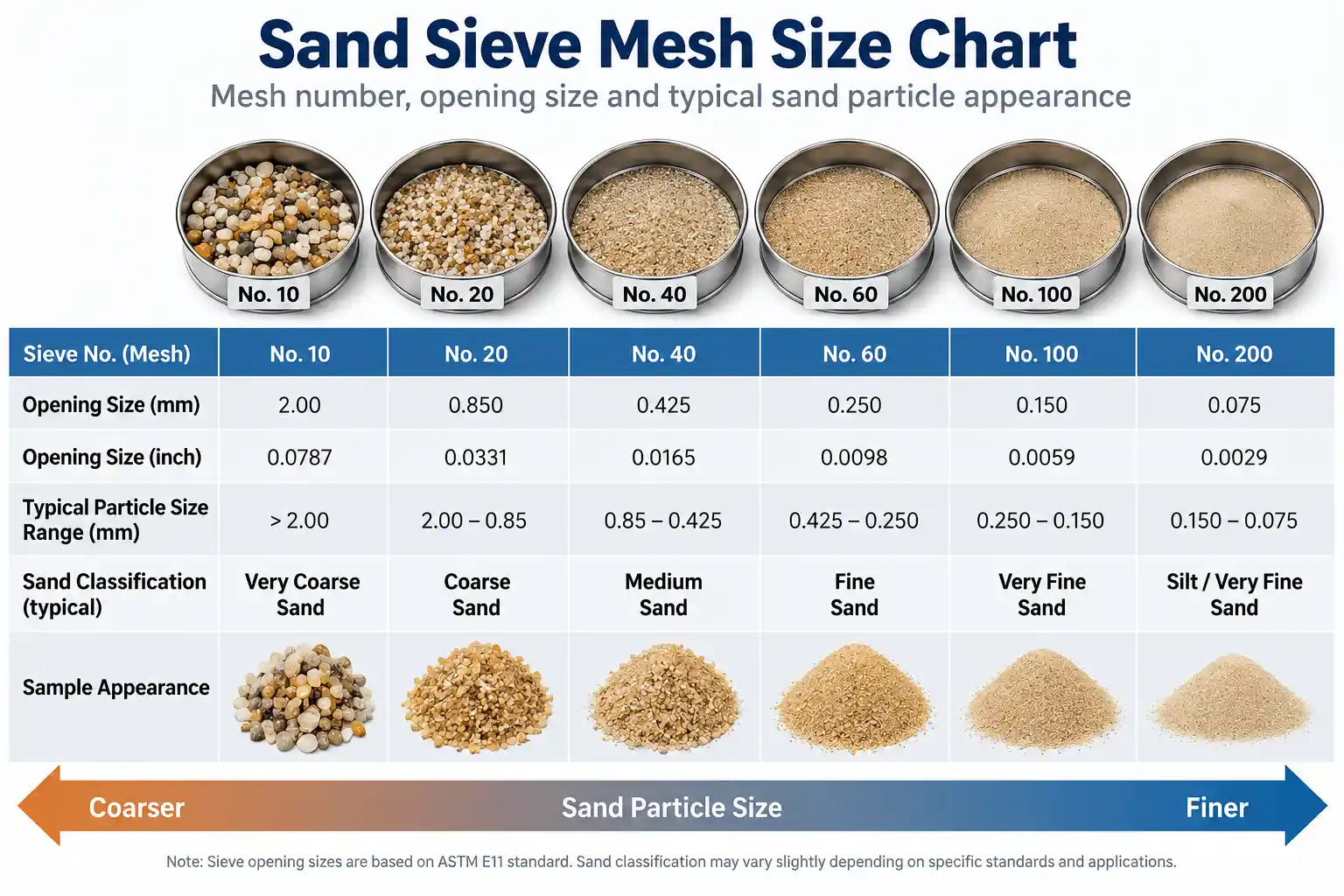
This guide explains common sand mesh sizes, their approximate equivalents in millimeters and microns, and how we use these numbers when selecting industrial screening equipment.
What Does Sand Sieve Mesh Size Mean?
Mesh generally refers to the number of openings per linear inch of a woven screen.
As the mesh number increases, the openings normally become smaller.
For example:
- 20 mesh → relatively coarse
- 40 mesh → finer
- 100 mesh → much finer
The basic relationship is:
- Higher mesh number = smaller screen opening = finer particle separation
But there is an important detail. Mesh number and opening size are not the same thing.
The actual opening of a woven screen is affected by both the number of openings and the wire diameter. Two screens described by mesh count alone should not automatically be assumed to have exactly the same aperture.
For precise industrial screening, we prefer to confirm the required opening in mm or microns.
If your process specification says 0.425 mm, for example, give us 0.425 mm as the required cut point rather than only saying “40 mesh.”
Sand Sieve Mesh Size Chart
The following sand mesh size chart gives common sieve numbers and their nominal openings.
| Sieve No. | Nominal Opening | Microns | General Size Reference |
|---|---|---|---|
| No. 4 | 4.75 mm | 4,750 μm | Gravel / very coarse particles |
| No. 8 | 2.36 mm | 2,360 μm | Coarse sand |
| No. 10 | 2.00 mm | 2,000 μm | Coarse sand |
| No. 16 | 1.18 mm | 1,180 μm | Coarse to medium sand |
| No. 20 | 0.850 mm | 850 μm | Medium sand |
| No. 30 | 0.600 mm | 600 μm | Medium sand |
| No. 40 | 0.425 mm | 425 μm | Medium-fine sand |
| No. 50 | 0.300 mm | 300 μm | Fine sand |
| No. 60 | 0.250 mm | 250 μm | Fine sand |
| No. 80 | 0.180 mm | 180 μm | Very fine sand |
| No. 100 | 0.150 mm | 150 μm | Very fine sand |
| No. 200 | 0.075 mm | 75 μm | Very fine particles |
This table is useful for understanding particle size, but it should not replace the actual screen specification.
If the cut point matters to your process, confirm the aperture rather than choosing a production screen only from the mesh number. If you have any other questions about sizes, please contact us at Sangyuantang.
Sand Mesh Size in mm: Mesh, Micron and Millimeter
Sand particle sizes are commonly described using:
Mesh/Millimeters (mm)/Microns (μm)
Converting between millimeters and microns is straightforward:
- 1 mm = 1,000 μm
For example:
| Millimeters | Microns |
|---|---|
| 2.00 mm | 2,000 μm |
| 1.18 mm | 1,180 μm |
| 0.85 mm | 850 μm |
| 0.60 mm | 600 μm |
| 0.425 mm | 425 μm |
| 0.30 mm | 300 μm |
| 0.25 mm | 250 μm |
| 0.15 mm | 150 μm |
| 0.075 mm | 75 μm |
Note: Mesh-to-micron conversion needs a little more care. You will find simple mesh conversion formulas online. They can be useful for a rough estimate, but they are not what we would use to confirm a production screen because wire diameter affects the actual opening. For industrial screening, aperture is more useful than mesh count when the particle specification is strict.
What Sand Sieve Mesh Size Should I Use?
There is no single best sand sieve size.
Start with two questions:
- What is the largest particle allowed in the finished product?
- What material should pass through the screen?
Suppose you need a finished product below 0.5 mm.
An opening around the required cut point gives you a starting point. From there, we still need to consider the material and required capacity.
Now suppose you need three products:
- above 2 mm
- 0.5–2 mm
- below 0.5 mm
One screen cannot make all three fractions.
You need two cut points: Feed → 2 mm screen → +2 mm → 0.5 mm screen → 0.5–2 mm → -0.5 mm
This is why sand grading applications often use multi-deck screening equipment.
Typical Sand Sieve Sizes for Different Applications
Different sands have different screening requirements. There is no reason to use the same mesh just because the materials are all called “sand.”
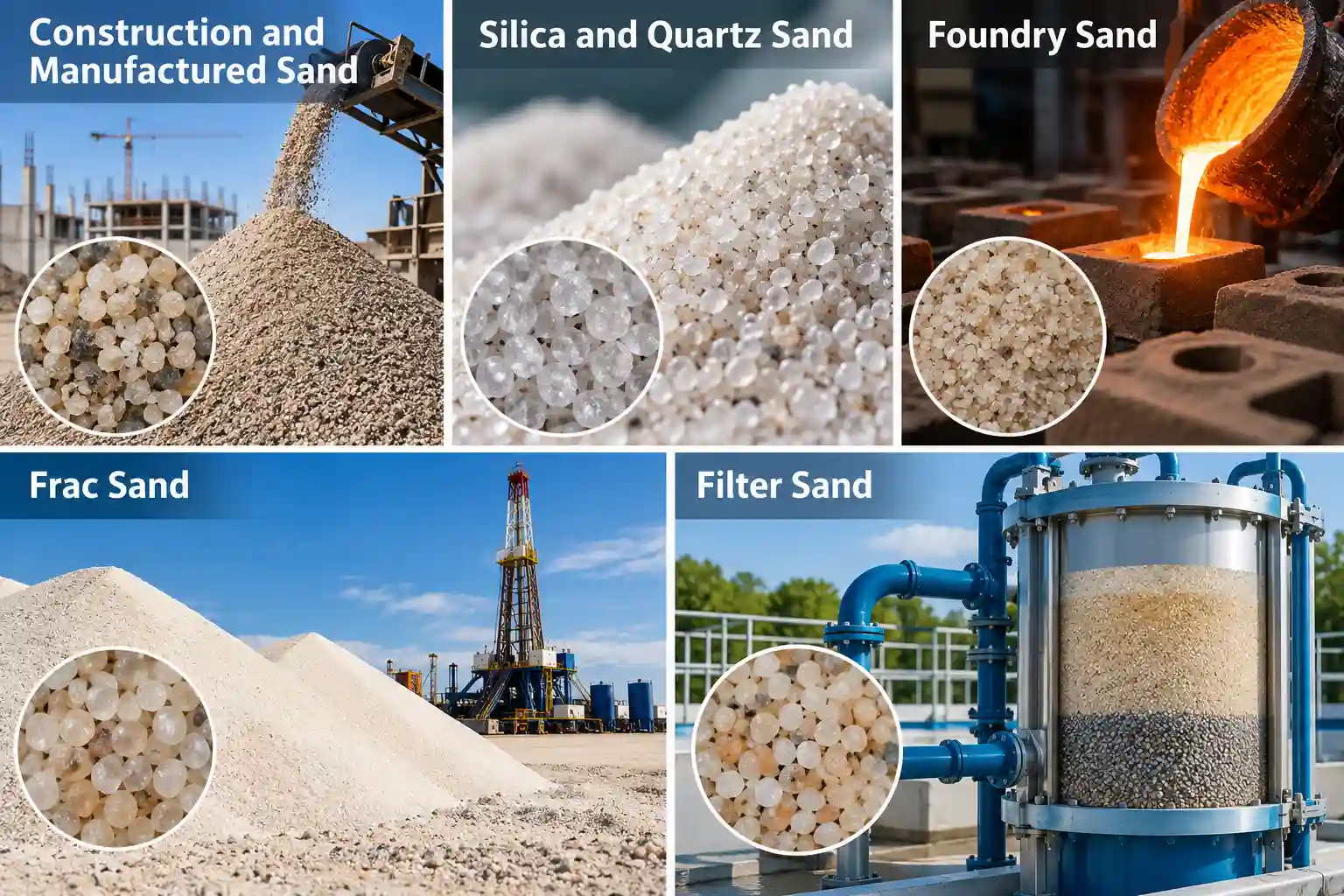
Construction and Manufactured Sand
Construction and manufactured sand normally have a broad particle-size distribution. The purpose of screening may be to remove large particles, divide the feed into several commercial fractions, or control fine material.
Typical cut points may include:
| Screen Opening | Possible Purpose |
|---|---|
| 4.75 mm | Gravel and large-particle removal |
| 2.36 mm | Coarse fraction |
| 1.18 mm | Coarse/medium classification |
| 0.60 mm | Medium/fine classification |
| 0.30 mm | Fine sand classification |
| 0.075 mm | Very fine particle control |
These are size references, not a universal construction sand specification. The actual screens should follow the required product gradation.
Silica and Quartz Sand
Silica and quartz sand often require narrower size fractions.
A production line might need to separate material into ranges such as:
- 0.1–0.3 mm
- 0.3–0.6 mm
- 0.6–1.2 mm
In this situation, specifying the actual aperture is much clearer than asking only for “40 mesh” or “60 mesh.”
Abrasion is another consideration. Quartz-containing material can wear screen surfaces over time. Screen material, wire diameter, machine configuration, and replacement frequency therefore need to be considered alongside particle size.
Foundry Sand
Foundry sand is usually controlled according to particle-size distribution rather than simply being divided into coarse and fine material.
The required sieve openings depend on the casting process and sand specification. If several fractions need to be controlled, multiple sieve sizes may be involved.
Frac Sand
Frac sand shows clearly why one mesh number is sometimes not enough.
Common grades may be described as:
- 20/40
- 30/50
- 40/70
The two numbers describe a particle-size range between upper and lower sieve limits.
Producing a controlled range therefore requires more than one cut point.
Filter Sand
Filter media also depend on controlled particle distribution.
Too much fine material or too much oversize can affect the behavior of the filter bed. Instead of choosing a generic “filter sand mesh,” start from the required particle-size distribution or effective size and select the screen openings from there.
Why the Correct Mesh Can Still Give Poor Screening
This is where laboratory sieve size and industrial screening start to separate. A correct screen opening tells us where the separation should happen. It does not tell us how easily the sand will pass through the screen.
Several factors make a big difference.
1. Moisture
Dry, free-flowing sand is usually easier to screen.
When moisture increases, fine particles can stick together or adhere to the screen. Small agglomerates form, openings begin to blind, and the effective screening area decreases. Using a finer mesh does not necessarily solve the problem. Sometimes it makes the blockage worse. That is why the actual moisture condition should be provided when selecting a sand screening machine.
2. Near-Size Particles
Consider a 0.5 mm screen opening. A 0.1 mm particle can pass easily. A 3 mm particle is clearly oversize. The difficult particles are those around the cut point. Particles close to 0.5 mm may contact the screen several times before passing or moving toward the discharge. If a large percentage of the feed sits close to the required cut size, screening becomes more difficult.
This is why particle-size distribution can be more useful than maximum feed size alone.
3. Particle Shape
Sand grains are not perfect spheres.
Natural sand may be relatively rounded, while crushed sand and quartz particles can be angular or irregular. Particle orientation affects how easily borderline particles pass through an opening. When the separation requirement is strict, testing an actual material sample can give more useful information than mesh number alone.
4. Feed Rate
More feed does not always mean more correctly screened product. When the material layer becomes too deep, fine particles have fewer opportunities to reach the mesh surface. Some fines may leave with the oversize fraction. The machine may still show a high throughput, but the quality of separation has fallen.
5. Screen Area
Fine screening requires enough effective screen area.
As the opening becomes smaller, screening generally becomes more difficult, particularly when the feed contains many near-size particles.
This is why we do not recommend selecting machine size before confirming both:
- Required aperture + required capacity
What Sanyuantang Checks Before Selecting a Sand Screen
A customer sometimes contacts us with a simple request:
- “We need a vibrating screen for 40 mesh sand.”
That gives us a starting point, but not enough information to select the machine.
At Sanyuantang, the following information is normally more useful:
| Information | Why It Matters |
|---|---|
| Material | Indicates flow behavior, abrasion and screening difficulty |
| Feed size | Shows what enters the machine |
| Required finished size | Determines the screen opening |
| Particle-size distribution | Shows how much material is close to each cut point |
| Moisture | Helps evaluate blinding and agglomeration |
| Bulk density | Helps calculate actual material loading |
| Required capacity | Affects required screening area |
| Number of final fractions | Determines the number of screening stages |
| Continuous or batch operation | Affects machine configuration |
| Dust requirements | Helps determine whether an enclosed structure is needed |
This explains why two customers using the same sand screen mesh size may need very different machines.
A few hundred kilograms per hour of dry silica sand is not the same screening job as several tons per hour of sand, even if both use a nominal 40 mesh screen.
Real Project: Silica Sand Screening for a Glass Manufacturer in India
A real Sanyuantang project shows why selecting sand screens from one mesh number alone can be misleading.
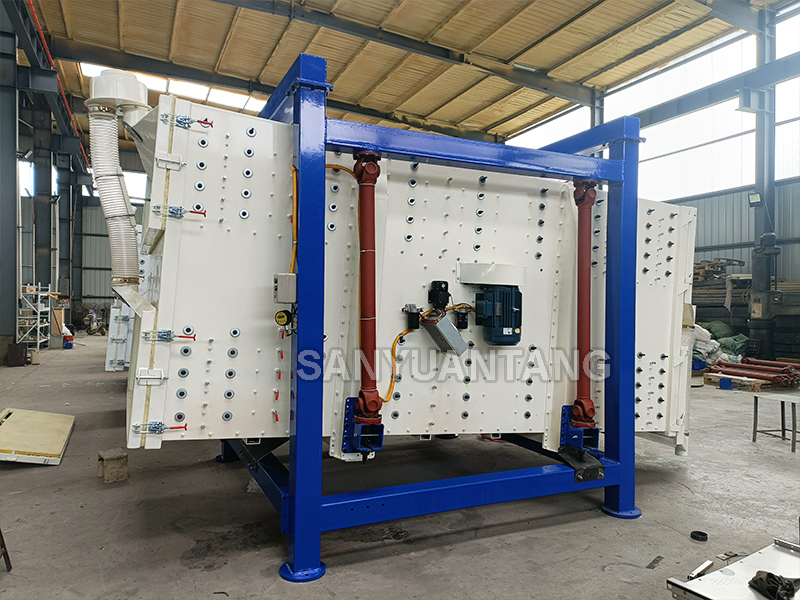
An Indian glass manufacturer needed to classify silica sand before it entered the production process. The feed was 0–2 mm silica sand, but the customer did not simply ask us for one mesh.
They provided the required cut points and particle-size distribution.
Project Requirements
| Parameter | Project Data |
|---|---|
| Material | Silica sand |
| Application | Glass manufacturing |
| Feed size | 0–2 mm |
| Required cut sizes | 1.18 / 0.8 / 0.6 / 0.3 / 0.15 mm |
| Required screening accuracy | 95% |
| Total production requirement | 70 t/h |
| Screen range | 30–100 mesh |
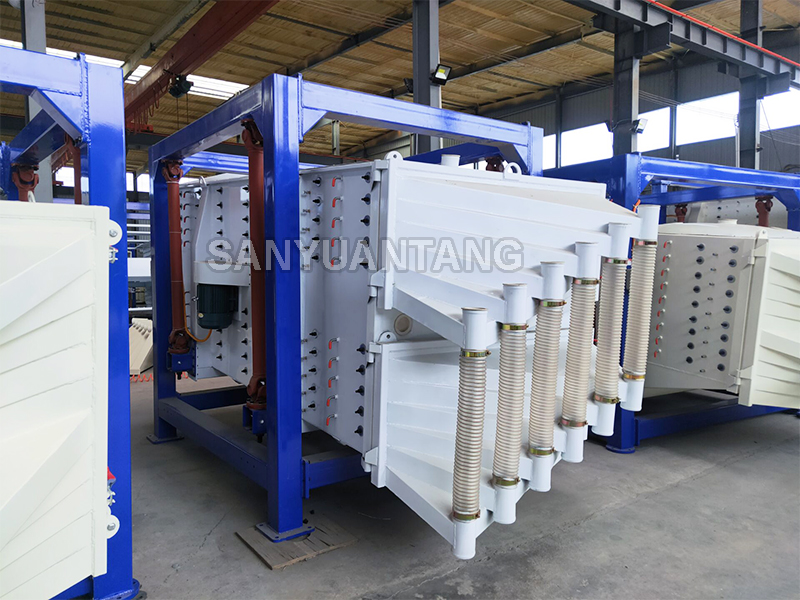
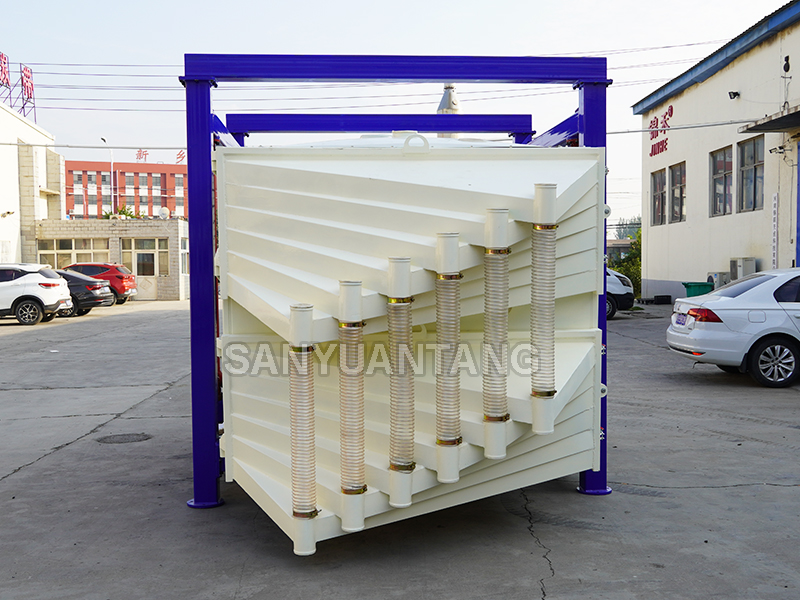
| Equipment | FYBS2040 Gyratory Sifter |
| Capacity | Approx. 15 t/h per unit |
| Quantity | 5 sets |
| Location | India |
The feed itself was not evenly distributed.
The customer’s particle-size data showed:
| Particle Size | Percentage of Feed |
|---|---|
| >1.18 mm | 23% |
| 0.8–1.18 mm | 20% |
| 0.6–0.8 mm | 14% |
| 0.3–0.6 mm | 14% |
| 0.15–0.3 mm | 9.5% |
| <0.15 mm | 19.5% |
This information mattered because the customer needed several usable silica sand fractions rather than a simple oversize removal.
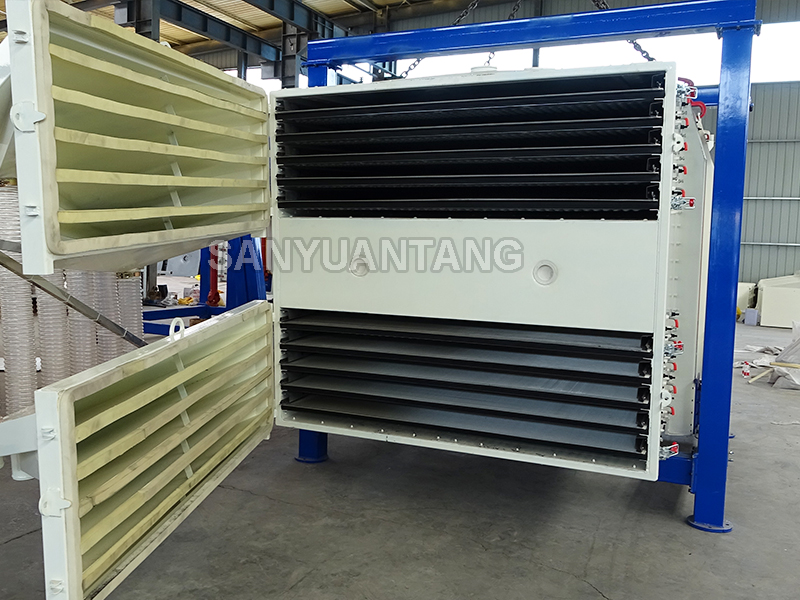
Sanyuantang supplied five FYBS2040 gyratory sifters, using a multi-layer screening arrangement covering approximately 30–100 mesh. Each machine was designed for around 15 t/h under the project conditions.
The screens also used a bouncing-ball mesh cleaning system to help keep the screening surface open during continuous operation.
What This Project Tells Us About Mesh Selection
Imagine that the customer had only said:
- “We need a 100 mesh silica sand screen.”
We would know one possible cut point, but very little else.
We would not know:
- the 0–2 mm feed distribution;
- the intermediate fractions required;
- the 70 t/h total production target;
- how many screen decks were needed;
- how much screening area was required.
That is the practical difference between choosing a sand sieve mesh size and designing an industrial sand screening process.
Mesh is one parameter.
The complete particle-size distribution tells us what the machine actually has to do.
Laboratory Sieve Analysis vs Industrial Sand Screening
Laboratory sieve analysis and production screening are related, but they serve different purposes.
| Item | Laboratory Sieve Analysis | Industrial Sand Screening |
|---|---|---|
| Main purpose | Measure particle-size distribution | Produce required fractions |
| Material quantity | Small sample | Continuous production |
| Equipment | Test sieve shaker | Vibrating or gyratory screen |
| Screen arrangement | Standard sieve stack | One or multiple production decks |
| Main result | % retained / % passing | Finished material fractions |
| Main concern | Repeatable measurement | Capacity, separation and reliability |
| Output | Particle-size data | kg/h or t/h |
If you already have a sieve analysis report for your sand, send it when requesting a production screening machine.
It is much more useful than describing the material only as “coarse sand” or “fine sand.”
Which Screening Machine Is Suitable for Sand?
There is no single machine that is best for every sand application.
The choice depends on particle size, capacity, number of fractions and material behavior.
Gyratory Screener
For dry sand requiring continuous grading and relatively high capacity, a gyratory screener is often worth considering.
Sanyuantang FYBS gyratory screening machines use a reciprocating screening motion that spreads material across the screen surface and gives particles repeated opportunities to contact the openings. Multi-layer configurations can produce several sand fractions in one machine. For silica sand, quartz sand and other dry granular materials, this can be useful when both capacity and grading accuracy matter.
Linear Vibrating Screen
A linear vibrating screen can be used for continuous screening and grading of free-flowing granular materials. It can be configured with several screen layers when multiple products are required. The final choice between a linear screen and a gyratory screener should be based on actual material characteristics, capacity and required separation rather than the material name alone.
Laboratory Test Sieve Shaker
If you do not yet know the particle-size distribution of the sand, a lab test sieve shaker is a useful starting point.
A representative sample can be separated through several standard sieves. The resulting retained and passing percentages help establish the particle distribution before a production machine is selected.
One Deck or Multiple Decks?
A simple way to think about this is to count the required separation points.
If you only need to remove particles larger than 2 mm:
Feed → 2 mm screen → oversize + undersize
One screening deck may be enough.
If you need:
- 2 mm
- 0.5–2 mm
- <0.5 mm
you need two cut points and therefore at least two screening stages.
The number of decks should follow the number of required products, not simply the maximum number of decks a machine can hold.
The India silica sand project is a good example. Several finished fractions were required, so a multi-layer configuration was more practical than using a single screen opening.
Common Mistakes When Choosing Sand Screen Mesh
Selecting the Screen Only by Mesh Number
“40 mesh” is useful information, but confirm the actual required opening.
If your process specification says 0.425 mm, provide the 0.425 mm requirement directly.
Assuming Finer Mesh Is Always Better
It is not.
If the product does not require a finer cut, using an unnecessarily fine screen can reduce capacity and make blinding more likely.
Ignoring Moisture
A screen that performs well with dry sand may behave very differently with damp material.
Always provide the actual operating condition.
Ignoring Particle-Size Distribution
Maximum feed size alone does not tell us how difficult the separation will be.
A feed containing a large percentage of near-size particles can require more screening area.
Selecting Machine Size Before Capacity
Mesh size determines the required separation.
Capacity helps determine the machine size and screening area.
You need both.
How to Send a Useful Sand Screening Inquiry
Instead of sending:
- “Need 40 mesh sand screen.”
send something like this:
| Parameter | Example |
|---|---|
| Material | Silica sand |
| Feed size | 0–3 mm |
| Required product | <0.425 mm |
| Capacity | 2 t/h |
| Moisture | <1% |
| Bulk density | 1.5 t/m³ |
| Operation | Continuous |
| Required fractions | 2 |
If you have a sieve analysis report, include it. If the material is difficult to describe, an actual sample can also be useful for screening tests. These details allow us to select the aperture, screen area, machine type and number of decks around the real process instead of guessing from one mesh number.
FAQ About Sand Sieve Mesh Size
What is the most common sand sieve mesh size?
There is no universal sand sieve mesh size. Coarse sand may use openings above 1 mm, while fine sand may require 0.6, 0.3, 0.15 mm or smaller openings. The correct size depends on the required finished particle distribution.
What size is 20 mesh sand?
A standard No. 20 sieve has a nominal opening of approximately 0.850 mm or 850 microns. For industrial screening, confirm the actual screen aperture because wire diameter and screen construction also affect the opening.
What size is 40 mesh sand?
A standard No. 40 sieve has a nominal opening of approximately 0.425 mm or 425 microns. If 0.425 mm is a strict production requirement, specify the aperture directly instead of relying only on the term 40 mesh.
What size is 60 mesh sand?
A standard No. 60 sieve has a nominal opening of approximately 0.250 mm or 250 microns. Whether it is suitable for your sand depends on the required product size, moisture, feed distribution and production capacity.
What size is 100 mesh sand?
A standard No. 100 sieve has a nominal opening of approximately 0.150 mm or 150 microns. Screening at this size can be more sensitive to moisture, near-size particles and mesh blinding than coarse sand screening.
Does a higher mesh number mean finer sand?
Generally, yes. A higher mesh number corresponds to a smaller opening, so 100 mesh is finer than 20 mesh. For precise industrial screening, however, the actual aperture in mm or microns should also be confirmed.
Can wet sand be screened through fine mesh?
Yes, but moisture can cause particles to agglomerate and screen openings to blind. Fine wet screening may require a different machine configuration or screening method. The actual moisture condition should be evaluated before equipment selection.
How do I choose a vibrating screen for sand?
Start with material type, feed size, required particle sizes, particle distribution, moisture, bulk density, capacity and number of finished fractions. These parameters determine the screen aperture, screening area, machine type and number of decks.
Conclusion
The correct sand sieve mesh size starts with the particle size you need to produce.
Confirm the required aperture in millimeters or microns first, then look at the actual material: particle distribution, moisture, shape, capacity and the number of finished fractions. The India silica sand project is a good example. One mesh number would not have been enough to design the screening system. The complete 0–2 mm particle distribution, five cut sizes and 70 t/h production requirement were needed before the screen configuration could be determined.
If you are selecting a sand screening machine, send Sanyuantang your material, feed size, required particle sizes, capacity, moisture and sieve analysis data if available. That gives us enough information to evaluate the screen around the actual process rather than guessing from a mesh number.
About Sanyuantang
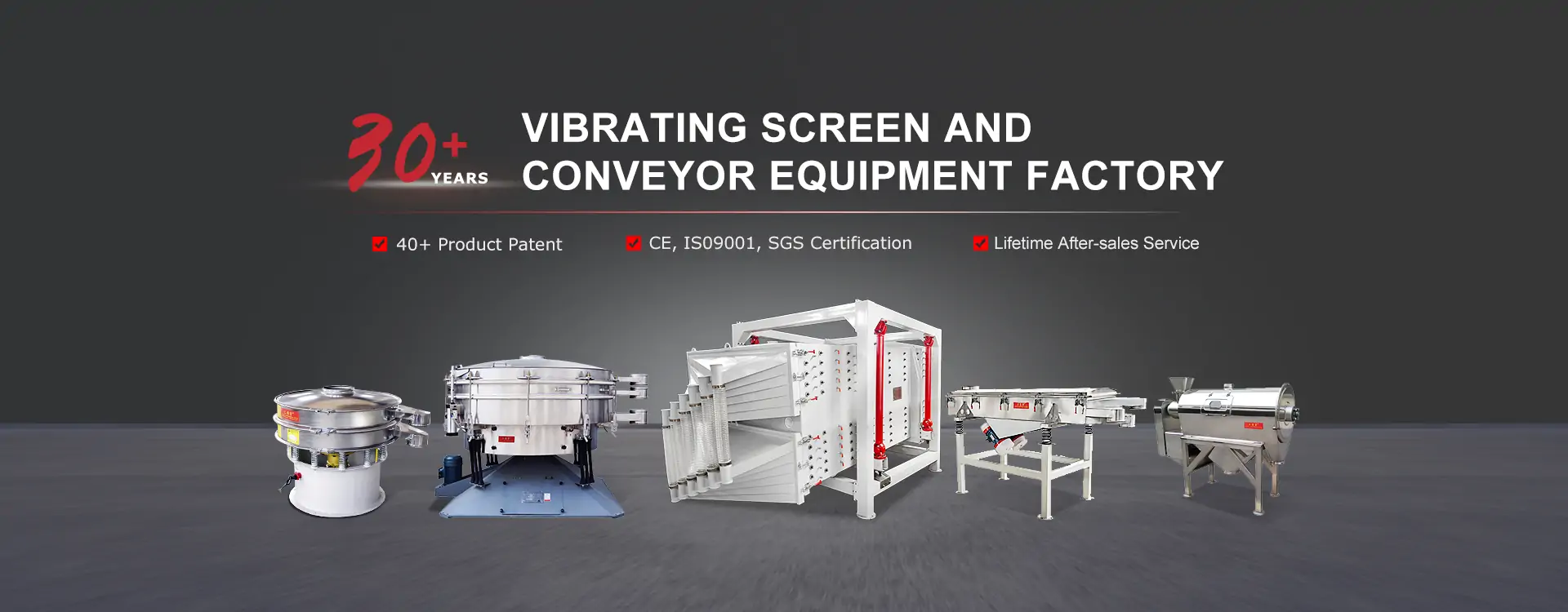
Sanyuantang has focused on screening and conveying solutions since 1994. For sand and mineral grading projects, our engineers review the required apertures, particle-size distribution, moisture, capacity and number of finished fractions before recommending a screen.
Learn more about Sanyuantang or review our industrial screening machines.
Discuss Your Screening Requirement
Send us the material, feed size, required cut sizes, moisture and target capacity. If a sieve analysis report is available, include it so our team can evaluate the screening load and suitable deck arrangement.
Email: info@sanyuantang.com
Phone: +86-18639095165