
Introduction
For chemical manufacturers processing ultrafine powders, achieving stable fine particle classification while maintaining production safety is a critical challenge. When screening materials below 325 mesh, traditional screening equipment may experience frequent screen clogging, unstable throughput and reduced screening efficiency.
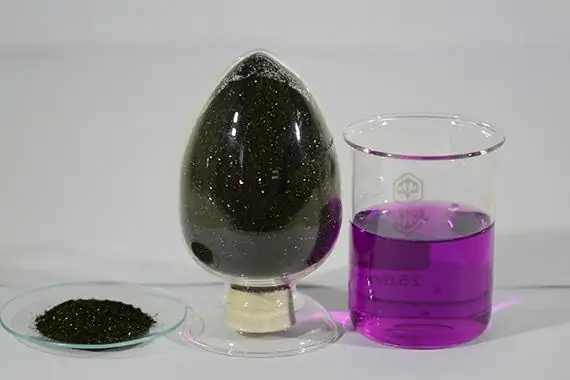
This case study presents how Sanyuantang provided a 325 mesh fine powder screening solution for a European chemical company processing specialty oxidizing salt. By using a 1.2m ultrasonic vibrating screen with ATEX requirements, the customer achieved reliable fine powder screening with a production capacity of 200–500 kg/h.
Project Summary
| Item | Details |
|---|---|
| Project Date | February 20, 2026 |
| Industry | Chemical Processing |
| Customer Location | European Union |
| Screening Material | Specialty Oxidizing Salt |
| Screening Mesh | 100 / 200 / 325 Mesh |
| Capacity | 200–500 kg/h |
| Equipment | 1.2m Ultrasonic Vibrating Screen |
| Special Requirement | ATEX Certification |
| Contact Material | SS316 Stainless Steel |
| Machine Base Material | SS304 Stainless Steel |
| Screening Purpose | Fine Particle Classification and Stable Production |
Customer Background
The customer is a chemical company located in the European Union, focusing on the processing and production of specialty oxidizing salt products.
Due to the characteristics of ultrafine chemical powders, the customer required precise particle size classification at 100, 200, and 325 mesh. At the same time, because the material involved fine powder processing and potential dust explosion risks, the production equipment needed to meet ATEX certification requirements.
Challenges in 325 Mesh Fine Powder Screening
During the customer’s previous screening process, several production problems affected efficiency and product consistency.
Screen Clogging During Fine Powder Processing
When processing powder materials at 325 mesh, ordinary screening equipment was prone to screen blocking. Fine particles accumulated on the mesh surface, reducing the effective screening area and affecting continuous production.
Difficulties in Maintaining Stable Throughput
As the screening mesh became finer, production capacity decreased due to frequent cleaning and reduced screening efficiency. The customer required a stable output range of 200–500 kg/h while maintaining accurate particle classification.
Safety Requirements for Chemical Powder Processing
Because specialty oxidizing salt is a fine chemical powder, the customer required equipment suitable for an ATEX production environment. Equipment design, material selection, and safety compliance were important factors during the solution selection process.
325 Mesh Fine Powder Screening Solution
Based on the customer’s material characteristics and production requirements, Sanyuantang provided a 1.2m ultrasonic vibrating screen as the screening solution.
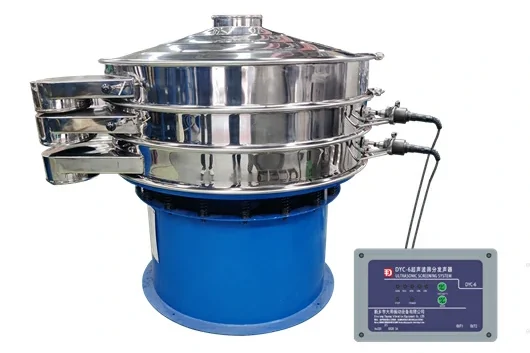
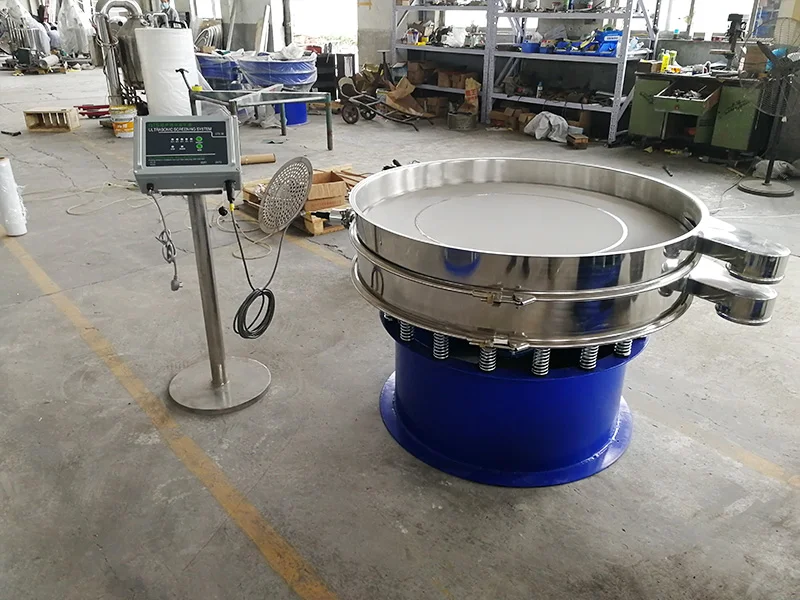
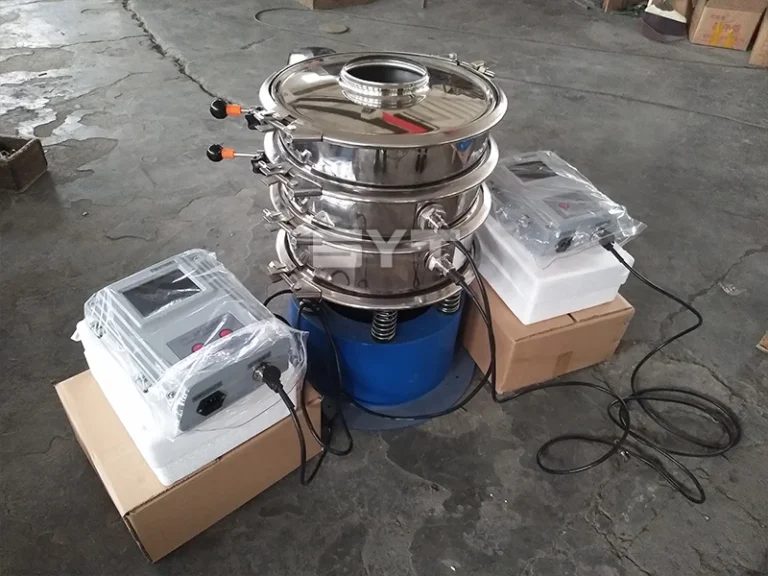
The ultrasonic system was selected specifically for fine powder screening applications. By applying high-frequency ultrasonic vibration to the screen mesh, the system helps reduce particle adhesion and improves the passing efficiency of fine powders through the 325 mesh screen.
The equipment was configured with 100 mesh, 200 mesh, and 325 mesh screening layers to achieve accurate particle size classification according to the customer’s production requirements.
Considering the chemical processing environment, all material-contact parts were manufactured from SS316 stainless steel, providing excellent corrosion resistance and compatibility with chemical powder applications. The equipment base was manufactured from SS304 stainless steel to meet the customer’s requirements for durability and cleanliness.
In addition, the equipment was designed according to the customer’s ATEX certification requirements, supporting safer operation in fine powder processing environments.
Equipment Configuration
| Configuration | Specification |
|---|---|
| Equipment Type | Ultrasonic Vibrating Screen |
| Diameter | 1.2 Meter |
| Screening Mesh | 100 / 200 / 325 Mesh |
| Capacity | 200–500 kg/h |
| Screening System | Ultrasonic Cleaning System |
| Contact Parts | SS316 Stainless Steel |
| Base Material | SS304 Stainless Steel |
| Application | Specialty Oxidizing Salt Screening |
| Safety Requirement | ATEX Certification |
For related product information, please see: Ultrasonic Vibrating Screen
Why Ultrasonic Screening Was Selected
For conventional powder screening applications, standard vibrating screens may work effectively. However, when processing ultrafine powders at 325 mesh, screen clogging becomes a major factor affecting production efficiency.
An ultrasonic vibrating screen provides several advantages for this application:
| Requirement | Ultrasonic Screening Advantage |
|---|---|
| 325 Mesh Screening | Improves fine powder passing efficiency |
| Screen Clogging Problem | Reduces particle blocking on mesh surface |
| Continuous Production | Maintains stable screening performance |
| Chemical Powder Processing | Suitable for precision classification |
| Fine Particle Quality | Improves particle size consistency |
Project Results
After installation and commissioning, the ultrasonic screening system successfully met the customer’s production requirements.
The equipment achieved stable screening performance for 100, 200 and 325 mesh specialty oxidizing salt, with production capacity reaching 200–500 kg/h.
Compared with the previous screening process, the ultrasonic system significantly improved fine powder passing efficiency and reduced problems caused by frequent screen blockage.
The combination of SS316 contact materials, ultrasonic screening technology and ATEX requirements provided the customer with a reliable solution for safe and continuous chemical powder processing.
Conclusion
For specialty chemical powders, achieving stable 325 mesh fine powder screening requires more than standard screening equipment. Factors such as material characteristics, screen clogging, production stability and safety requirements must all be considered.
In this project, Sanyuantang provided a customized solution using a 1.2m ultrasonic vibrating screen with SS316 contact parts and ATEX requirements, helping the European customer achieve reliable fine powder classification for specialty oxidizing salt production.
Email: info@sanyuantang.com
Phone: +86-18639095165
More Recommended Screening Machine

FAQs
1. Why is 325 mesh fine powder screening difficult?
325 mesh screening involves very small particle sizes, which can easily cause screen clogging and reduce screening efficiency. Equipment with ultrasonic cleaning technology can improve powder passing performance and maintain stable production.
2. What materials are suitable for ultrasonic fine powder screening?
Ultrasonic vibrating screens are widely used for fine powders, including chemical powders, pharmaceutical materials, mineral powders and other materials requiring high precision classification.
3. Why was an ultrasonic vibrating screen selected for specialty oxidizing salt?
Because specialty oxidizing salt requires fine particle classification and stable screening performance. Ultrasonic technology helps reduce mesh blockage when processing ultrafine powders.
4. What is the advantage of SS316 stainless steel in chemical screening applications?
SS316 stainless steel provides excellent corrosion resistance and durability, making it suitable for equipment components that directly contact chemical materials.
5. Why does this application require ATEX certification?
Fine chemical powders may create combustible dust risks during processing. ATEX certification helps ensure that equipment meets European safety requirements for potentially explosive environments.
6. Can ultrasonic vibrating screens process multiple mesh sizes?
Yes. Ultrasonic vibrating screens can be configured with different mesh combinations, such as 100, 200 and 325 mesh, according to specific particle size requirements.
7. How can screen clogging be reduced during fine powder screening?
Selecting suitable mesh materials, optimizing feeding conditions, and using ultrasonic cleaning systems can effectively reduce screen blockage during ultrafine powder processing.
8. How do I choose the right fine powder screening solution?
Selection depends on material characteristics, required mesh size, production capacity, safety requirements, and industry standards. Professional evaluation helps determine the most suitable screening configuration.