Why can the same pigment formula produce a slightly different color from one batch to another?
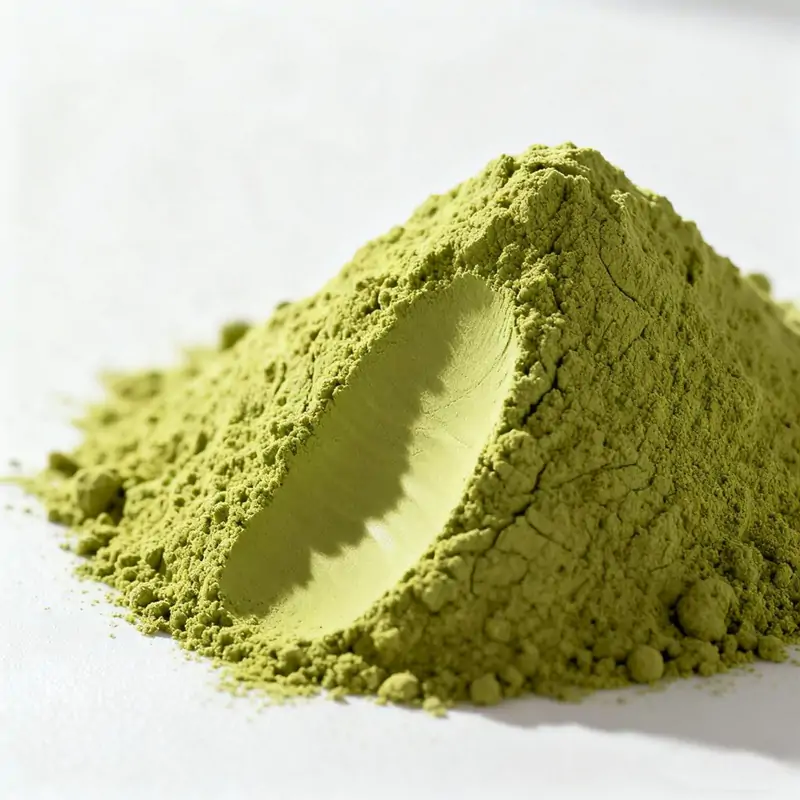
It is tempting to blame the formulation first. Sometimes that is the right place to look. But particle size is another factor that should not be overlooked, especially when the material is a fine mineral pigment or color powder. A few oversized particles may not sound like a big deal. In a fine powder, however, they can affect surface smoothness and the way the material behaves during further processing. A wide particle size distribution can also make the powder less consistent from batch to batch. That is why screening matters.

For very fine pigments, though, screening brings its own problems. Once the mesh becomes fine enough, powder can stick to the screen, block the openings, or simply stop moving through the mesh as efficiently as expected. This is where ultrasonic screening for pigments becomes worth considering.
Why Particle Size Matters in Pigment Processing
Pigment color is related to how particles interact with light, but color consistency is not controlled by particle size alone. Pigment composition, dispersion, formulation, mixing, coating conditions, and other parts of the process all have an effect. Still, particle size has an important role.
If a powder contains too many oversized particles, some of them may remain visible in the finished material. This can be particularly noticeable in coatings, paints, ceramic materials, and other applications where a smooth and uniform surface is expected.
The problem is not necessarily that every particle needs to be exactly the same size. What manufacturers usually need is a controlled particle size range. That means removing particles that are too large and keeping the useful fraction within the required range. Screening is one of the simplest ways to do this.
What Does Screening Do for Pigments?
In a typical pigment processing line, screening may take place after grinding or another size-reduction process. The purpose is fairly straightforward: separate material according to particle size before it moves to the next stage. Depending on the production process, the screen may be used to remove coarse particles, classify fine powder, or separate material that has formed larger agglomerates. This can make a difference downstream.
If the feed entering the mixing or dispersion process contains a large amount of oversized material, the next stage has to deal with that variation. If the particle size is better controlled beforehand, the process starts with a more consistent powder.
There is one thing worth pointing out, though. Screening does not determine the final color by itself. It is one part of the process. Keeping that distinction clear is important when evaluating the actual value of a screening machine.
The Problem with Screening Fine Pigment Powder
When the particles become very small, adhesion and electrostatic effects can become more noticeable. Some powders also tend to form small agglomerates.
On a fine mesh, this can lead to a familiar problem: the powder starts building up on the screen.
At first, the effect may seem minor. Then some openings become blocked. The available screening area gets smaller, and the material takes longer to pass through.
Operators may notice that the screening rate has dropped or that the screen needs cleaning more often. With a high-mesh screen, the problem can become even more obvious because the openings are already very small. This is commonly referred to as mesh blinding or screen clogging.
For a pigment manufacturer, frequent cleaning is more than an inconvenience. It can interrupt production and make the screening process less predictable.
How Ultrasonic Screening Helps
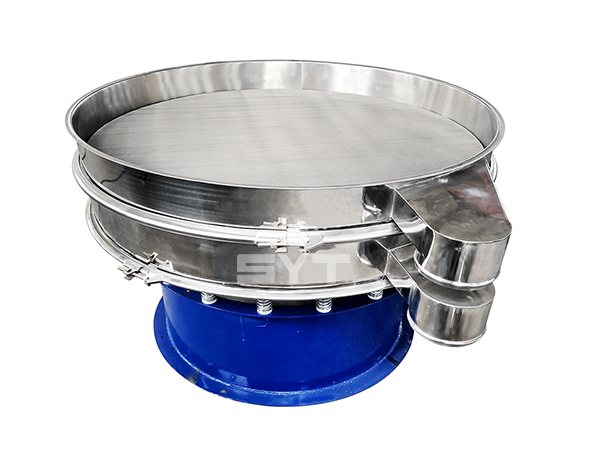
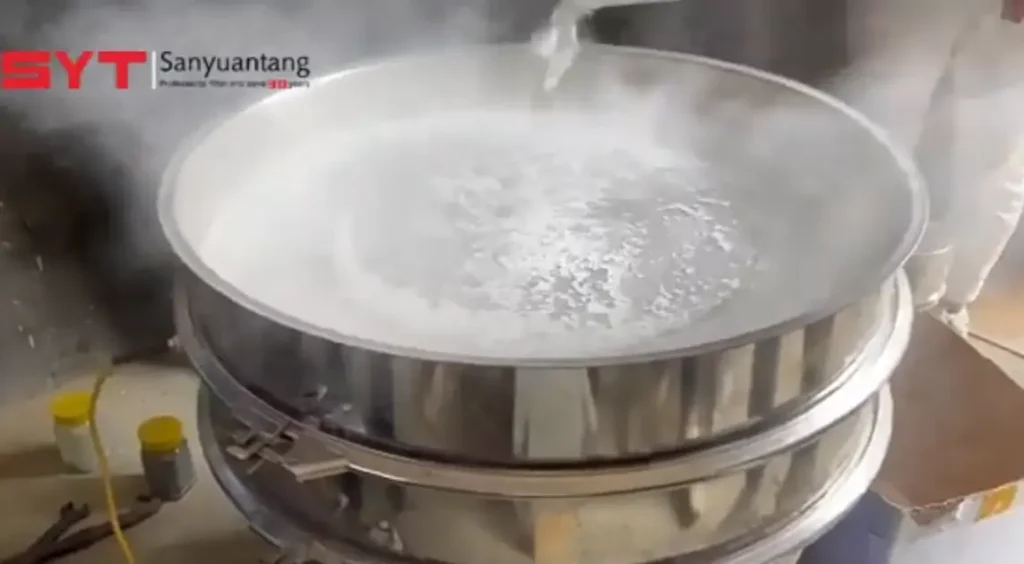
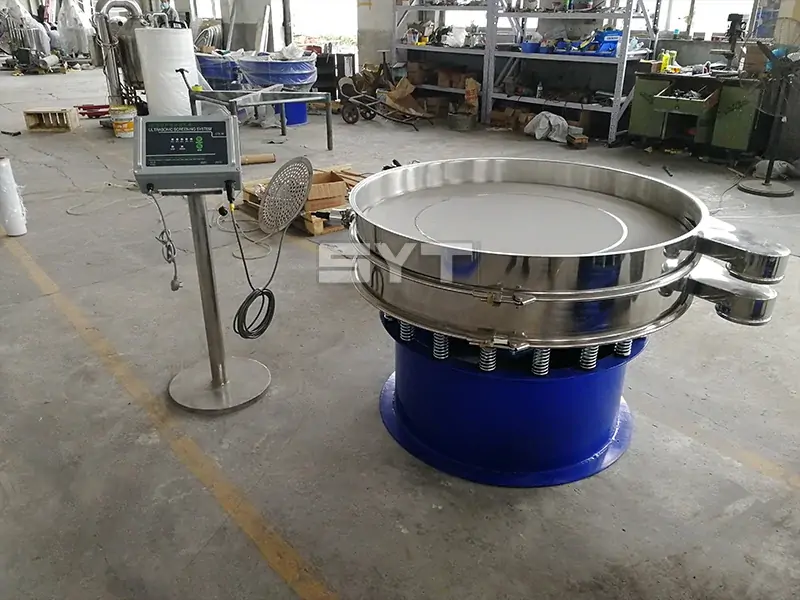
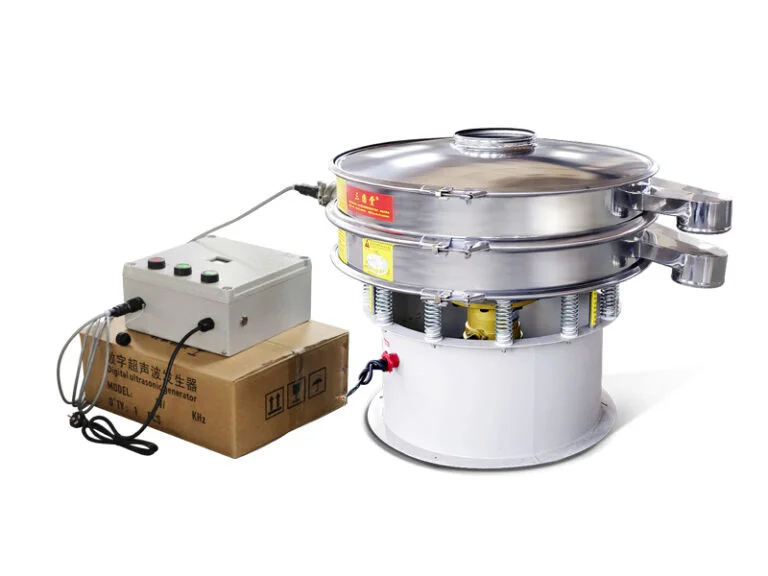
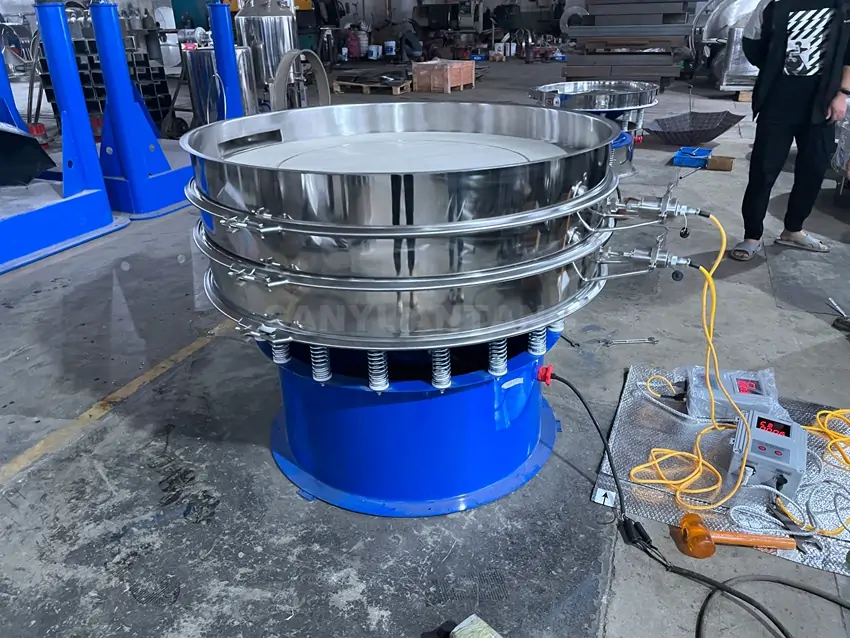
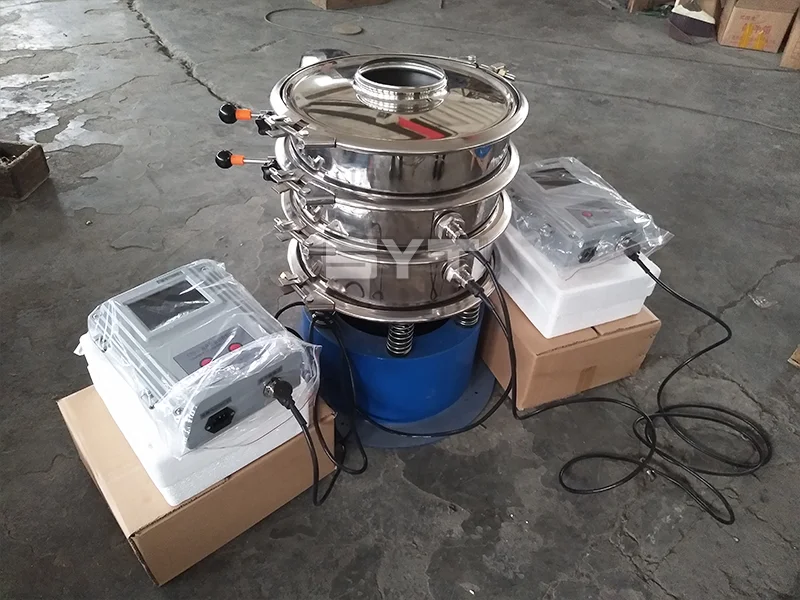
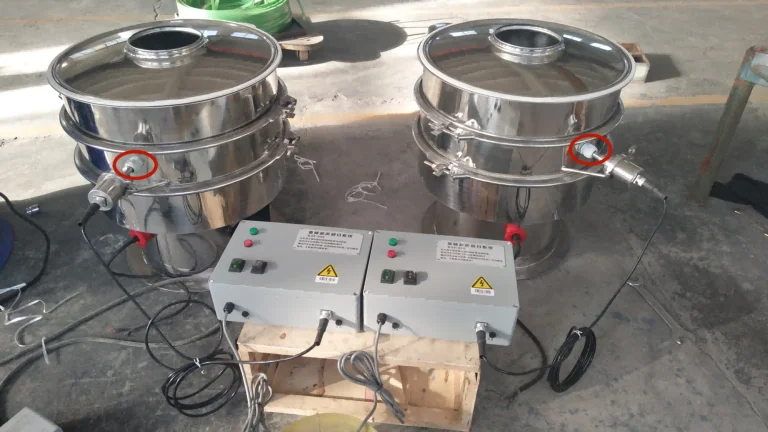
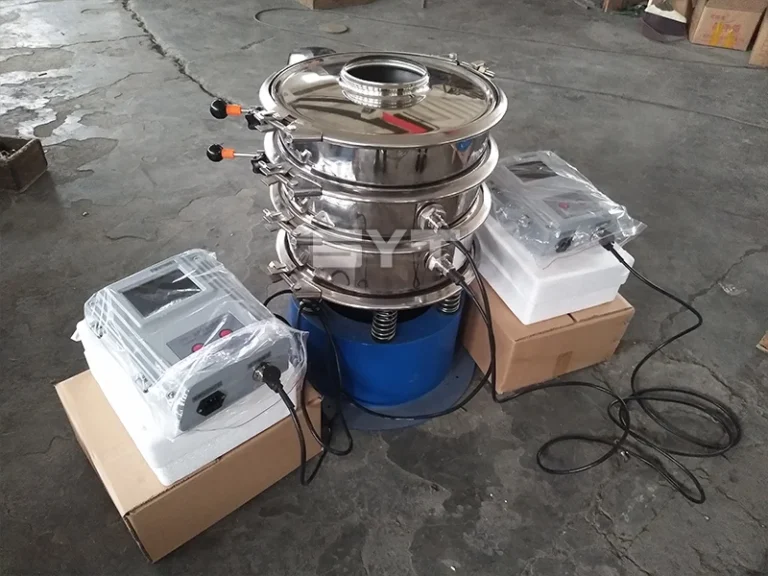
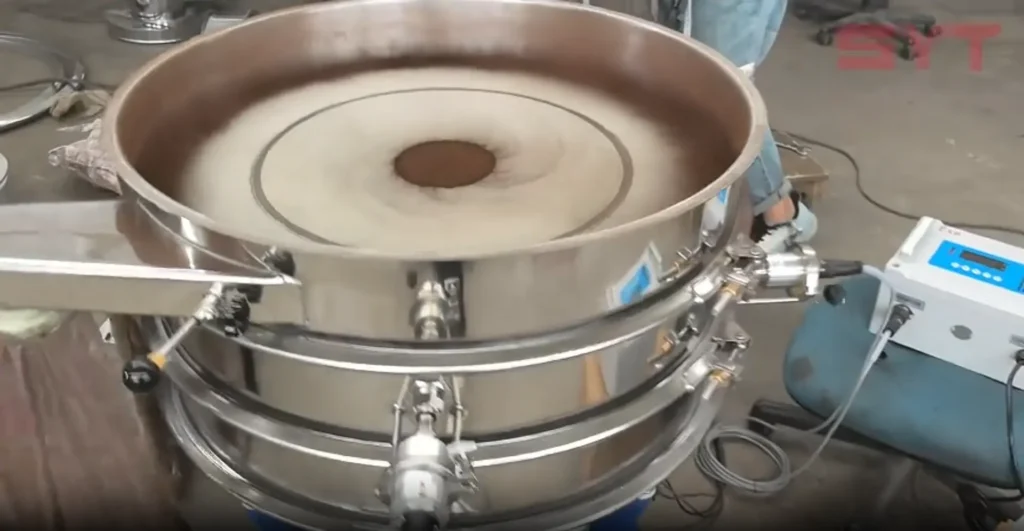
An ultrasonic vibrating screen adds a high-frequency vibration to the screen mesh. The machine still works as a rotary vibrating screen, moving the material across the screening surface. The ultrasonic system adds another layer of vibration directly to the mesh. This helps fine particles move across the screen and can reduce the tendency of powder to remain attached to the mesh or block the openings.
That is the main reason ultrasonic screening is used for difficult fine powders.
It does not change the pigment chemically. It does not make a pigment “more colorful.” Instead, it helps the screening stage do its job when a conventional screen has difficulty handling very fine material. This distinction is easy to miss in marketing descriptions, but it matters when choosing equipment.
Ultrasonic Screening for 500–600 Mesh Pigments
High-mesh screening is where the limitations of conventional screening often become more noticeable.
A 500-mesh or 600-mesh screen has very small openings. Fine particles need to find those openings and pass through them, while particles outside the required size range should remain on the screen. If powder starts sticking to the mesh, the process becomes less efficient.
Sanyuantang’s ultrasonic vibrating screen is designed for fine screening applications and can be configured for screening requirements up to approximately 635 mesh, depending on the material and machine setup.
The machine itself is only part of the equation, however. When we look at a fine powder screening application, we also need to know what the material is actually like.
For example:
- What is the feed particle size?
- What particle size needs to pass?
- How much material needs to be processed per hour?
- Is the powder dry and free-flowing?
- Does it carry static electricity?
- Does it tend to stick to the mesh?
- Does it form agglomerates?
- How many fractions need to be separated?
These details can have a bigger effect on the final screening result than the mesh number alone. A pigment that needs 500-mesh screening is not automatically the same as another pigment with the same nominal mesh requirement.
Conventional Vibrating Screen or Ultrasonic Screen?
There is no need to use an ultrasonic system for every pigment application. A conventional rotary vibrating screen can work well when the powder has good flowability and the required screening performance can be maintained without serious mesh clogging.
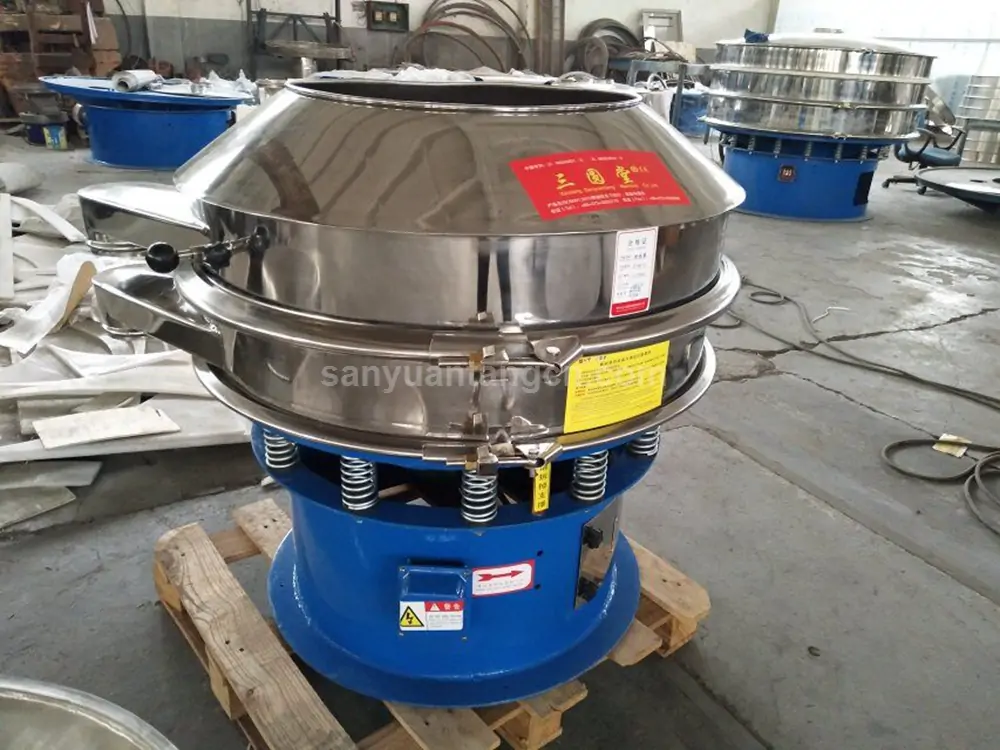
The situation changes when fine powder begins to block the mesh or when the screening capacity drops as the mesh becomes finer.
Here is a practical comparison:
| Screening Condition | Conventional Vibrating Screen | Ultrasonic Vibrating Screen |
|---|---|---|
| General powder screening | Suitable | Suitable |
| Coarse particle separation | Suitable | Suitable |
| Fine pigment powder | Depends on material | Often worth evaluating |
| High-mesh screening | May experience mesh blinding | Designed to reduce mesh blocking |
| Powder with static electricity | Can be challenging | Ultrasonic assistance can help |
| Adhesive fine powder | May require more cleaning | Better suited to difficult fine-powder conditions |
So the question should not be “Which machine is more advanced?” It should be “What is causing the screening problem?”
If the answer is simply insufficient screening area, the solution may be a larger machine. If the problem is that fine powder is sticking to the mesh, increasing the machine size alone may not solve it.
That is where ultrasonic screening can make more sense.
Which Pigments Can Be Screened with Ultrasonic Technology?
Ultrasonic screening can be considered for a range of fine pigment and color-related powders.
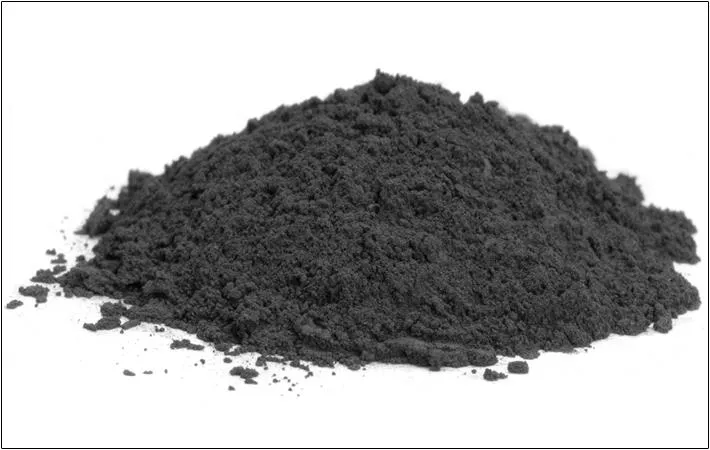
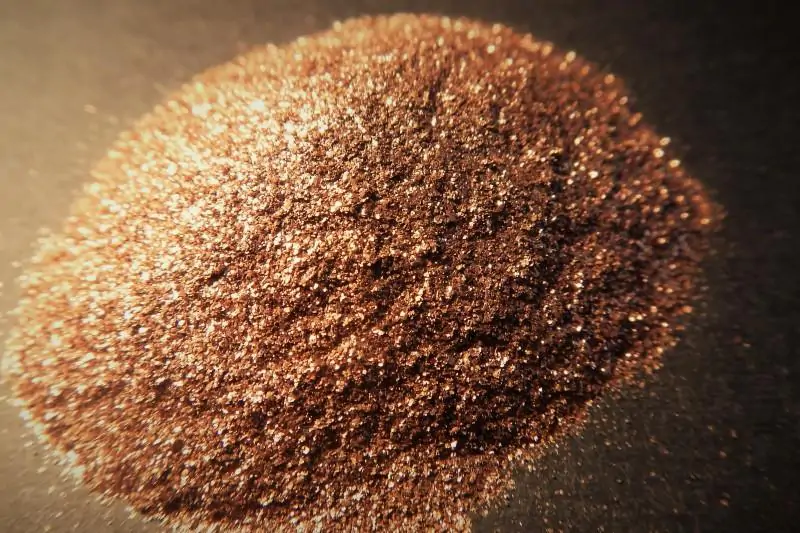
Typical materials may include mineral pigments, inorganic pigments, iron oxide pigments, titanium dioxide, ceramic pigments, and other fine powder materials. The technology is not limited to pigments either. The same type of screening problem can occur with other fine powders that are prone to static electricity, adhesion, or agglomeration.
Sanyuantang has developed ultrasonic screening solutions for different fine powder applications, including materials that are difficult to screen using conventional mesh vibration alone.
But material testing is still important. A machine that performs well with one fine powder may need a different configuration for another.
Does Fine Screening Really Affect Color Consistency?
Yes, but the relationship needs to be understood correctly. Screening is not responsible for the entire color result. A pigment can have a well-controlled particle size and still produce inconsistent color if the formulation, dispersion, mixing, or coating process is unstable. What screening does is control one physical variable before those later processes take place.
Think of the process this way:
Grinding → Screening → Particle Size Control → Mixing / Dispersion → Final Product
If oversized particles or poorly classified powder are allowed to move into the next stage, they become another variable that the production process has to deal with.
A more controlled powder feed does not guarantee perfect color consistency, but it gives the downstream process a more predictable starting point.
That is the real value of fine screening in pigment production.
Why Not Just Increase the Vibration?
This is a question we often encounter when discussing fine powder screening.
If the powder is not passing through the mesh, it seems reasonable to increase the mechanical vibration. Sometimes that helps. Sometimes it does not.
If the real problem is that particles are sticking to the mesh or becoming trapped in the openings, simply making the entire machine vibrate harder does not necessarily solve the problem.
Ultrasonic screening works differently:The ultrasonic system introduces high-frequency vibration directly to the screen mesh. This helps keep fine particles moving and can reduce the buildup that causes mesh openings to become blocked.
That is why ultrasonic systems are particularly useful in fine and high-mesh screening applications.
Choosing an Ultrasonic Screening Machine for Pigments
The right machine starts with the material, not the catalog.
Before selecting an ultrasonic vibrating screen, it is useful to provide the supplier with several basic details:
- Material: What type of pigment or powder is being screened?
- Feed size: What is the approximate particle size entering the screen?
- Cut size: What particle size needs to pass through?
- Capacity: How many kilograms per hour need to be processed?
- Material behavior: Is the powder adhesive, electrostatic, hygroscopic, or prone to agglomeration?
- Screening layers: Is one separation step enough, or are several particle-size fractions required?
- Contact material: Does the application require stainless steel construction such as SUS304 or SUS316?
These details give a much better starting point for equipment selection. For difficult powders, an actual material test is even better. It allows the screening performance to be checked under real conditions instead of assuming that a particular mesh number will automatically deliver the expected result.
Sanyuantang Ultrasonic Vibrating Screen for Pigment Screening
Sanyuantang’s ultrasonic vibrating screen combines a rotary vibrating screen with an ultrasonic screening system for fine powder applications.
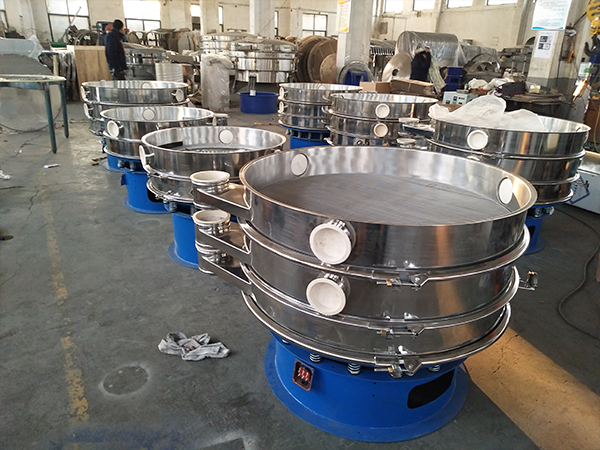
The current range can be configured for approximately 10–635 mesh, with different machine diameters, screening areas, and one to three screening layers available according to the application.
The equipment can be used for fine powder classification where conventional screening is affected by problems such as mesh clogging, particle adhesion, static electricity, or poor powder movement.
For pigment applications, the machine configuration can be selected according to the required mesh size, capacity, material characteristics, and production conditions.
This is also why Sanyuantang does not recommend selecting an ultrasonic screen based on mesh size alone.
If you are screening a 500-mesh pigment, for example, the useful information is not just “500 mesh.”
We also need to know the powder’s actual particle distribution, feed rate, flowability, and screening behavior.
That information determines whether ultrasonic screening is necessary and what type of configuration makes sense.
When Is Ultrasonic Screening Worth Considering?
If your current screening process is running smoothly, there may be no reason to change it.
An ultrasonic vibrating screen is more worth considering when you repeatedly see problems such as:
- fine powder blocking the mesh;
- reduced screening capacity at high mesh sizes;
- powder remaining on the screen;
- frequent manual mesh cleaning;
- electrostatic powder affecting screening;
- agglomerated particles passing through inconsistently;
- difficulty maintaining a stable particle size range.
In these situations, ultrasonic screening can provide an additional way to keep the mesh working more effectively.
The goal is not to replace every conventional vibrating screen.
It is to solve the situations where fine powder makes conventional screening difficult.
FAQs
What is ultrasonic screening for pigments?
Ultrasonic screening for pigments uses high-frequency vibration on the screen mesh to assist the screening of fine pigment powders. It is mainly used to reduce mesh clogging and improve the movement and passage of fine particles through high-mesh screens.
Can an ultrasonic vibrating screen handle 500-mesh pigment powder?
Yes. Ultrasonic vibrating screens can be used for high-mesh pigment screening, including applications around 500 mesh and above. Sanyuantang offers configurations up to approximately 635 mesh. Actual screening performance depends on the material and operating conditions.
Can ultrasonic screening improve pigment color consistency?
Ultrasonic screening does not directly change pigment color. Its role is to improve particle size classification and screening stability. More consistent particle size can provide a more predictable powder feed for later mixing, dispersion, and processing.
Does ultrasonic screening completely prevent mesh clogging?
No screening system can guarantee that a mesh will never clog. Ultrasonic vibration is designed to reduce the tendency of fine powder to block the mesh, but the actual result depends on material properties, moisture, static electricity, adhesion, feed rate, and mesh specifications.
Is ultrasonic screening necessary for all pigments?
No. If a conventional rotary vibrating screen can meet the required capacity and particle separation without significant mesh clogging, an ultrasonic system may not be necessary. It is mainly worth evaluating for difficult fine powders and high-mesh screening.
What information should I provide when choosing a pigment screening machine?
The most useful information includes the pigment type, feed particle size, required mesh or cut size, processing capacity, moisture content, bulk density, and whether the powder is adhesive, electrostatic, or prone to agglomeration. Material testing can provide a more reliable basis for final equipment selection.
Conclusion
Fine pigment screening is not just about choosing a smaller mesh. Once the powder becomes very fine, problems such as adhesion, static electricity, agglomeration, and mesh clogging can start to affect the screening process. That is where ultrasonic screening for pigments can be useful.
The ultrasonic system does not change the pigment itself. It helps the screen mesh deal with fine particles more effectively, making high-mesh screening easier to manage in applications where conventional screening may struggle. For pigment manufacturers, the best equipment choice depends on the actual powder rather than the target mesh number alone.
If you are dealing with fine pigment powder, especially around 500–600 mesh, testing the material before selecting the final machine is a practical place to start.
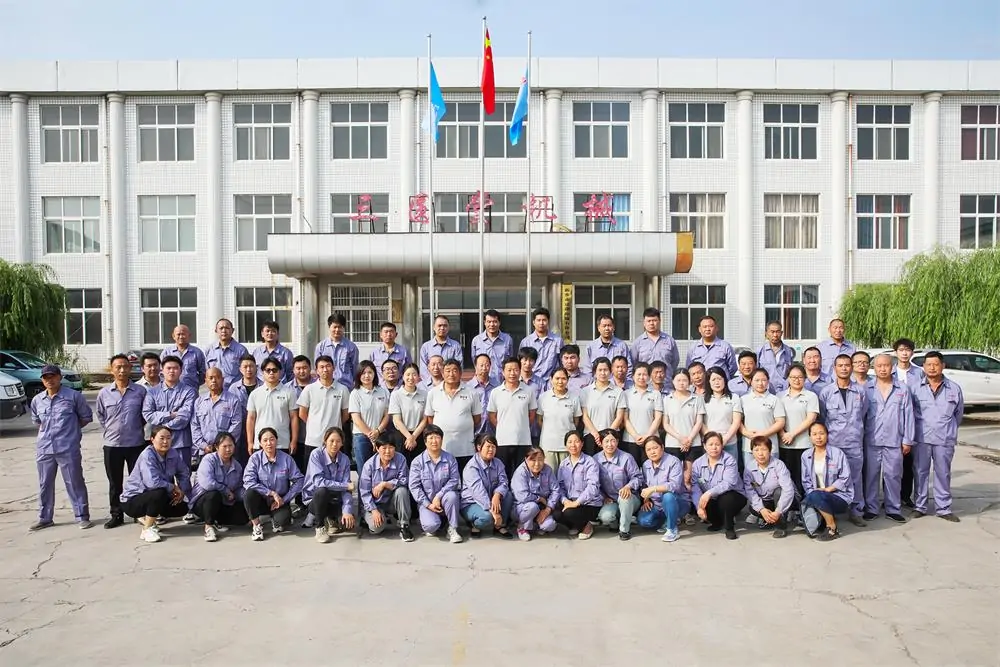
Sanyuantang provides ultrasonic vibrating screen solutions for fine powder screening and can recommend the appropriate configuration based on material characteristics, screening requirements, and production capacity.
Email: info@sanyuantang.com
Phone: +86-18639095165