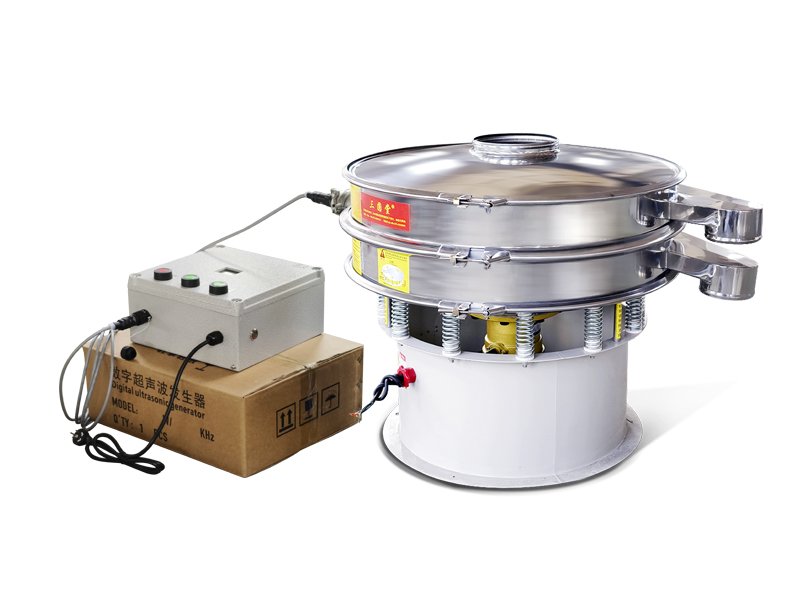
In industries such as solid waste treatment, mining, and food processing, the selection of a waste screening machine directly determines screening efficiency and resource utilization rate. According to industry data, insufficient equipment matching can lead to more than 30% capacity loss, while precise selection can increase screening efficiency by over 40%.
This article will analyze the main problems of industrial screening and the technical characteristics and application scenarios of tumbler screening machine, ultrasonic vibrating screen, and linear vibrating screen, and provide selection solutions based on material characteristics.
Core Problems and Technical Requirements of Industrial Waste Screening Machine
Modern industrial screening faces three core contradictions: high-moisture materials blocking the screen mesh, insufficient separation accuracy of fine powder materials, and the balance between large processing capacity and screening efficiency.
A waste treatment project case shows that when the material moisture content exceeds 35%, the clogging rate of traditional screening equipment will rise to 60%, resulting in downtime for cleaning accounting for as much as 25%. This requires the screening machine to have targeted solutions.
Key technical indicators should focus on three dimensions:
Processing capacity:
The material throughput per unit time (t/h) must match the capacity of the upstream production line. For example, the processing range of Sanyuantang’s linear vibrating screen is usually 1–6 t/h, while large tumbler screening machines can reach 10–20 t/h.
Screening accuracy:
The separation efficiency of target particle size materials is directly related to mesh size and vibration frequency. Sanyuantang’s ultrasonic vibrating screen can achieve ultra-fine screening of 50–500 mesh, while conventional equipment usually stops at 200 mesh.
Anti-clogging capability:
The screen cleaning device is very critical. The Bouncing Ball Cleaning System can effectively handle sticky materials, while the ultrasonic system is suitable for fine powder agglomeration problems.
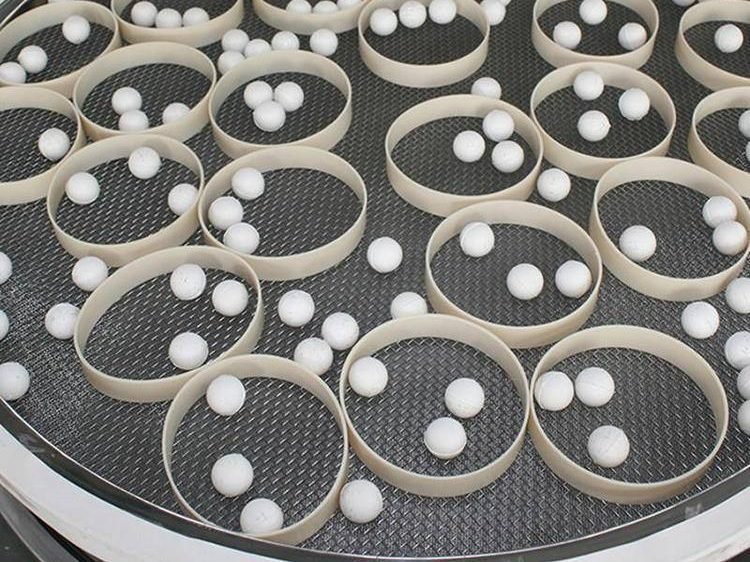
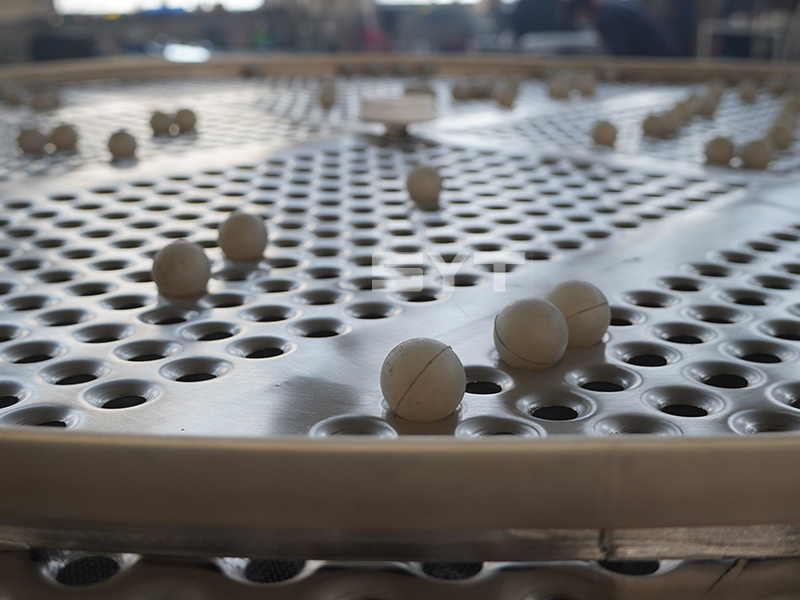
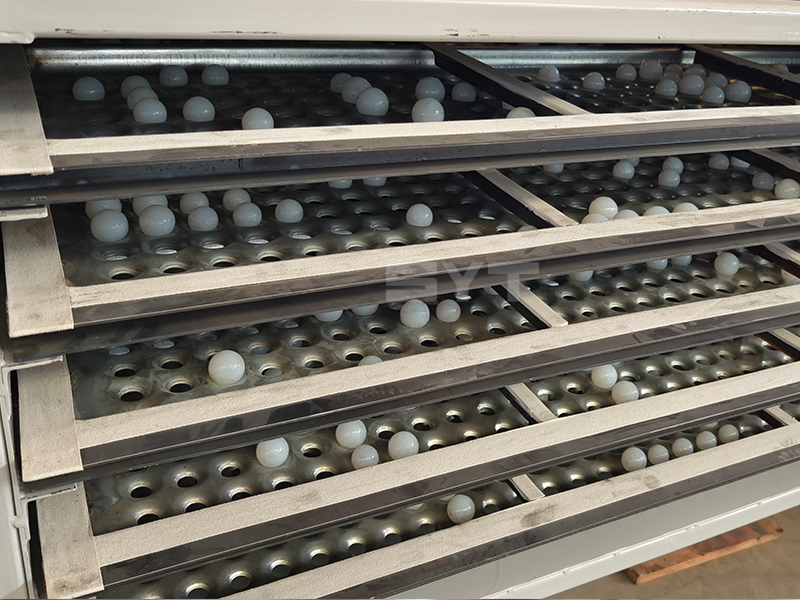
Different industries have significantly different priorities: the food and pharmaceutical industries have strict requirements on materials (such as SUS304 stainless steel) and hygienic design, the mining industry focuses more on wear resistance and processing capacity, and the chemical industry needs to consider explosion-proof and corrosion resistance.
So if you do not know how to choose equipment, you can contact our professional team, and we will provide you with suitable selection suggestions based on your actual working conditions. Below are three classic waste screening machines for waste screening from Sanyuantang.
Three Core Waste Screening Machine Types from Sanyuantang
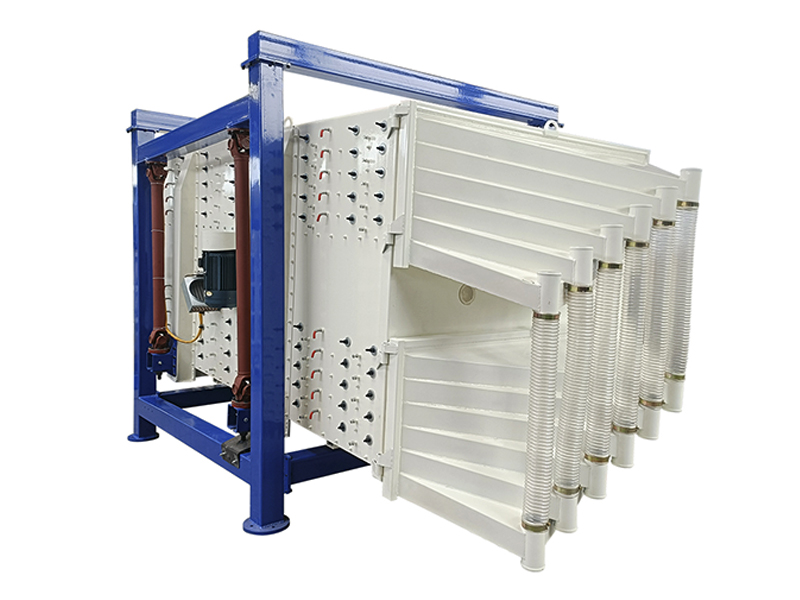
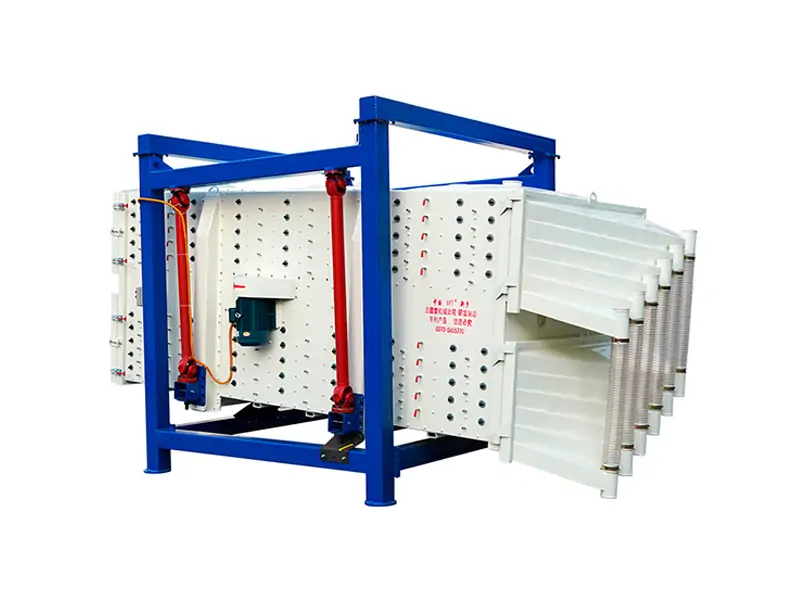
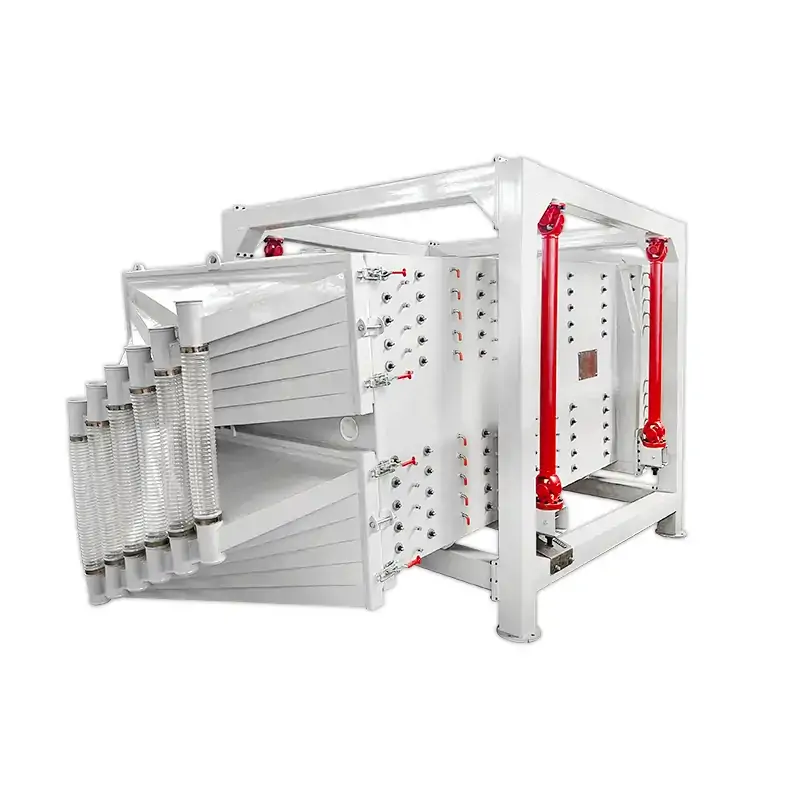
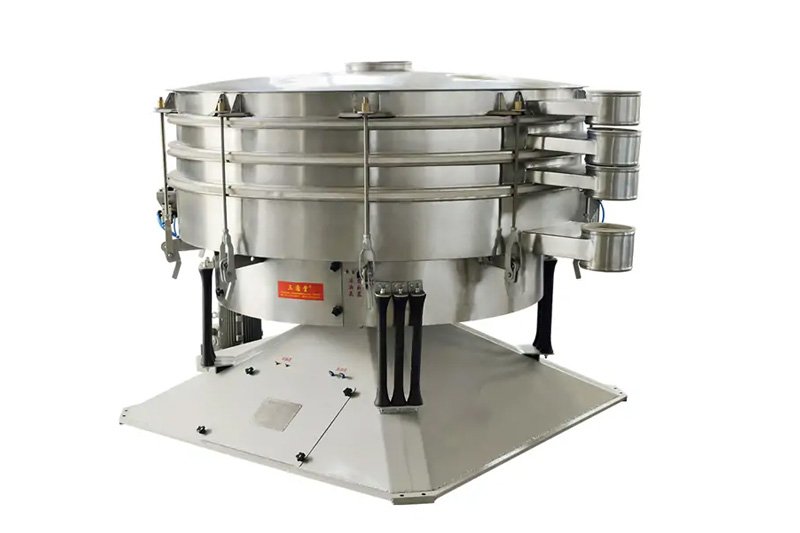
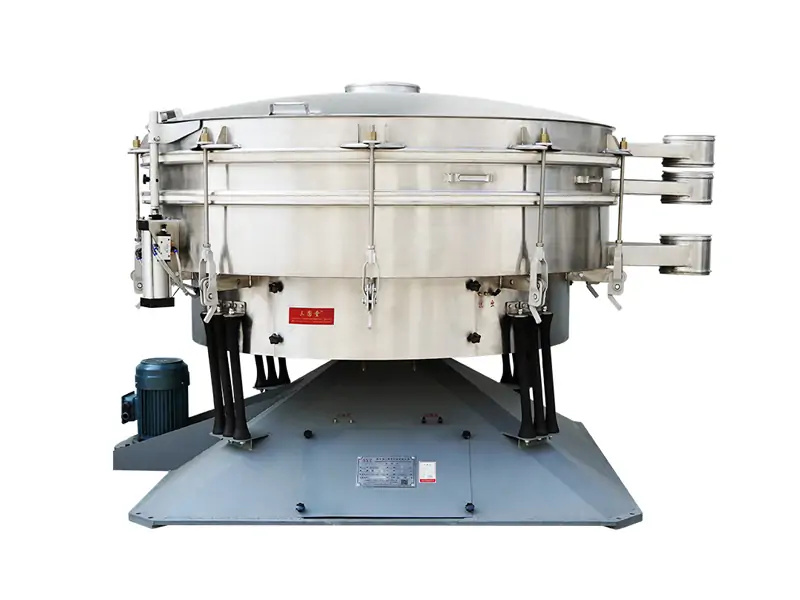
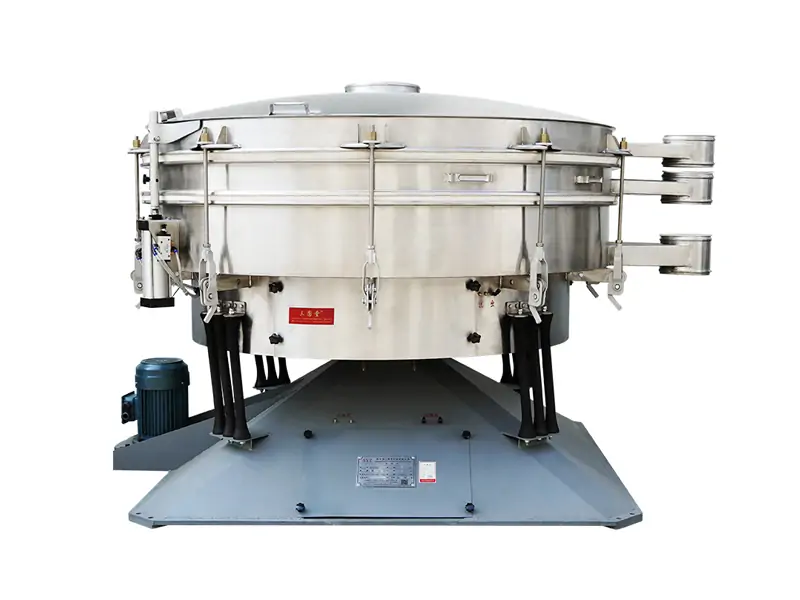
tumbler screening machine:
Working principle:
It adopts a compound motion trajectory of eccentric vibration and rotary movement, enabling materials to produce spiral throwing motion on the screen surface, achieving multi-layer classification. It is especially suitable for large-scale screening of medium and coarse materials such as quartz sand and plastic particles.
Technical parameters:
- Processing capacity: 10–20 T/H (depending on material density)
- Screening layers: 1–10 layers optional
- Noise control: <75 dB, better than the industry average
Core advantages:
Stable operation is achieved through the rubber spring damping system, combined with a bouncing ball cleaning device to effectively prevent clogging of wet and sticky materials.
Typical applications:
Silica sand classification in the mining industry, aggregate separation in construction waste treatment, and particle screening in plastic recycling. A quartz sand processing plant case shows that after using a 1500 mm diameter tumbler screen, the screening efficiency of 3–5 mm particles increased to 92%, and energy consumption decreased by 18%.
ultrasonic vibrating screen:
Working principle:
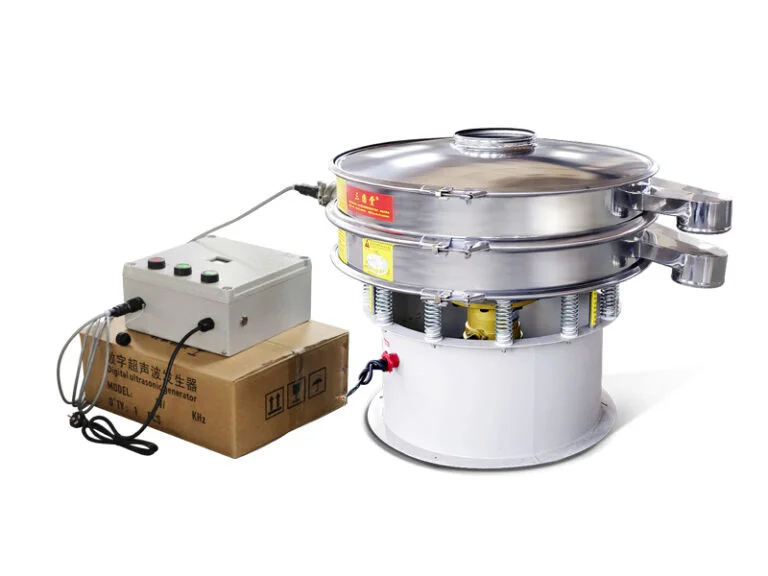
Based on traditional vibrating screens, 20–40 kHz ultrasonic vibration is superimposed, causing the screen mesh to generate high-frequency micro-amplitude vibration, effectively breaking the surface tension and electrostatic adsorption of fine powders. Its ultrasonic generator and transducer work together to increase the screening efficiency of 500 mesh materials to over 95%.
Technical parameters:
- Effective screen diameter: 600–1200 mm
- Power configuration: 0.25–3 kW
- Mesh size: 50–500 mesh
- Material options: SUS304/316 stainless steel or carbon steel, meeting pharmaceutical-grade cleanliness requirements
Typical applications:
Fine screening of protein powder, traditional Chinese medicine powder, and metal powder. A protein powder production enterprise increased the qualification rate of 80–120 mesh products from 78% to 99%, and the service life of the screen mesh was extended by 3 times after using the SYC-1000 ultrasonic screen.
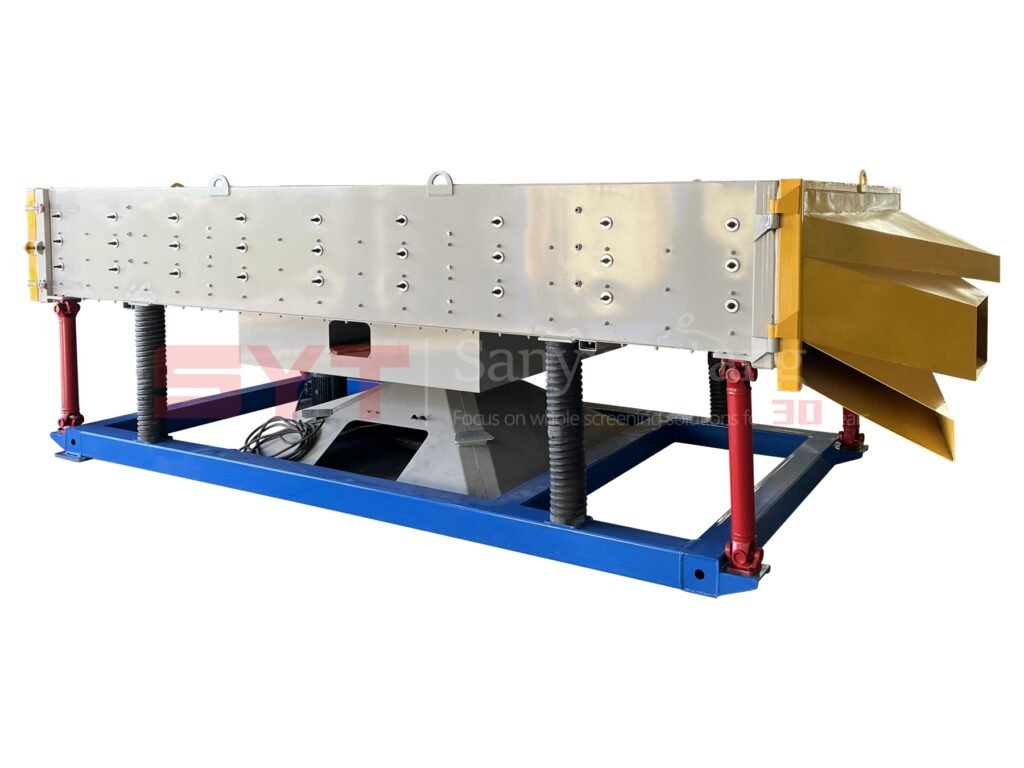
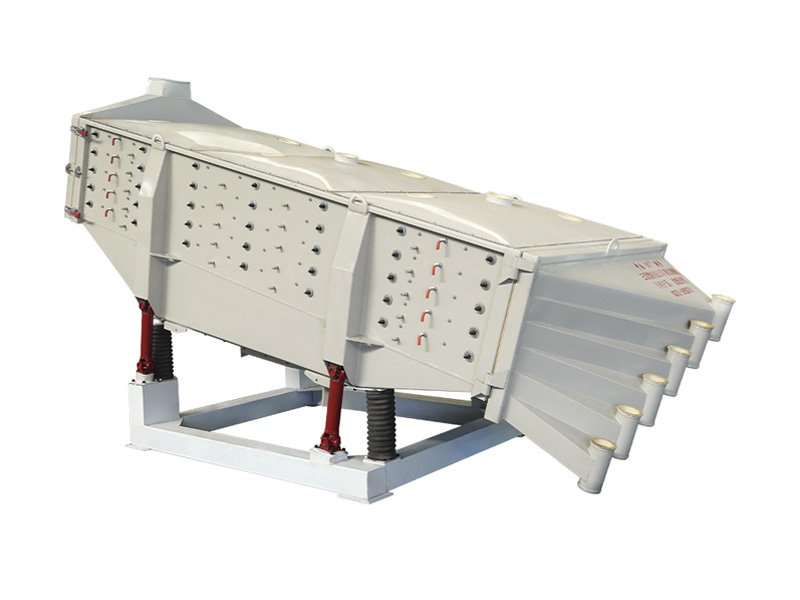
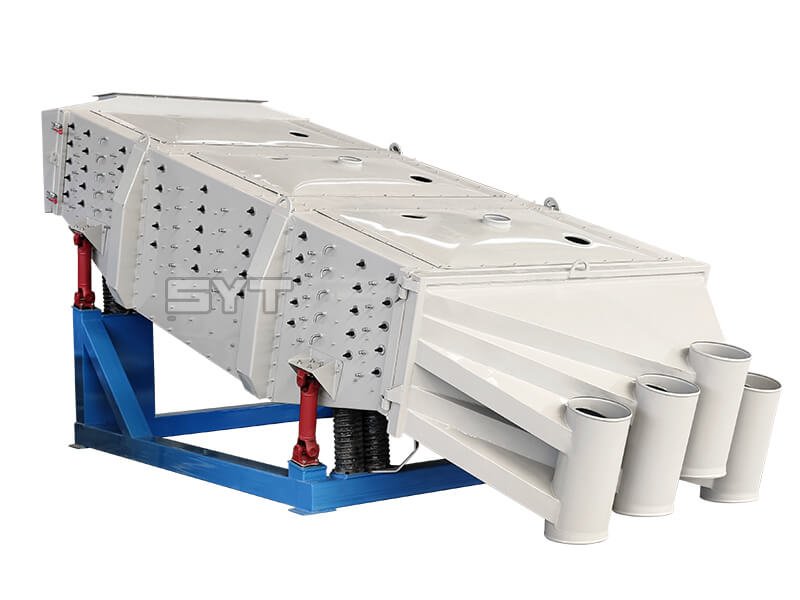
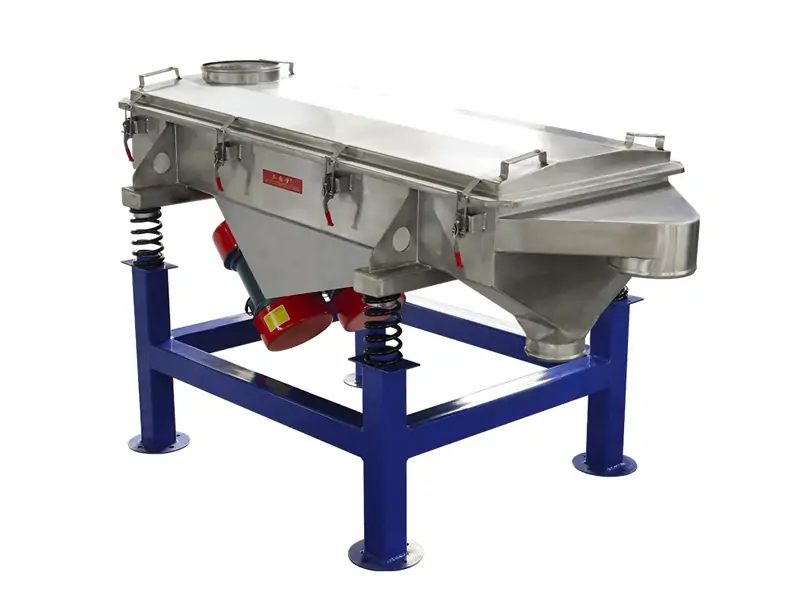
linear vibrating screen
Working principle:
Driven by vibration motors, materials are thrown forward along a straight trajectory, and classification is achieved through multi-layer screens. Its structure is simple, and the maintenance cost is only 60% of that of a tumbler screen.
Technical parameters:
- Processing capacity: 1–6 t/h (single unit)
- Separation particle size: 0.074–40 mm
- Vibration frequency: 960 times/min
- Installation method: can be tilted 1–5° to adapt to different material fluidity
Typical applications:
Impurity removal screening in grain processing, coarse and fine classification of chemical raw materials, and preliminary separation of construction waste. After using the SYZ-520 linear screen, a coffee processing plant improved grading efficiency by 25%, and the impurity removal rate reached 98%.
Waste Screening Machine Selection Decision and Case Analysis
Sanyuantang Machinery summarizes a four-step selection method:
Step 1: Material characteristic analysis
- Particle size distribution: ultrafine powder below 0.074 mm should prioritize the ultrasonic vibrating screen
- Moisture content: wet materials >20% are recommended to use the tumbler screening machine with the bouncing ball cleaning system
- Corrosiveness: the chemical industry should prioritize SUS316 material
Step 2: Capacity matching calculation
Single-shift processing capacity = equipment capacity × effective working time × utilization rate (recommended 0.7–0.8)
Example: A waste treatment plant with a daily processing capacity of 200 tons needs to select screening equipment of at least 5 t/h (based on an 8-hour working system)
Step 3: Site and environmental requirements
- Limited space scenarios: a linear vibrating screen with a modular design is more suitable
- Noise control areas: prioritize tumbler screening machine with <75 dB
Step 4: Full lifecycle cost evaluation
- Initial investment: the ultrasonic type is about 1.5–2 times that of the linear type
- Operation and maintenance cost: The replacement cost of the ultrasonic transducer should be included in the long-term budget
Industry Application Cases
Mining industry:
An iron mine uses a tumbler screening machine to process 20–50 mm ore, configured with 3 layers of screens to achieve coarse, medium, and fine three-stage separation, with a processing capacity of 15 T/H and screening efficiency stable above 85%.
Food industry:
A seasoning enterprise uses an ultrasonic vibrating screen to process 100–200 mesh chili powder. With a 500W ultrasonic system, the powder agglomeration problem is solved, and the product qualification rate increases to 99.5%.
Environmental protection industry:
A municipal solid waste treatment project uses a linear vibrating screen to separate organic materials below 50 mm, combined with magnetic separation equipment to achieve iron material separation.
Common Mistakes in Waste Screening Machine Selection and Solutions
Mistake 1: Blindly pursuing high processing capacity while ignoring screening accuracy
Solution: Achieve graded processing through layer configuration (1–5 layers optional). For example, the multi-layer design of a linear screen can improve accuracy while ensuring processing capacity.
Mistake 2: Ignoring material characteristics leading to equipment clogging
Solution: For high-viscosity materials, use a combined cleaning system of bouncing ball + ultrasonic. For example, a chemical plant reduced clogging rate from 45% to 8% after upgrading to an ultrasonic model.
Mistake 3: Ignoring after-sales service and spare parts supply
Solution: Choose suppliers with ISO9001 certification and a 1-year warranty. Xinxiang Sanyuantang Machine provides video technical support and fast supply of wearing parts.
FAQs
Q1. What is a waste screening machine used for?
A: A waste screening machine is used to separate materials by particle size in industries like waste management, mining, and food processing, improving efficiency and resource recovery.
Q2. How do I choose the right waste screening machine?
A: You should consider material size, moisture content, processing capacity, and required accuracy. For example, fine powders require an ultrasonic vibrating screen, while wet materials require a tumbler screen.
Q3. Which screening machine is best for wet materials?
A: For materials with moisture above 20%, a tumbler screening machine with a bouncing ball cleaning system is recommended to prevent clogging.
Q4. What is the difference between linear and ultrasonic vibrating screens?
A: Linear vibrating screens are suitable for coarse and large-capacity screening, while ultrasonic vibrating screens are designed for ultra-fine powders and high-precision separation.
Q5. How can I improve screening efficiency?
A: Improving screening efficiency requires proper equipment selection, correct mesh size, and the use of anti-clogging systems like ultrasonic or bouncing ball cleaning.
Q6. What industries use waste screening machines?
A: Waste screening machines are widely used in mining, recycling, food processing, chemical industries, and environmental protection sectors.
Conclusion
From tumbler screening machines to ultrasonic vibrating screens employing high-frequency vibration technology, screening equipment is advancing toward greater efficiency and refinement.
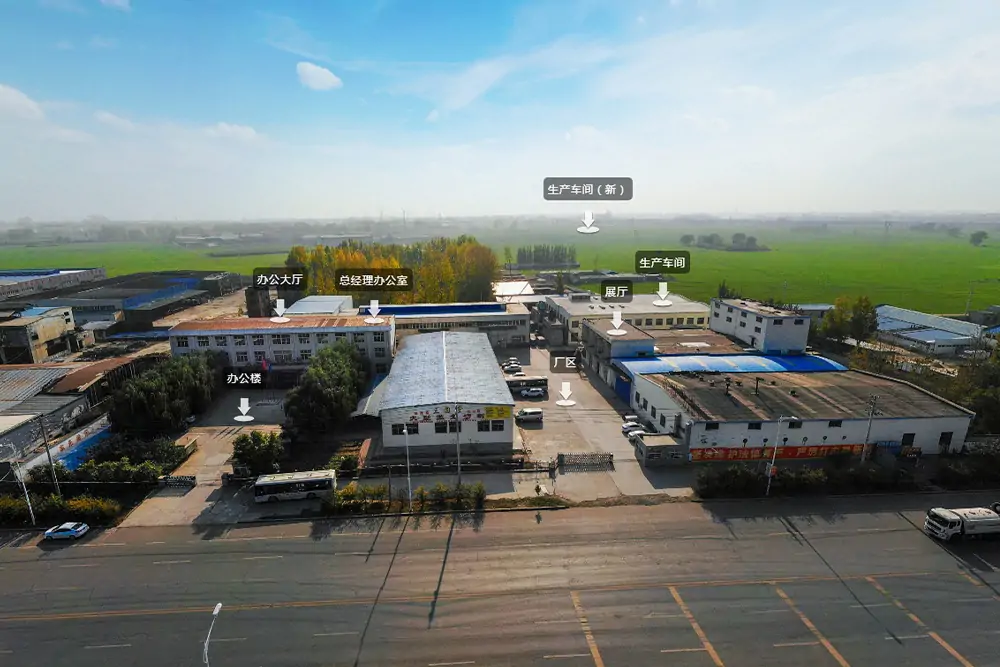
As an ISO9001-certified enterprise, Sanyuantang Machine, with 30 years of industry experience, has provided customized solutions for international companies such as DuPont and Nestlé.
In the selection of a waste screening machine, it is recommended to verify the matching degree between equipment and materials through a customized test, which is more reliable than relying solely on parameter tables. After all, the most suitable screening machine is the most efficient screening solution.
Contact us now, and we will provide customized solutions based on your actual working conditions. Sanyuantang Machinery will be your satisfactory supplier.
Email: info@sanyuantang.com
Phone: +86-18639095165