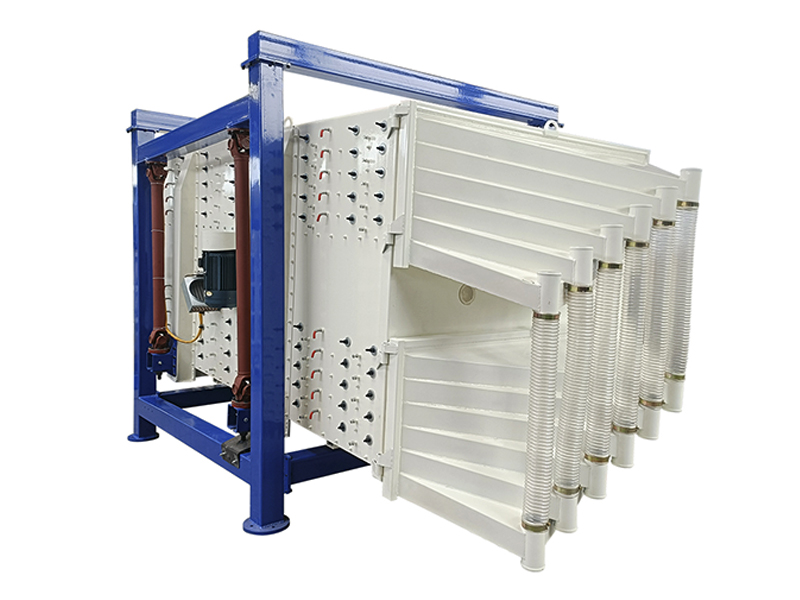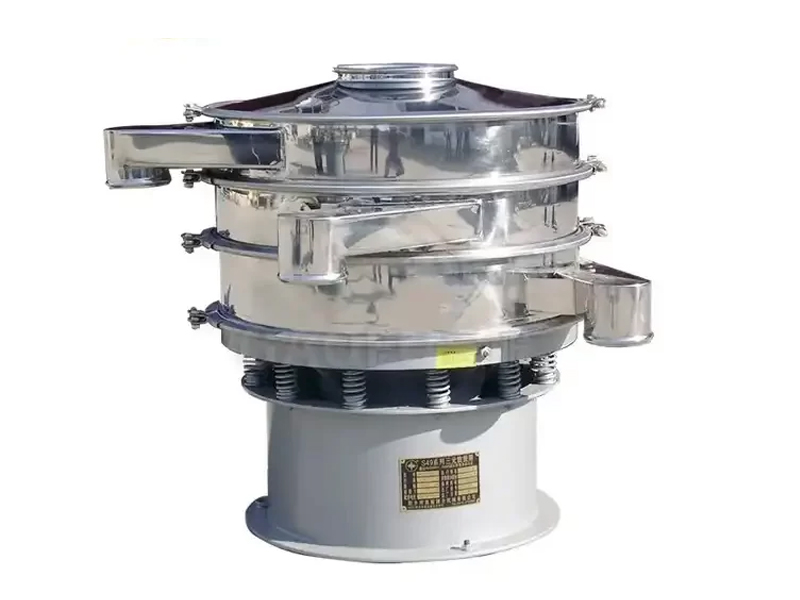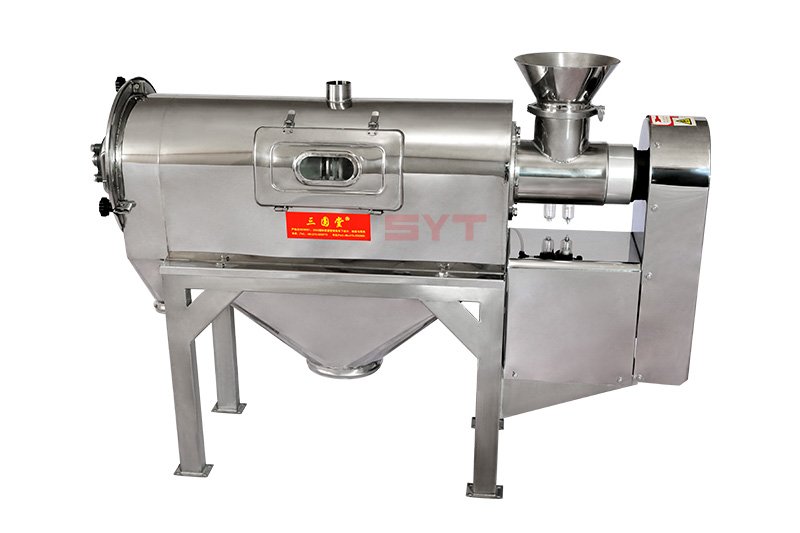
In industrial screening applications, selecting the right equipment is critical for ensuring production efficiency and product quality. Rotary sifters and vibrating screens are two of the most widely used mechanical screening solutions, but they differ significantly in working principles, capacity, and application scenarios.
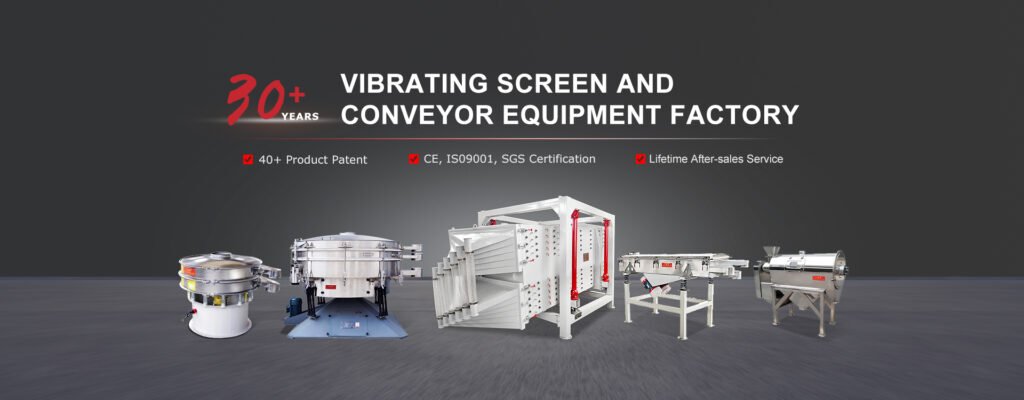
With over 30 years of engineering experience, Sanyuantang manufactures high-precision, heavy-duty rotary sifters and vibrating screening systems designed to maximize operational efficiency, safety, and reliability in modern processing lines.
The Engineering Challenge: Why Choosing the Right Sifter Matters
Using an unsuitable screening machine can lead to serious production issues such as material agglomeration, mesh clogging, excessive dust emission, and even production line downtime due to insufficient capacity.
- Rotary sifters are specifically designed for ultra-fine powders and materials prone to agglomeration.
- Vibrating screens excel in multi-stage classification and general-purpose material processing.
Rotary Sifter
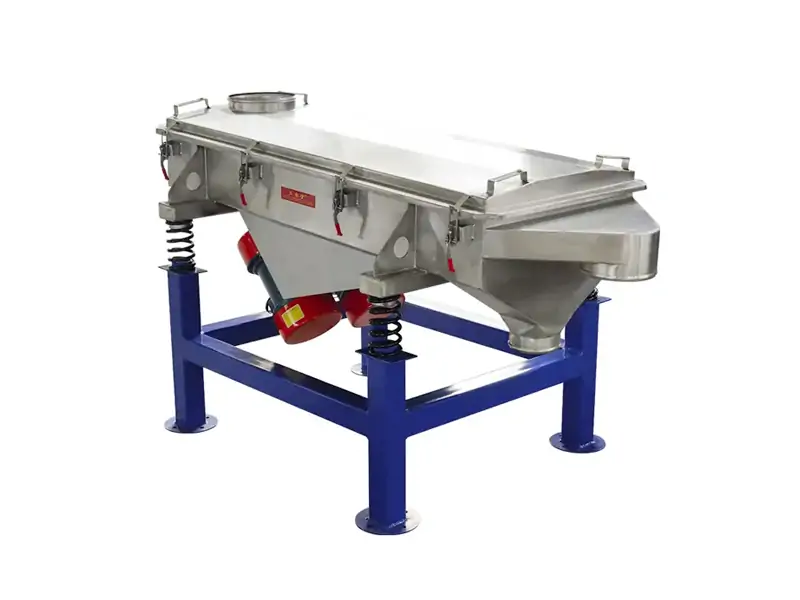
A rotary sifter (also known as an airflow sieve) uses airflow combined with centrifugal force to transport and separate materials inside a cylindrical screen. Rotating blades generate centrifugal force, pushing fine particles through the mesh while coarse particles are discharged along the screen wall.
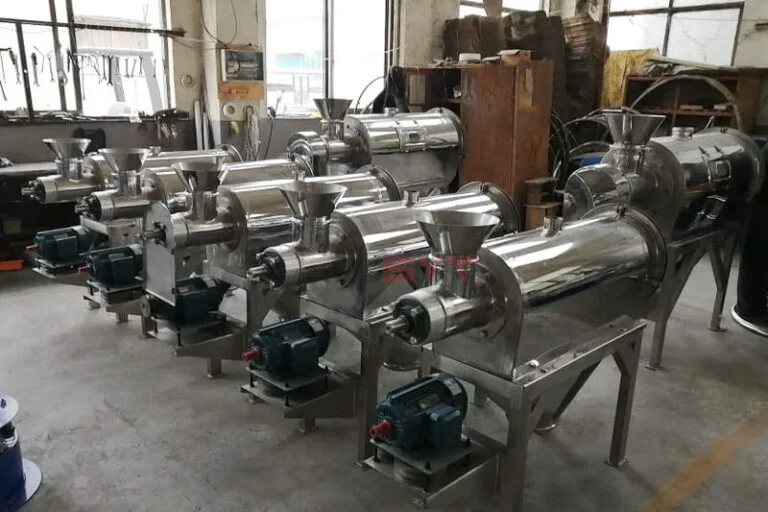
Core Series: SY-WQS Series Rotary Airflow Sifter
Best suited for:
- Ultra-fine powders (80–530 mesh)
- Lightweight materials
- High-viscosity powders
- Electrostatic or agglomerated materials
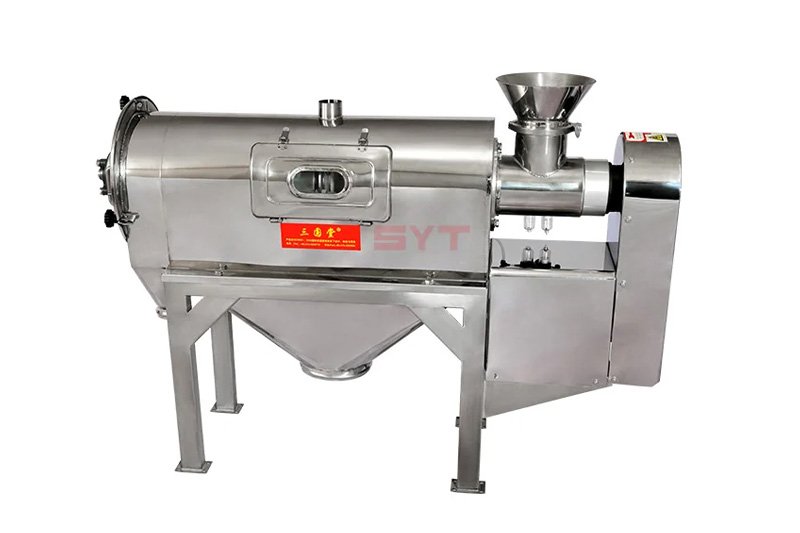
Technical Parameters
| Model | Material | Power | Screening Mesh | Capacity (t/h) |
|---|---|---|---|---|
| SY-WQS18-65 | Stainless Steel 304/316L | 2.2 kW | 80–530 mesh | 1–2 |
| SY-WQS30-100 | Stainless Steel 304/316L | 4.0 kW | 80–530 mesh | 2–5 |
| SY-WQS50-130 | Stainless Steel 304/316L | 5.5 kW | 80–530 mesh | 5–15 |
Advantages
- Zero clogging: Airflow improves mesh utilization and reduces blockage
- High precision: Screening efficiency up to 85%–95%
- Dust-free operation: Fully enclosed design suitable for environmentally controlled facilities
Vibrating Screen
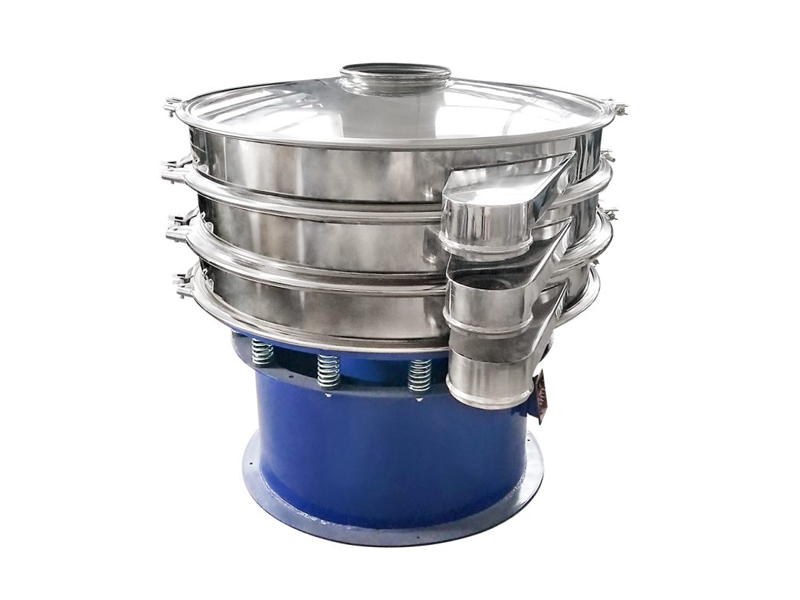
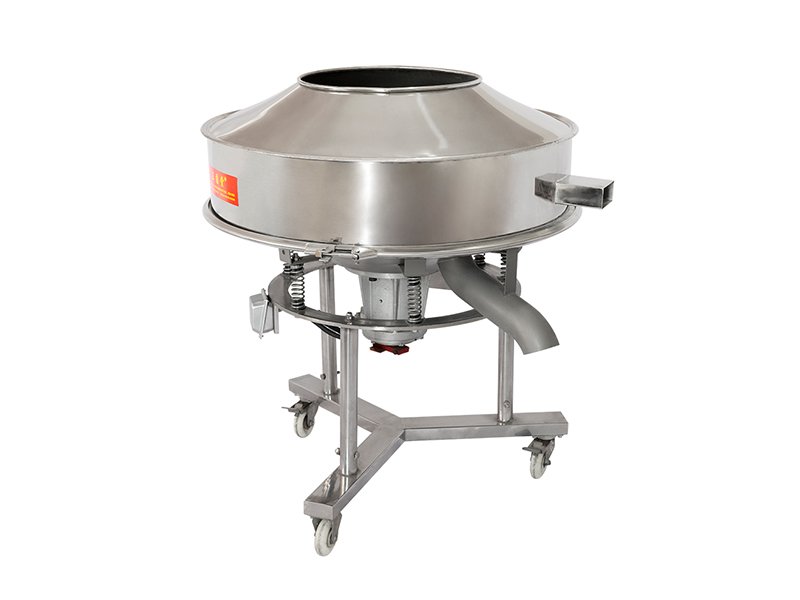
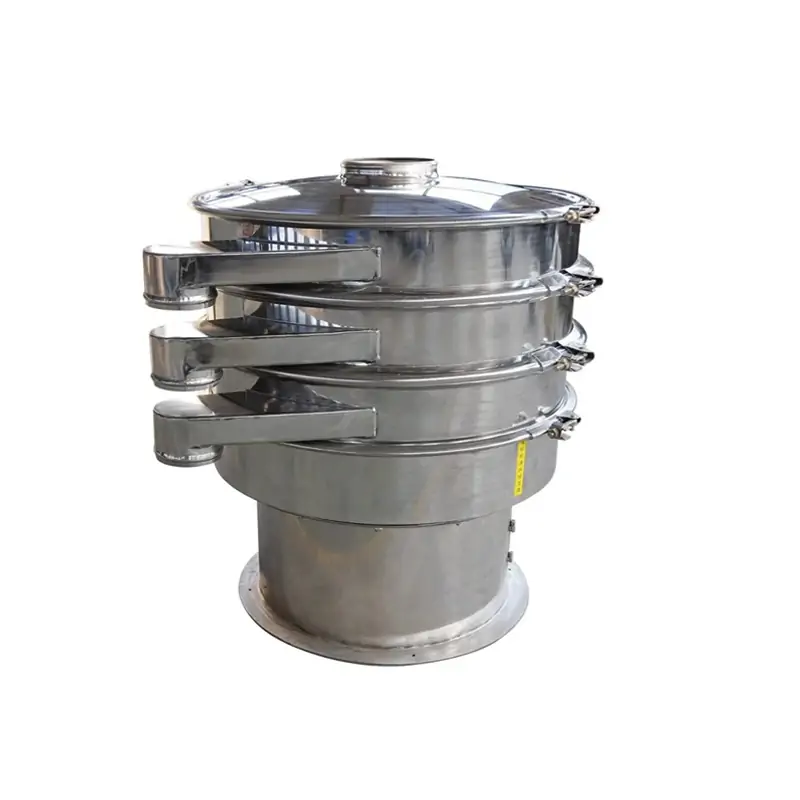
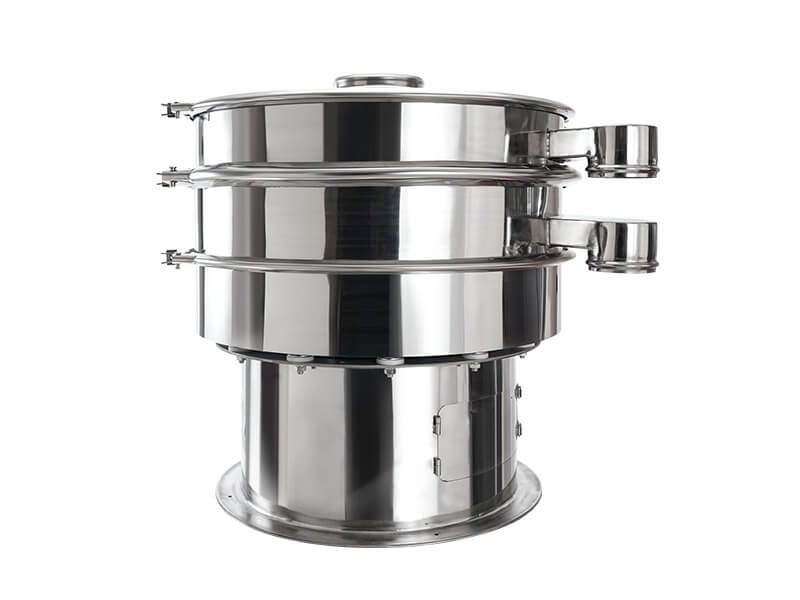
A vibrating screen uses a vertical vibration motor as its power source. Eccentric weights at both ends of the motor convert rotational motion into multi-dimensional vibration, causing materials to move in a circular or spiral trajectory across the screen surface.
References: https://en.wikipedia.org/wiki/Vibrating_screen
Core Series: SY-XZS Series Vibrating Screen Separator
Best suited for:
- Material classification
- Filtration
- Impurity removal
- Multi-grade separation (2–6 output sizes)
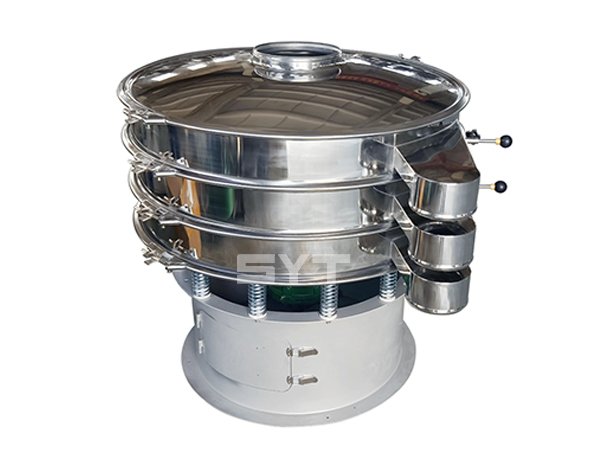
Technical Parameters
| Model | Diameter (mm) | Power (kW) | Layers | Capacity (kg/h) |
|---|---|---|---|---|
| SY-XZS600 | 600 | 0.55 | 1–5 | 200–800 |
| SY-XZS1000 | 1000 | 1.1 | 1–5 | 800–1500 |
| SY-XZS1200 | 1200 | 1.5 | 1–5 | 1200–2500 |
| SY-XZS1500 | 1500 | 2.2 | 1–5 | 1500–3300 |
Advantages
- Multi-stage grading: One machine enables multiple product classifications
- Versatility: Suitable for powders, granules, and liquid slurries (e.g., syrup, coatings)
- Easy maintenance: Screen replacement can be completed in 3–5 minutes
Comparison Guide: Which One Is Better for You?
- Particle size (mesh range):
- For ultra-fine powders above 500 mesh → rotary sifter is the preferred solution
- For materials between 2–400 mesh → vibrating screen offers better cost efficiency
- Capacity requirements:
- Rotary sifters provide higher single-unit throughput (up to 15 tons/hour)
- Vibrating screens are ideal for medium to small-scale precision screening
- Installation space:
- Vibrating screens are vertical and compact
- Rotary sifters require more horizontal installation space
References: https://www.sciencedirect.com/topics/agricultural-and-biological-sciences/sieving
FAQs
Q1: What materials are best suited for a rotary sifter?
A: Rotary sifters are ideal for fine, lightweight, and easily agglomerated powders such as calcium carbonate, activated carbon, starch, herbal powders, and graphite powder.
Q2: Can a vibrating screen be used for liquid filtration?
A: Yes. The SY-XZS vibrating screen series is suitable for slurry filtration and impurity removal in liquids such as juice, paint, soy milk, and wastewater.
Q3: How often should the screen mesh be replaced?
A: Replacement frequency depends on material abrasiveness. With high-quality stainless steel mesh, service life can be extended by more than 30% under normal conditions.
Why Choose Sanyuantang for Your Sieving Solutions?
- 30+ years of industry experience: Deep expertise in food, chemical, pharmaceutical, and industrial screening applications
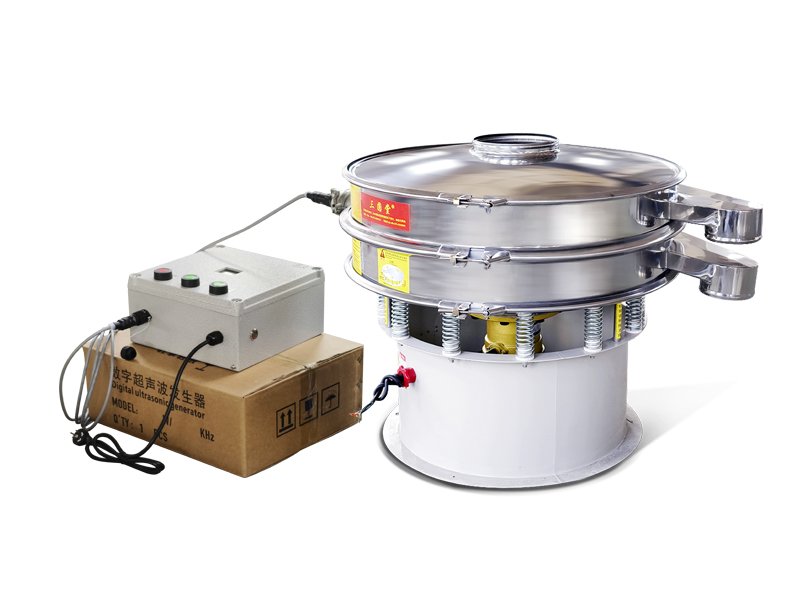
- Custom solutions: Options include mobile frames, inspection ports, explosion-proof motors, and ultrasonic cleaning systems
- Global service support: Fast delivery within 5 days, 1-year warranty, and lifetime after-sales support
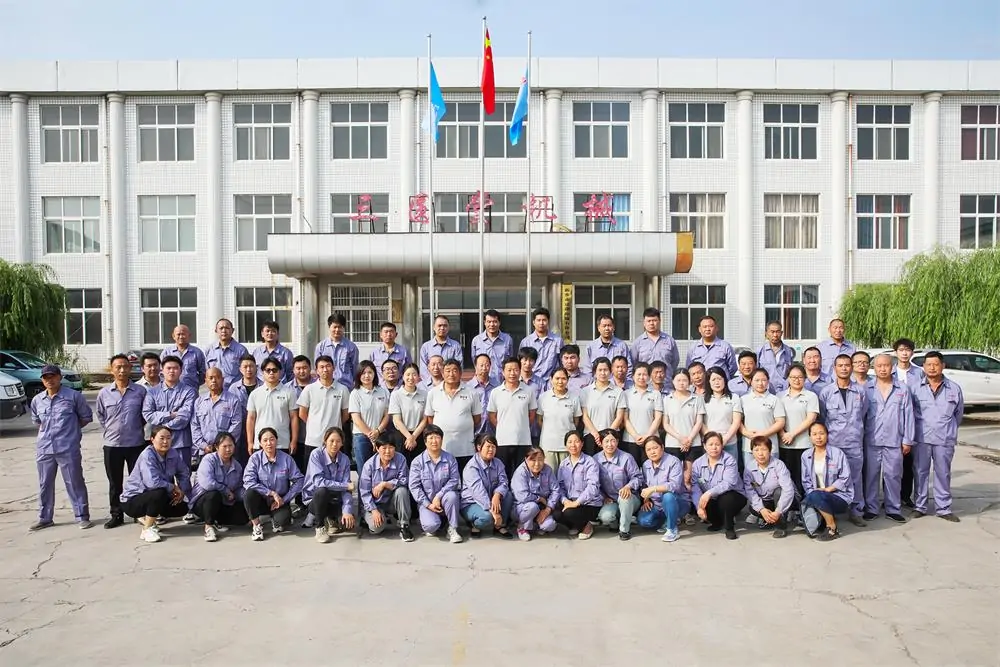
If you’re unsure which equipment best fits your production needs, consult our engineering team for tailored recommendations and quotations.
Email: info@sanyuantang.com
Phone: +86-18639095165