The Rotary Vibrating Screen and the Inline Vibratory Screen are common screening equipment, used for screening and classifying materials. However, there are some differences between them, including working principle, structural characteristics, application scope, price, and so on.
This article compares Rotary Vibrating Screen VS Inline Vibratory Screen in terms of structure, working principle, mesh size, capacity, price, and application scope, helping you select the right screening equipment for your production needs.
Appearance
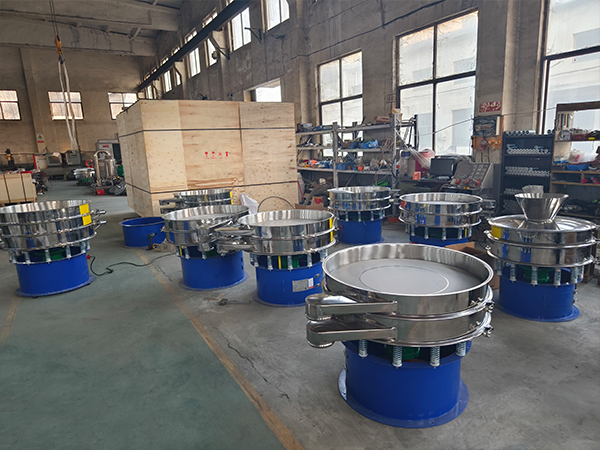
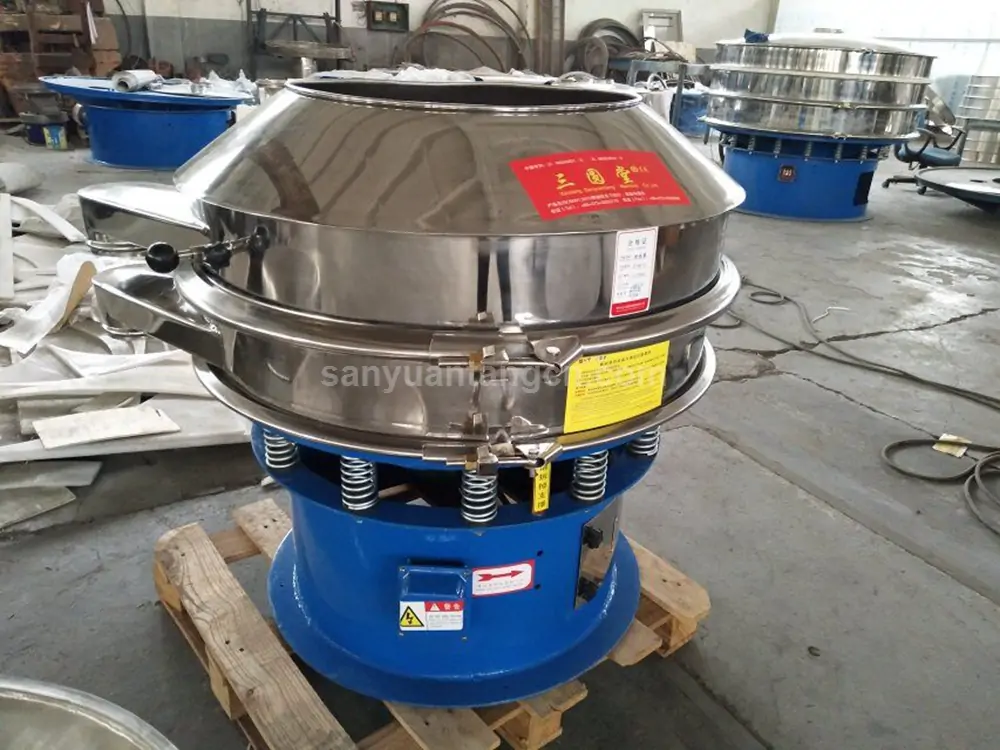
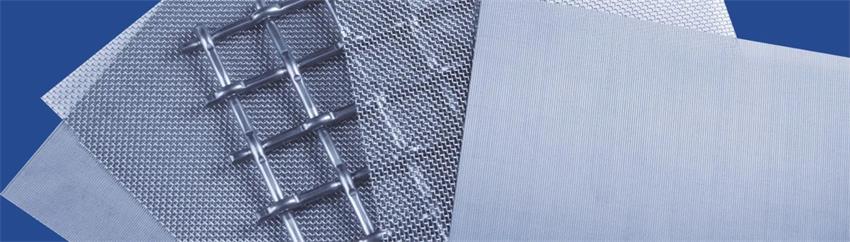
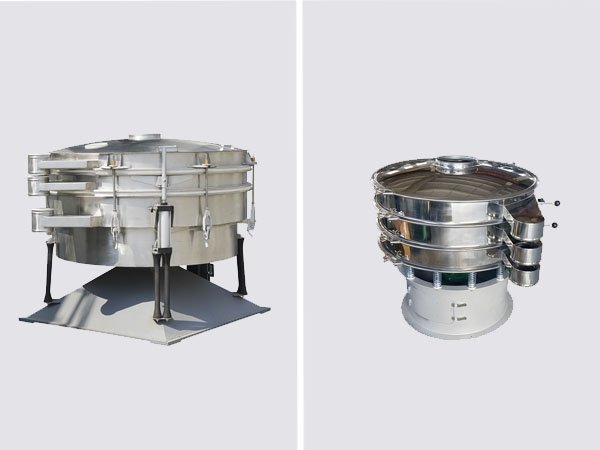
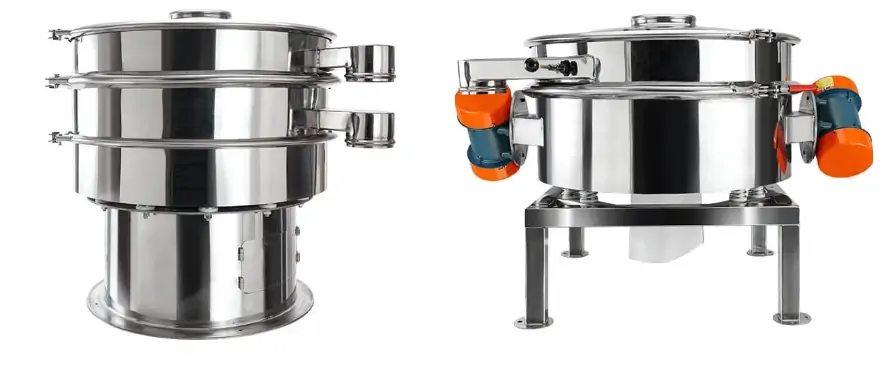
The rotary vibrating screen and self-discharge screen are very similar in appearance; both are round sieves. But the motor of the rotary vibrating screen is a vertical vibrating motor, the equipment can do 1-5 layers of 6 levels of screening, usually using three layers of screen mesh. The rotary vibration sieve screen can be as fine as 500 mesh; for the fine materials below 60 mesh screening effect is better than the inline vibratory screen.
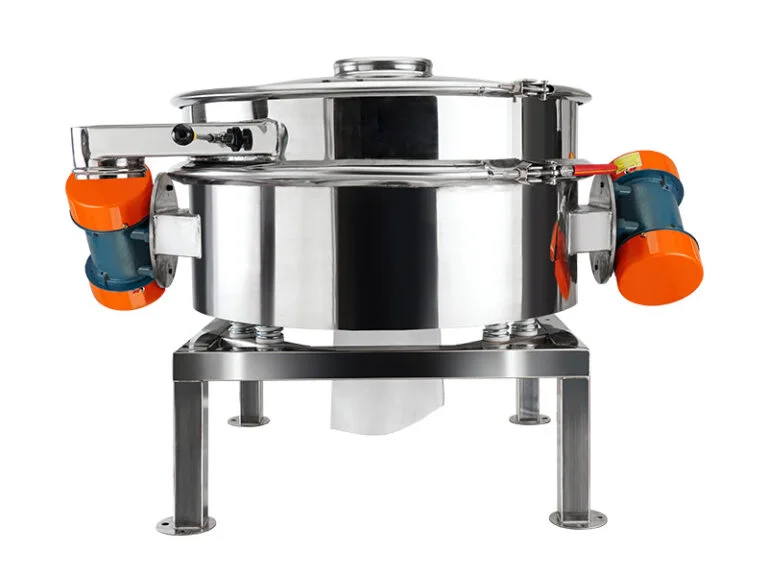
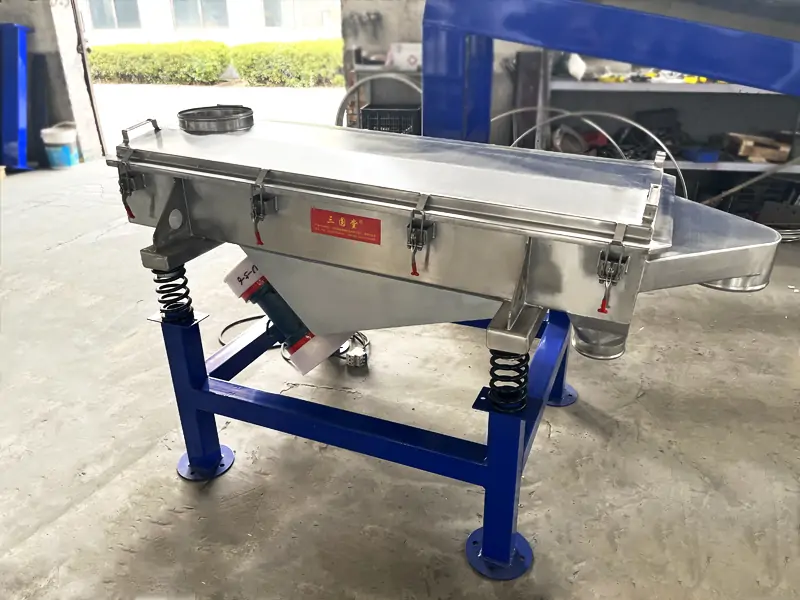
The inline vibratory screen adopts a horizontal vibration motor; according to the demand can choose a single-side motor or a double-side motor. Inline vibratory screens commonly use mesh 12 mesh, 20 mesh, 24 mesh, 30 mesh, 40 mesh, and 60 mesh, usually using a single layer of screen mesh for material screening.
Structure
There are also some differences in the structural characteristics of rotary vibrating screens and inline vibratory screens. Rotary screens are usually arranged horizontally and consist of a screen box, a vibrator, and a screen surface. The vibrator makes the screen box and screen surface vibrate by generating vibration force.

The inline vibratory screen is usually arranged vertically, and the screen surface consists of multi-layer screen panels, with different sizes of holes in each layer.
Working Principle
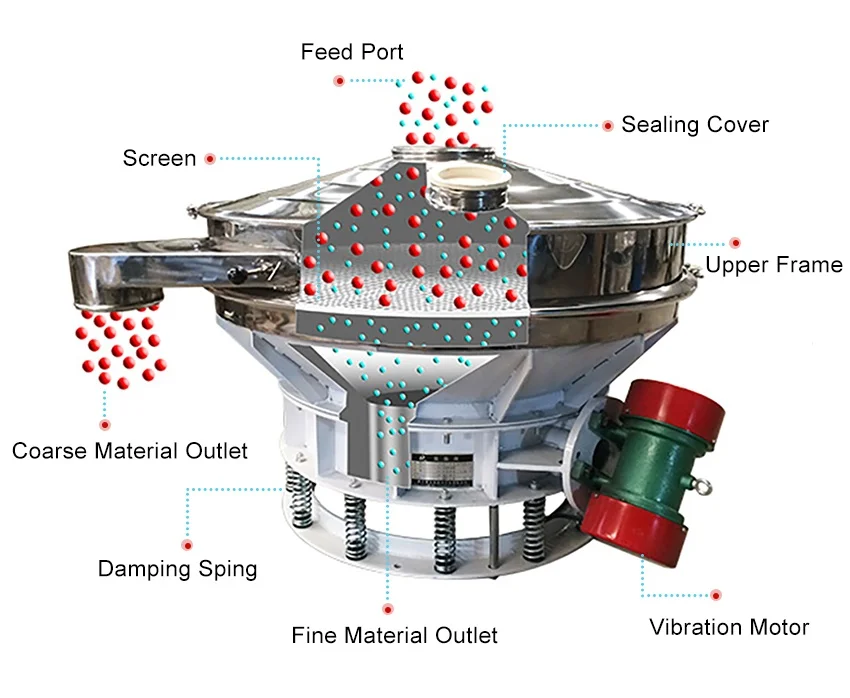
The working principle of the rotary vibrating screen is to use a vertical vibrating motor as the excitation source, driven by the motor material in the screen frame to do horizontal, vertical, and inclined three-dimensional movement. The materials are separated by the elliptical movement trajectory produced by the vibrating screen machine. After the material is put into the feed port, it is vibrated by the vibration force, which makes linear vibration up and down along the elliptical trajectory. This vibration can make the materials spread, separate, and dewater quickly on the screen surface. The rotary vibrating screen is suitable for fine particles and multi-classification screening work.
The working principle of an inline vibratory screen is to use a double vibration motor as the vibration source, driven by the motor material in the sieve frame to do elliptical movement, rapid and reciprocating to realize the material over the screen action. Through the material on the screen surface under the action of gravity from top to bottom of the linear movement, the screen surface completes the screening process. After the material is evenly distributed in the upper feeding area, it gradually passes through the screen surface in a downward direction. In this process, the larger particles are blocked by the screen mesh above, while the smaller particles fall through the screen holes to the bottom. Therefore, inline vibratory screens are suitable for screening relatively large particles.
Application
Inline vibratory sieve and rotary vibratory screen in the scope of application is also different.
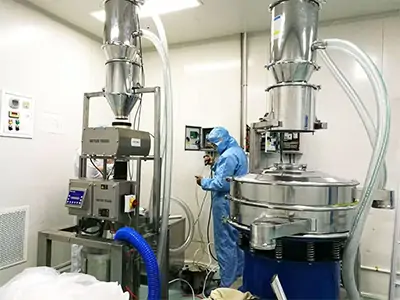
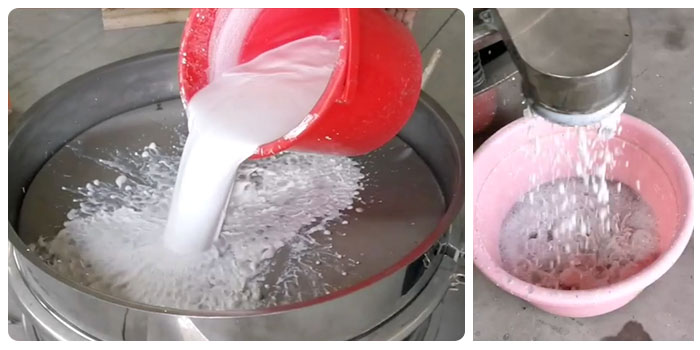
Rotary vibratory screen can be used for particles, powder, slurry materials for effective screening work, can be 400 mesh powder materials, 500 mesh slurry materials for effective screening work. Mainly used in the chemical industry, food, pharmaceuticals, and other fine particles and difficult-to-screen materials screening.
An inline vibratory screen is mainly for a large number of particles, powder materials, coarse screening, and impurities. The inline vibratory sieve mesh is larger, can quickly sift the material through the screen, can screen 60 mesh powder materials, screening output is more than 4 times that of the rotary vibration sieve. An inline vibratory screen is suitable for the front-end feeding system of the production line, mainly used for coal, ore, cement, and other large particles and materials that are not easy to adhere to the screen.
Mesh Clearing Method
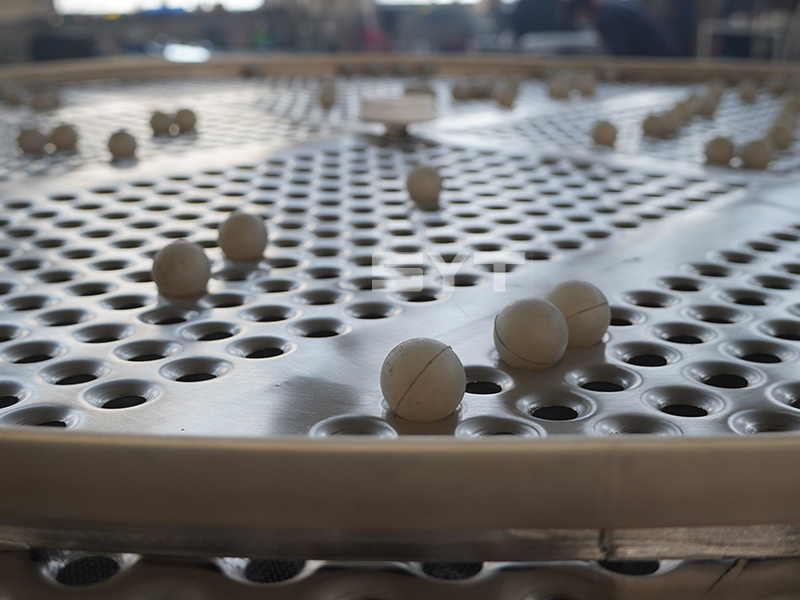
The rotary vibrating screen is equipped with a special bouncing ball clearing device, and the bouncing ball is placed in the lower part of the screen, which is carried by the ball carrier. During the screening process, the bouncing ball produces secondary vibration to clean up the mesh surface to avoid clogging.
An inline vibratory screen is used for general screening of particles or coarse powder materials, not easily block the mesh, so generally do not need a special mesh-clearing device.
Price
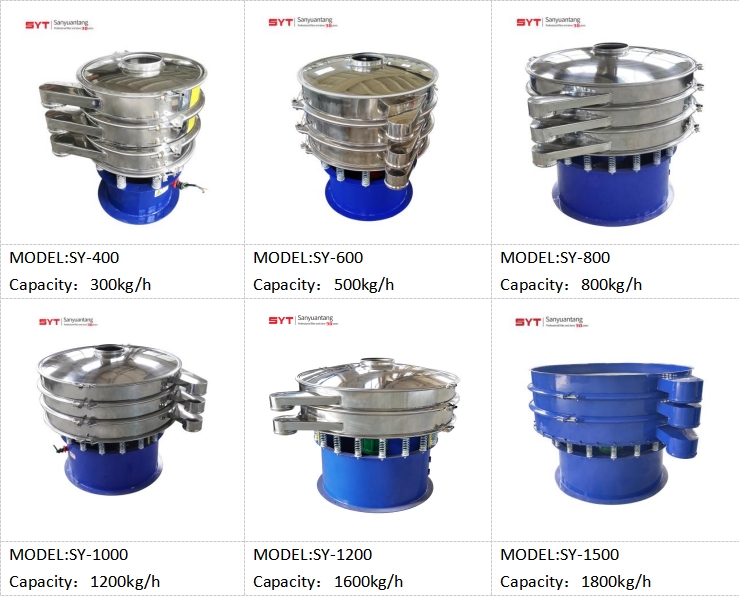
The following is the common rotary vibrating screen and inline vibratory screen price list.
From the above, it can be seen that the larger the diameter and power of the vibrating screen, the more expensive it is, so when selecting the type, it should be customized according to the needs of the choice, to avoid wasting the cost due to the selection error. In addition, the price of the rotary vibrating screen and the inline vibratory sieve is also affected by the material and customization requirements.
1, Material
- Rotary vibrating screen material: stainless steel, carbon steel and plastic.
- Inline vibratory screen material: stainless steel, carbon steel.
Different materials determine the price. The difference between carbon steel and stainless steel is between 100$ and 200$, and plastic is cheaper.
2、Customization
Rotary vibrating screen and inline vibratory screen can be customized to choose the number of screen layers, gates, bins, and so on. An inline vibratory screen can additionally add brackets and movable wheels. The specific price should be decided according to the customer’s customization requirements.
Rotary Vibrating Screen VS Inline Vibratory Screen Comparison Table
| Item | Rotary Vibrating Screen | Inline Vibratory Screen |
|---|---|---|
| Motor Type | Vertical vibration motor | Horizontal vibration motor |
| Screening Layers | 1–5 layers (6 grading levels) | Usually single layer |
| Max Mesh Size | Up to 500 mesh | Commonly 12–60 mesh |
| Best For | Fine powder & slurry | Coarse particles & impurities removal |
| Screening Accuracy | High precision | Medium precision |
| Output Capacity | Moderate | High (4× rotary screen in coarse screening) |
| Installation Type | Horizontal layout | Vertical layout |
| Mesh Cleaning | Bouncing ball cleaning system | Generally no cleaning device |
| Typical Industries | Food, pharmaceutical, chemical | Coal, mining, cement |
| Customization | Layers, inlet/outlet, gates | Brackets, wheels, structure |
| Price Range | Higher for multi-layer precision | Lower for coarse screening |
Conclusion
In short, the advantages of rotary vibrating screens and inline vibratory screens are different, and the selection of suitable screening equipment needs to be decided according to the characteristics of the material, particle size, and production requirements. If you want to know more, please feel free to contact us.
Why Choose Sanyuangtang?
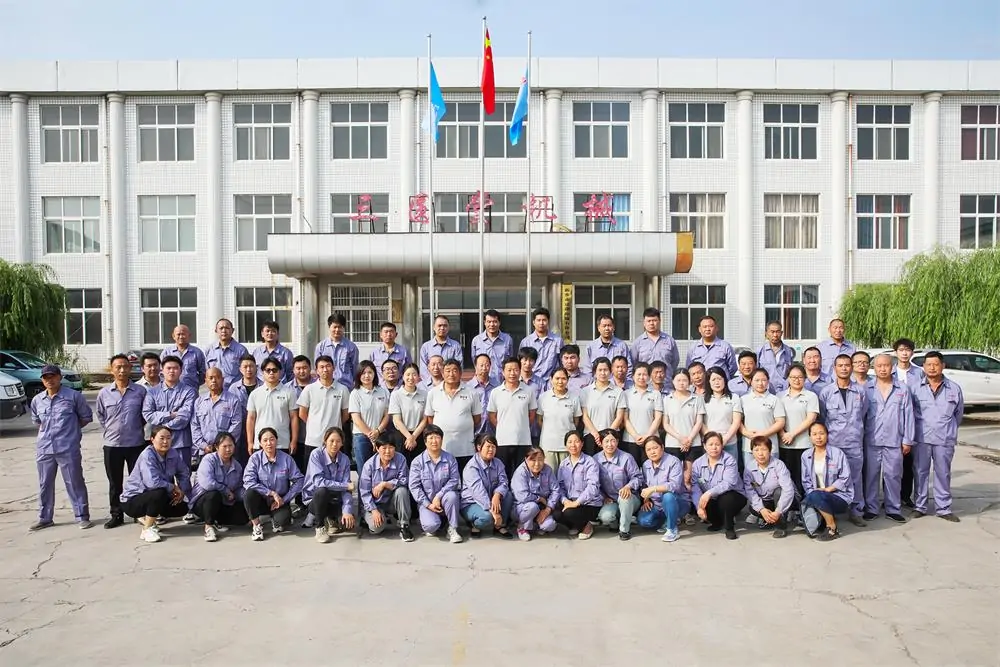
As a professional screening equipment manufacturer, Sanyuangtang specializes in both rotary vibrating screens and inline vibratory screens. With years of industry experience, we provide customized screening solutions based on material characteristics, mesh size requirements, and production capacity.
Our advantages include:
- Custom multi-layer screening design
- Stainless steel and carbon steel options
- Fast delivery and global export support
- Professional technical guidance
If you need assistance selecting the right screening solution, Sanyuangtang is ready to support your project.
Email: info@sanyuantang.com
Phone: +86-18639095165